Chronicle Editor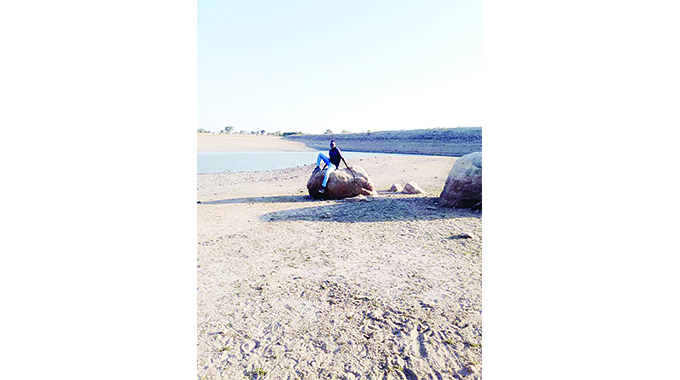
Patrick Chitumba – [email protected]
FOR a decade, Mr Pascal Mudzingwa (34) from Ward 11 in Mabhungu Village in Chiwundura area and several other members have been relying on water from Mtorahuku Dam to sustain their irrigation scheme.
Various types of crops were being grown in the area and close to 146 families derived a livelihood from the scheme.
All this is now history as the dam has silted and been affected by low rainfall totals received last season, a situation that has left irrigation scheme members stranded.
Siltation refers to the increased concentration of suspended sediments and the increased accumulation (temporary or permanent) of fine sediments on bottoms where they are undesirable. Siltation is most often caused by soil erosion or sediment spill. It occurs as a result of human activities that lead to fine soil leaching into nearby water bodies such as rivers and dams like Mtorahuku.
Farmers create siltation by planting crops too close to river banks or water sources such that the top-soil is washed into waterways during rains. Gold panners produce siltation by excavating riverbeds.
Gravel poachers do the same when they dig up gravel near streams and leave behind mounds of loose sand that is then washed into the water. With no source of income, Mr Mudzingwa who is the chairperson of Mtorahuku Irrigation Scheme is now a worried person.
Unlike in the past, this time he failed to grow winter wheat because of low water level in the dam. “I am the chairperson of the Mtorahuku Irrigation Scheme under Chief Chiwundura, which has been the source of livelihood for 146 members,” he said.
“For decades we have been relying on Mtorahuku Dam for our irrigation scheme. But because of siltation and climate change, we are in deep mourning because we are unable to grow crops as we have no water.”
Mr Mudzingwa said signs have been there for the past five years that the water level in the dam was dwindling at a fast rate.
He said this year the area received little rainfall thereby totally shutting them out from irrigating their crops for sale.
“We have no source of income, there is no water, and without water, there is nothing we can really do. So, we are desperate as we speak and our members are looking at alternative sources of survival, which is proving to be difficult for many,” said Mr Mudzingwa.
“Life used to be good as we would sell our produce such as wheat to GMB, tomatoes, and cabbages to markets as far as Gweru and send children to school among other things.
“Removing silt is a challenge because there is a need for a bulldozer or excavator, which is a challenge because we don’t have money.”
Mr Mudzingwa said they have approached the Government with the hope of being allowed access to Pezulu Dam, which is along Kwekwe River.
However, the dam is about 45 km away from their irrigation scheme, he said.
“We have Pezulu Dam, which still has water, if only we can be permitted to draw water from that dam we can start being productive.
“That development also means investment in infrastructure to bring water to this side, which is a mammoth task,” said Mr Mudzingwa.
Another villager Ms Mary Chimombe said the dam became heavily silted due to illegal gold mining activities taking place in its catchment.
“I can’t sustain my crops at the irrigation scheme because the usable water from the reservoir is gone. We agreed as a village that the remaining water will be for our livestock. Otherwise, the irrigation scheme faces collapse,” she said.
Ms Chimombe said they only worked in the irrigation scheme during the rainy season using rain-fed water.
“After the rainy season we realised that we didn’t have sufficient water to sustain the crops in the irrigation scheme. For the first time in a longtime, we have failed to grow winter wheat, which used to be our cash cow,” she said.
According to Mr Peter Makwanya, a climate change researcher and lecturer at the Zimbabwe Open University, land sub-division and fragmentation due to population pressure was posing a serious threat to wetlands that are home to various animal and plant species.
“Wetlands are responsible for keeping rivers at normal level. They hold water then release it to the river when needed. They act as climate regulation, water purification, and waste treatment but face a threat due to human settlement,” he said.
Mr Makwanya said climatic changes, such as more frequent and intense rain events, can increase erosion and result in greater amounts of sediment washing into rivers, lakes, and streams.

“More frequent and intense rain events can increase sediment loading from stormwater runoff. Stronger storms, higher river levels, and faster stream velocity can increase erosion and result in increased suspended sediment (turbidity) in water bodies, as well as affect normal distribution of sediment along rivers, lakes, and stream beds,” he said.
Mr Makwanya said globally, smallholder irrigation systems are viewed as critical common property resources that are needed to increase crop water supply and sustain livelihoods in semi-arid regions, according to the Food and Agriculture Organisation of the United Nations.
“Improving agriculture and enhancing productivity through smallholder irrigation is one of the key strategies for alleviating poverty and improving the livelihoods of rural communities; the majority of the poor depend directly or indirectly on agriculture and this is particularly true for Zimbabwe, where approximately 80 percent of agricultural land lies in arid or semi-arid regions,” he said.
Under its Accelerated Irrigation Rehabilitation and Development Programme, the Government has started resuscitating communal irrigation schemes nationwide, a key enabler to improved yields and livestock production for smallholder farmers.
Irrigation development has been identified as a key accelerator towards uplifting the livelihoods of rural communities besides providing a boost to agricultural production and productivity.
This resonates well with President Mnangagwa’s Vision 2030 as articulated under the National Development Strategy 1, which seeks to put 350 000 hectares under irrigation countrywide using idle water bodies and dams under construction.
Midlands Provincial Irrigation Engineer, Shingirai Zano, said the province has an estimated total irrigation area of 17 000ha, with a total area equipped for smallholder irrigation of 1 799 ha and 364 ha still under development.



 Online Reporter