Online Reporter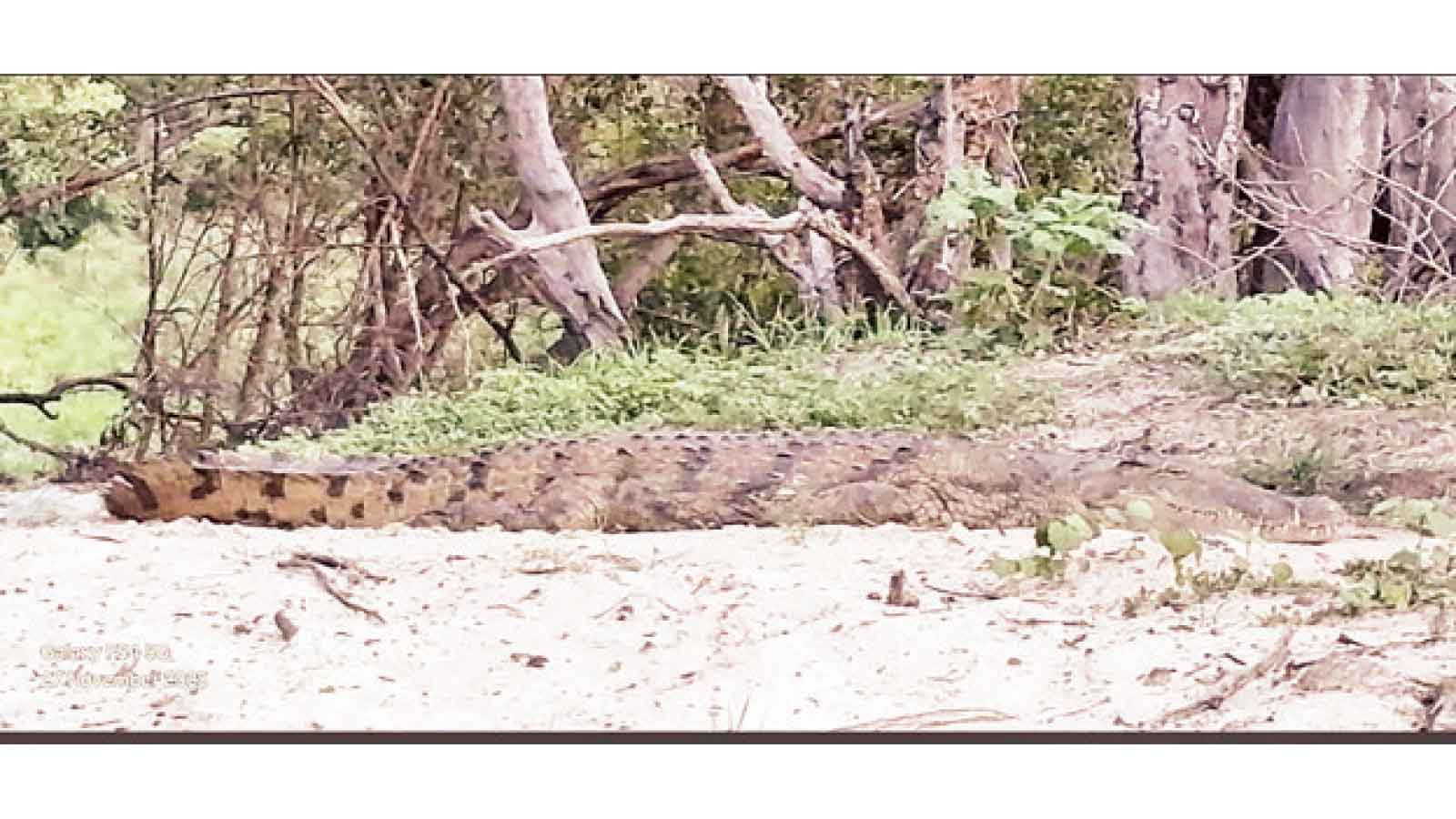
Rutendo Nyeve
Victoria Falls Reporter
ON the tranquil, sunlit waters of the upper Zambezi in Victoria Falls, river cruises have long offered visitors a serene escape from the thunderous roar of the Falls.
But for the past two months, those leisurely trips have turned into something extraordinary. On Luyando Island — aptly nicknamed Long Island — a single female crocodile has become the river’s most captivating star, transforming routine cruises into unforgettable wildlife encounters.
This unlikely celebrity has drawn boatloads of tourists eager for the perfect photograph and a glimpse into a rarely seen chapter of nature. While crocodiles are common along the Zambezi, this one has offered something exceptional: a patient vigil over her nest, a living lesson in survival and maternal instinct. Her story began nearly two months ago when boat captains noticed her taking up a stationary position on a sandy bank. Unlike her kin, who bask briefly before slipping back into the water, she stayed. Day after day, week after week, she remained — a silent sentinel guarding the future beneath her.
Word spread quickly among tour operators, and soon cruise boats began steering gently toward the island for what became a guaranteed sighting. For guides and captains, she is a golden ticket; for tourists, a revelation. This is no ordinary wildlife moment — it is a floating classroom. Thousands of visitors have learned about crocodilian reproduction and behaviour, thanks to passionate guides like Bruce Wellington, who narrates the science behind the spectacle.
“Right, uh ladies and gentlemen my name is Bruce Wellington, I am the river guide,” he begins, before diving into fascinating detail. “So, maybe just a little detailed information to take home based on the crocodile that we are seeing here. This crocodile has been there for the past month and a half now and I don’t have a doubt that it is actually doing an incubation process.”
He explains how crocodiles lay between 60 and 90 eggs in a metre-deep hole, cover them, and then sleep on top to protect them from kleptomaniac water monitor lizards.
He even shares the remarkable fact that nest temperature determines the gender of the hatchlings:
“The higher the temperatures the higher the chance of getting females, the lower the temperatures the higher the chances of getting the males.”
Wellington also addresses her astonishing stillness, revealing the crocodile’s ability to survive without food for months.
“They can go from six to 12 months without eating anything, they store fats and being an advantage to them because they need less, they spend much of their time motionless. So they do not need much of energy. So that is how this very crocodile is,” he says.
Cruise host Jabulani Ntambo confirms the excitement the crocodile has generated.
“In most cases you can go at times for a two-hour cruise and not even see any crocodile. For it being there as it is nesting, it is an advantage to us,” he says, though he admits some tourists initially suspect the story is fabricated — until they see her for themselves.
Ntambo also offers a stern warning: “I would not advise anyone to go anywhere close to that crocodile. Because they are hunger strikers, it will be very hungry and very aggressive.”
For visitors, the experience has been nothing short of magical. Sarah Jenkins from the UK was awestruck: “We came for the cruise expecting just beautiful scenery, but seeing this mother crocodile and learning so much from Bruce about what she’s doing, it has been the highlight of our trip. It is one thing to see a crocodile in a documentary, and another to witness this raw, patient dedication to her future offspring in the wild.”
South African tourist David van Wyk echoed her sentiment: “I have been on safari many times, but I never knew about the incubation or how temperature determines the sex of the babies. We have been sitting here for 20 minutes just watching her, and it is incredibly peaceful. It completely changes your perception of them from just being predators to being complex, caring parents.”
As the sun dips low over the Zambezi, casting a golden glow on Luyando Island, the last cruise boats drift away from their silent vigil.