admin
admin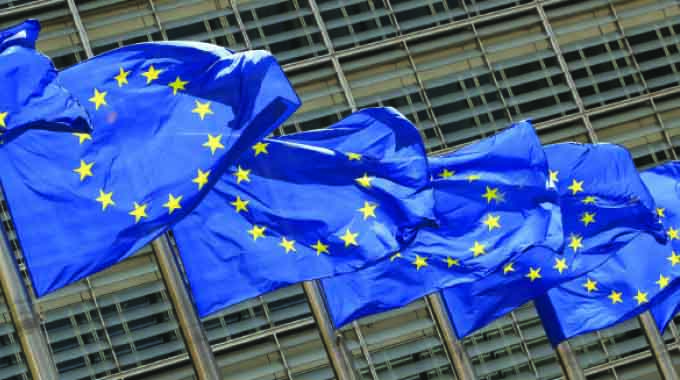
Ann Buel
Although relations between China and the European Union are undergoing changes, they will continue due to the undeniable economic power of China and its importance to the economic success of the EU, which is facing technical and/or real economic recession.
The entire Eurozone has already witnessed a slowdown in growth, much observed in the Czech Republic and Lithuania, also in Germany and other Eurozone countries, which was in technical recession for two quarters in a row.
The technical recession could turn into a real one or lead to economic stagnation and spread across the EU and the United States.
The main reason behind this is the industry-related crisis due to the failure of export operations owing to the lack of purchasing power in the domestic and international markets.
To overcome this situation, but also under pressure from the US, the EU is set to take some challenging decisions and hold a series of meetings to define its policy towards China.
At a key EU leaders’ summit on June 29-30, EU-China relations will be high on the agenda.
That EU-China relations will continue was, in a way, confirmed by what European Council President Charles Michel recently said that it is in the EU’s interest to maintain “stable and constructive” co-operation with China. Michel also called on China to use its “influence” over its neighbour Russia to end the Ukraine crisis.
Josep Borrell, the EU’s high representative for foreign affairs, in a recent commentary, hinted at how the EU could adjust its three-part policy toward China (“partner, competitor and systemic rival”).
And while Borrell came closer than before to acknowledging China’s aspiration to “build a new world order”, the prescriptions he provided are woefully tepid, especially on human rights. He called for “robust engagement” between the EU and Beijing, though.
“De-risking” is the latest term to enter the China-related policy lexicon of the EU. But it appears to largely mean, for some leaders at least, protecting EU economic players’ interests.
“Perhaps the most vivid example was given by German Chancellor Olaf Scholz, who sought to “de-risk” ties with China by ensuring dozens of German business executives accompanied him to Beijing during his November 2022 visit to Beijing, an approach adopted by French President Emmanuel Macron in April.
According to analysts, the EU should explain how it will recalibrate its human rights policy toward China.
After all, human rights, hyped up in recent times by Washington and Brussels, are a global issue, with breaches in the US and the EU.
The recent promises made by the US administration, especially State Secretary Antony Blinken’s claim that “America is back”, and are engaged in helping resolve issues such as climate change, Iran’s nuclear ambitions and human rights, have not been met.
There is evidence of greater silence on human rights violations in the EU, predominantly in Lithuania and in EU organisations, primarily the European Commission, after complaints to the US State Department did not evoke the promise of improving the situation but, in contrast, the denial of Fulbright scholarships on political grounds; perpetration of discrimination in the job market, leading to economic violence; even stealing of personal funds sent by the United Nations through fake invoices; and US State Department’s support to offenders rather than the victims.
It is worth remembering what some European officials have said: if you have nothing else to accuse China of, go for human rights even if it is not always real.
Western countries, especially the US, should first set their own house in order before criticising China. Otherwise, they would be manipulating the universal value of human rights.
Human rights cannot be the denominator of future China-EU relations. Sino-EU ties should be based not on polarisation, but on mutual interest and respect, on multilateralism and economic exchanges, and should be free from unlawful US interference and pressures.-China Daily
The author is a former official of the European Commission.



 Online Reporter