dyton mupawaenda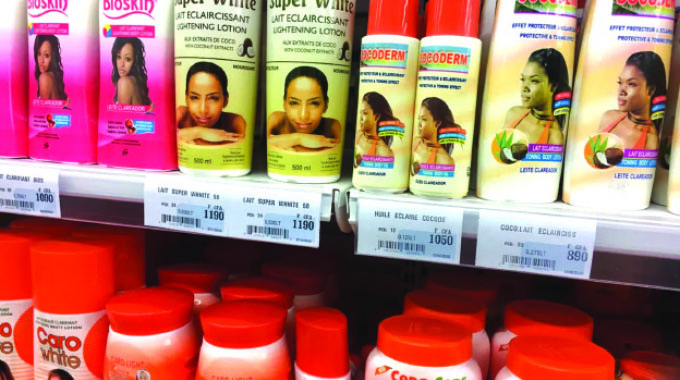
Mutsawashe Mashandure-Herald Correspondent
Many people around the world use lightening oils, chemical and injections in an attempt to get lighter skin.
While this is often done in pursuit of a certain beauty ideal, it can have serious and potentially dangerous consequences.
The history of skin bleaching in Zimbabwe is complex and deeply rooted in the country’s colonial history.
During the colonial era in Rhodesia, lighter skin was associated with power and privilege, and many people internalised the idea that darker skin was inferior.
After independence, the bleaching trend continued, as many people still saw lighter skin as a sign of beauty and success.
Today, the desire for lighter skin is still prevalent in Zimbabwe, despite the health risks associated.
Some see it as a way to conform to social norms and feel more accepted, while others view it as a form of self-hatred and internalised racism.
I have discovered that most food outlets want light skinned girls for better marketing. So, due to this factor darker girls strive to have lighter skin by any means. Skin bleaching is the process of using chemical products to lighten the skin.
These products contain ingredients like hydroquinone, mercury, and steroids, which can lighten the skin by reducing the amount of melanin, the pigment that gives skin its colour.
In the long term, it can cause damage to the skin barrier, leading to dryness, sensitivity, and irritation.
Additionally, it can lead to hyperpigmentation, or dark spots on the skin.
It can also cause sun sensitivity, which can lead to increased risk of skin cancer.
In some cases, bleaching can also cause changes to the texture of the skin, such as thinning or wrinkling.
And of course, there is the psychological impact of bleaching, which can lead to feelings of insecurity and low self-esteem.
In the short term, using lightening oils can cause a number of side effects. The most common side effect is skin irritation, which can manifest as redness, swelling, itching, or burning.
Other side effects can include dryness, peeling, and flaking of the skin. In some cases, people may also experience an allergic reaction to the ingredients in the lightening oil.
And finally, the use of lightening oils can cause photo-sensitivity, which means that the skin becomes more sensitive to the sun’s rays. This can lead to sunburns and an increased risk of skin cancer.
Bleaching did not start today but back then our grandmothers used to use amyl, sometimes known as poppers for bleaching.
Despite being prohibited from using Ambuyl, many continue to utilise other lightening oils. It is not advised to use any goods containing ambul in light of these hazards. It is crucial if you have been using a product that contains ambuyl.
There are two main methods of bleaching: chemical bleaching and physical bleaching.
Chemical bleaching involves the use of topical creams or serums that contain ingredients like hydroquinone, steroids, or other harsh chemicals.
Physical bleaching, on the First, their skin may start to return to its natural colour, which can be a difficult adjustment for some people.
Additionally, they may experience some skin discolouration or uneven tone, as the bleaching products have likely disrupted their skin’s natural balance.
Finally, they may feel self-conscious or embarrassed about their appearance, especially if they were using lightening oils to try to fit in with a certain beauty standard.
“I think the best way to stop the use of lightening oil is for people to love and accept themselves for who they are, rather than trying to change their appearance in potentially harmful ways.
Mrs. Sharon, a vendor who sells lightening oil, said she just sells the product for the sake of money.
“ I am just selling this product to make money, and I am a single mother of four, so selling this product pays me a lot.
“As a single mother, I send my children to school because people do not hesitate to be light,” she said.
Another lady from Makoni who preferred to be unknown said she used a lightening cream to boost her confidence.
“I used lightening skin because I was darker and people always gave me a nick name; people used to call me blackie. This triggered me to start using lightening oil, she said.
“Ever since I used lightening oils, I am confidence enough in myself, and I would tell people I now see my beauty,” she said.
Mrs Lashmar Mkono from Kuwadzana urged people to stop using lightening oil.
“I tell you, do not use these oils. Be proud of your skin and once used these lighting oil, I could not expose my skin over the sun why because of burns,” she said.



 Online Reporter