admin
admin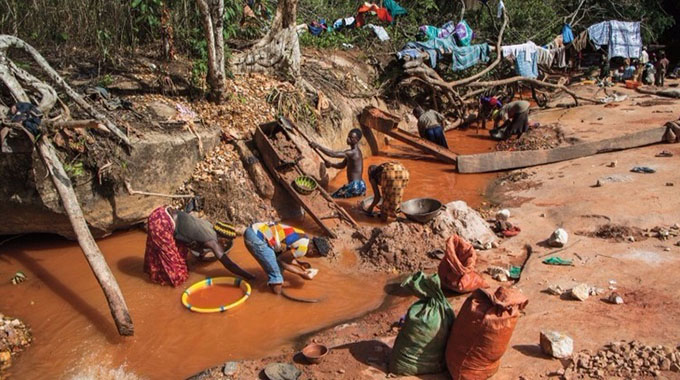
Oliver Kazunga Senior Business Reporter
THE Zimbabwe Miners Federation (ZMF) will continue negotiating for tributary agreements with large-scale miners to ensure sustainable mining operations, an official has said.
This would also help to formalise operations of the artisanal and small-scale miners.
A tributary mining arrangement is a form of subcontracting or leasing of mining claims on a temporary basis to a third party to exploit minerals in return for paying rent.
“We are continuously engaging the Chamber of Mines of Zimbabwe, which represents the large miners to give the small-scale miners tributary agreements so that our members can sustainably produce and deliver through the formal channel,” ZMF chief executive officer Mr Wellington Takavarasha said in an interview.
“We are glad that through engagements involving the Government and the Chamber of Mines, we have managed to bring artisanal and small-scale miners into the formal system.
“Mines such as Jumbo, Redwing Mine and Venice Mine have given us tributary agreements on their gold-rich clams and negotiations with Golden Valley Mine are also under way for tributary agreement. This will go a long way in bringing illegal miners into the formal system from the informal system,” Mr Takavarasha added.
Small-scale and artisanal miners contribute about 60 percent of the country’s gold output.
The Government has also been negotiating with large miners to parcel out some of their claims to small-scale miners in a bid to formalise their operations and boost output.
This is in line with the Government’s strategic roadmap that seeks to grow the mining industry to a US$12 billion economy by 2023. Under the US$12 billion roadmap, gold, the country’s largest foreign currency earner, is expected to contribute US$4 billion.
The US$12 billion mining economy will also be spurred by minerals such as platinum, diamond, chrome, iron and steel, coal and lithium. The mining industry strategic roadmap rides on the opening of new mines, reopening of closed mines as well as beneficiation initiatives in the sector to enhance production.
The small-scale mining industry has been recognised as pivotal to Zimbabwe’s economy.
In 11 months to November 31, 2022, Zimbabwe’s gold output increased by 31,3 percent to 33,3 tonnes compared to 25,3 tonnes in the corresponding period in 2021. The increased output is attributed to the Government’s incentives to the industry.
The small scale miners produced 22,9 tonnes while large miners delivered 10,4 tonnes.
“We are happy that the Government through the Ministry of Mines and Mining Development has recommended EPOs (Exclusive Prospecting Orders) to small-scale miners. If we are given the EPOs that’s going to boost production as our members will have more claims to work on,” said Mr Takavarasha.



 Online Reporter