

 admin
admin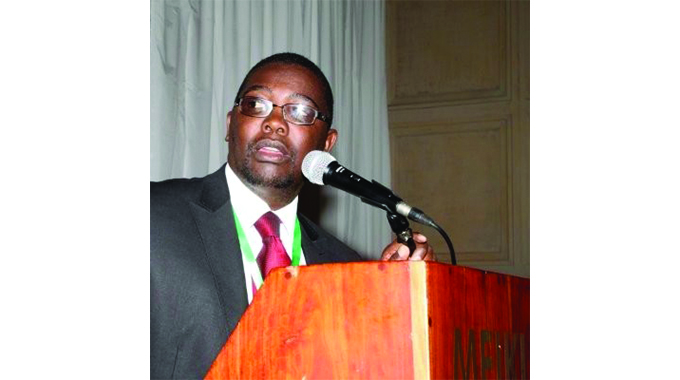
Senior Business Reporter
THE financing of Smart Cities concept will come under the spotlight when Government officials, infrastructure planners and the banking sector engage during a Financing Smart Cities and Rural Connect Conference later this month.
DEAT Capital, a trade and investment consulting firm is organising a one-day Financing Smart Cities and Rural Connect Conference in Bulawayo.
The engagement targeting 150 participants will focus on accelerating the implementation of Zimbabwe’s Smart Cities Concept.
Stakeholders will examine opportunities to catalyse resilience and innovation post Covid-19 pandemic to support growth plans of the Zimbabwe Vision 2030.
Expected participants include the Ministry of Information, Communication, Technology, Postal and Courier Services, Ministry of National Housing and Social Amenities, Ministry of Local Government and Public Works, Apollo Hospitals India, Westpro Holdings, Old Mutual Group, Rural Infrastructure Development Agency, Urban Councils Association of Zimbabwe and the Zimbabwe Stock Exchange .
“We will be gathering investors, banks, infrastructure planners, construction providers, technologists, municipal leaders, senior government officials, donors, financiers, investors, industrialists, academics, and many more.
“This will be a showcase of financing and technical solutions for smart cities and rural applications such as smart housing, smart grids, agritech, e-commerce, digital finance, e-grocery platforms, smart transport system, smart tourism, smart education, smart health, smart geospatial systems and e-governance,” said DEAT Capital managing director, Mr Nicky Moyo.
A “Smart City” is one that uses information communication technologies to improve operational efficiency, share information with the public and provide a better quality of public service and citizen welfare.
Government adopted the smart city concept which is a global phenomenon as part of the country’s modernization thrust.
The smart city concept will see the development of Figtree as a tributary town to Bulawayo as efforts to ease congestion in major cities gather pace.
The pursuit of the smart cities concept by the Government is complemented by the country’s citizens who are building modern structures in the rural areas, a departure from the past when rural areas were largely viewed as retiring places instead of productive settlements that can have industries to curb rural to urban migration.
According to the concept paper, the transformation of cities and rural communities is accelerating in Zimbabwe.
The range of infrastructure that developing country cities need to develop is vast —transport, water and sanitation, solid waste disposal, electricity generation, transmission and distribution and needs to be fit for purpose to support future generations.
“Given the volume of funds required for modernising infrastructure, smart cities and rural communities need to consider innovative financing strategies to transform their vision into reality.
“Traditionally, city and rural infrastructure has been provided by the public sector out of current fiscal resources. Grants from the Central Government can only meet a small part of total needs for infrastructure and services. Concessionary loans and international donations rarely make up the shortfall, even for developing nations like Zimbabwe,” it said.
It added that financing is often indicated as one of the biggest challenges to implement a smart city strategy.
“This is not only due to pressure on public budgets but also to inherent complexity of smart city and rural projects covering energy efficiency measures for various types of buildings and the development of smart grids and integrated mobility concepts,” the paper said.
Therefore, attracting investors requires a comprehensive strategic plan that clearly communicates the opportunity and presents a robust business model, a creative approach to funding and financing.



 Online Reporter
 Bongani Ndlovu