Online Reporter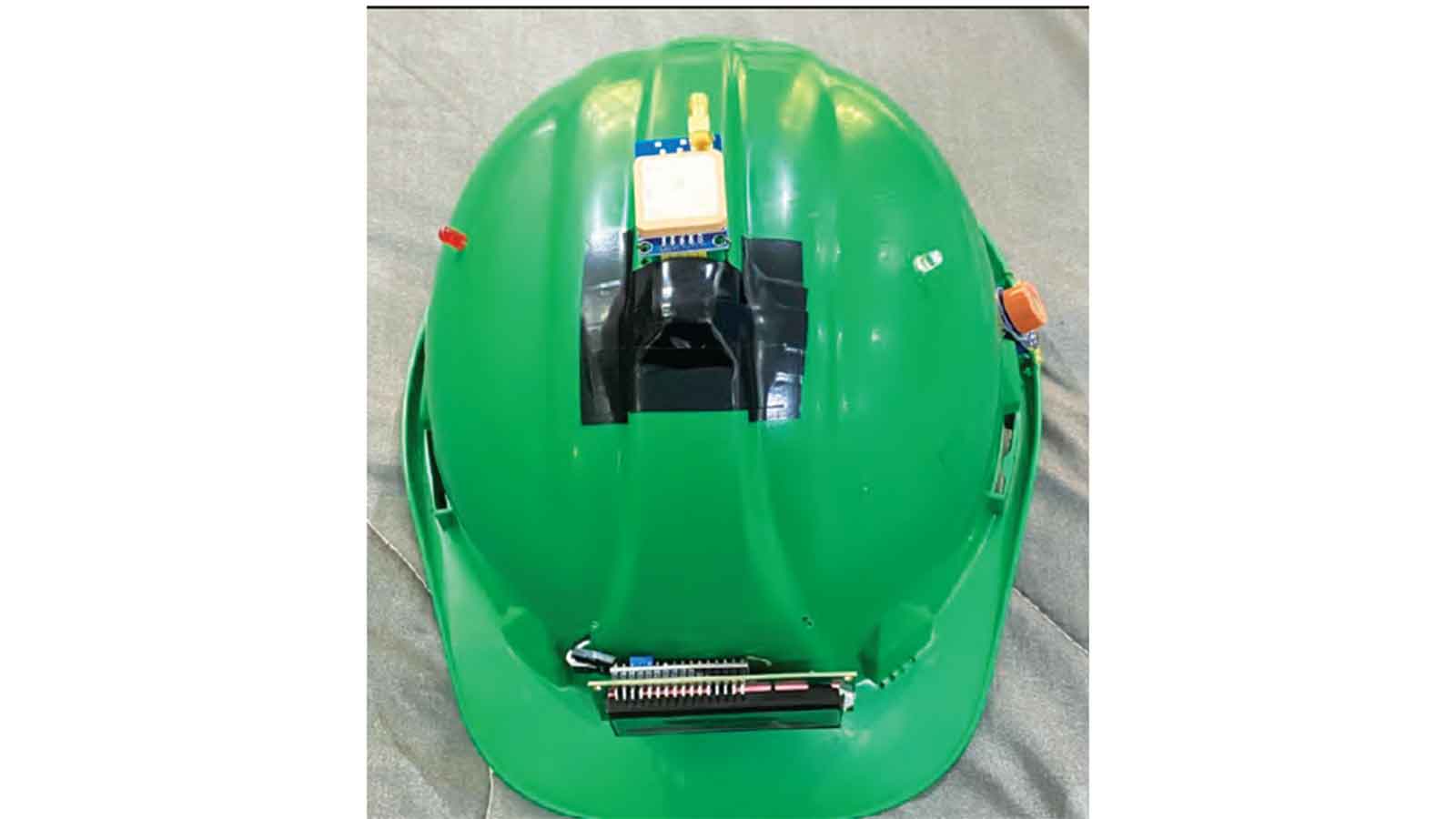
Obey Musiwa-Herald Reporter
THE mining and construction industries, long plagued by accidents and fatalities, may be entering a new era of safety developed by university students with a helmet that integrates artificial intelligence and IoT (Internet of Things) sensors to provide real‑time protection for workers underground and on construction sites.
The innovation is more than a gadget.
It is a lifeline combining GPS tracking, environmental monitoring and behavioural detection.
The helmet not only saves lives but also reduces operational risks, offering companies a pathway to safer, more efficient, and more sustainable growth.
Speaking to Zimpapers, a Master’s student at Chinhoyi University, Munyaradzi Zhou, said the helmet creates a comprehensive safety net for workers.
“Our AI Smart Helmet integrates GPS, alcohol detection, and environmental sensors to give operators real‑time visibility into worker health and location.
“It proactively warns workers against risks, significantly reducing injuries and fatalities.”
Mr Zhou said multi‑modal alerts ensure dangers are communicated instantly.
“Workers hear audible warnings through a Piezoelectric Buzzer and see flashing red lights when danger is detected.
“Supervisors receive sensor data and automated SOS signals at the command centre for rapid response,” he said.
Harare Polytechnic Engineering student Darrel Hunda said GPS tracking transforms rescue operations underground.
“We use high‑sensitivity GPS with IMU (Inertial Measurement Unit) and LoRaWAN triangulation to locate miners even where signals are weak.
“In emergencies, last known coordinates and flashing red lights guide rescue teams directly to trapped workers,” he said.
Another co-operator from Harare Polytechnic, Grey Sipani-Hungwe, said affordability makes adoption possible for all miners.