Zimpapers Writer
THE Government’s decision to scrap the 25 percent import duty on mobile phones could provide fresh impetus to Zimbabwe’s digital economy, lowering the cost of accessing technology while accelerating the adoption of artificial intelligence (AI), digital financial services and next-generation mobile connectivity, analysts have said.
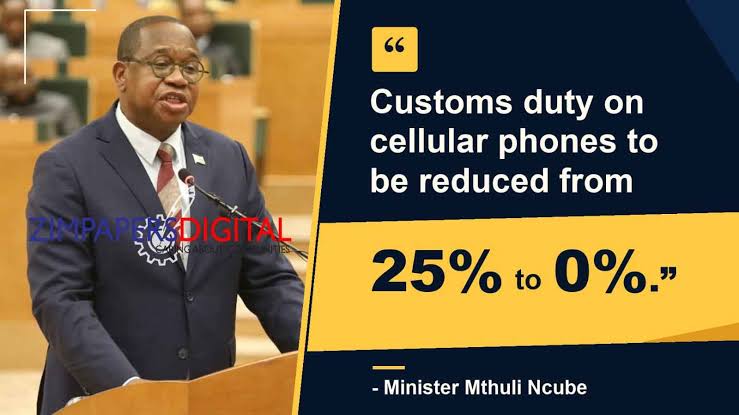
The policy, announced by Finance Minister Professor Mthuli Ncube in the 2027 National Budget last week, reduces customs duty on cellular phones from 25 percent to zero, reversing a tax introduced in 2014.
The move comes at a critical time as Zimbabwe seeks to expand digital inclusion and position its economy to benefit from rapid advances in technology, particularly AI, cloud computing and mobile-based services.
Affordable smartphones are increasingly becoming essential economic tools, providing access to financial services, education, markets, business opportunities and information. Reducing the cost of acquiring these devices could therefore have implications extending well beyond the telecommunications sector.
Economic analyst Francis Mukora said the intervention addressed one of the structural barriers to digital inclusion while potentially unlocking wider economic benefits.
“Smartphones have evolved from being discretionary consumer products into essential economic tools. They are gateways to financial services, education, markets and business opportunities. Removing import duty is therefore an important step towards making the digital economy more accessible to ordinary Zimbabweans,” he said.
Mukora said increased smartphone penetration could improve productivity, expand opportunities for small businesses and informal traders, and create a larger market for digital services.
“At a time when artificial intelligence is reshaping economies, access to affordable devices becomes even more important. Zimbabwe cannot aspire to participate meaningfully in the AI economy if a significant proportion of its population cannot afford the basic technology required to access these innovations.”
The policy also comes as telecommunications operators prepare for a gradual transition towards more advanced mobile technologies, making affordable, compatible devices increasingly important.
Econet Wireless Zimbabwe recently indicated its intention to sunset its third-generation (3G) network by December 2027 and progressively migrate customers to fourth-generation (4G) and fifth-generation (5G) technologies, as part of the industry’s broader network modernisation drive.
The transition is expected to increase the importance of smartphone affordability, since customers need compatible devices to fully benefit from faster mobile broadband services and the growing range of data-intensive applications.
Technology and telecommunications analyst McDonald Ndovi said removing import duty could help bridge the gap between investments in advanced network infrastructure and consumers’ ability to access the benefits.
“Network investment alone cannot deliver the full benefits of 4G and 5G if a significant proportion of subscribers continue using older-generation devices. Making smartphones more affordable could accelerate the replacement of legacy handsets and encourage migration to faster mobile broadband technologies,” he said.
Ndovi said a wider installed base of 4G- and 5G-compatible devices would also improve the utilisation of network investments and make the eventual retirement of legacy 3G infrastructure more practical.
“The implications extend beyond faster internet speeds. More capable devices, supported by modern networks, will be increasingly important for cloud computing, artificial intelligence applications, digital businesses and other technologies that will underpin Zimbabwe’s future economy.”
The shift is particularly significant as demand for mobile data continues to grow and businesses increasingly rely on digital platforms for payments, communication, marketing and service delivery.
More affordable smartphones could also widen access to AI-powered educational platforms, digital assistants, automated business tools and intelligent financial services, many of which are increasingly being delivered through mobile applications.
Information Communication Technology, Postal and Courier Services Minister Tatenda Mavetera welcomed the announcement, describing it as a policy her ministry had long advocated.
She said the cost of devices had been among the biggest barriers to digital inclusion, adding that removing the tax burden would make smartphones more accessible to students, farmers, vendors and young entrepreneurs.
The minister also indicated that her ministry would continue pushing for the removal of duty on manufacturing components and laptops, alongside reductions in other taxes affecting telecommunications operators.
The latest intervention signals a broader recognition that digital infrastructure, affordable devices and accessible services must advance together if Zimbabwe is to build an inclusive digital economy.