admin
admin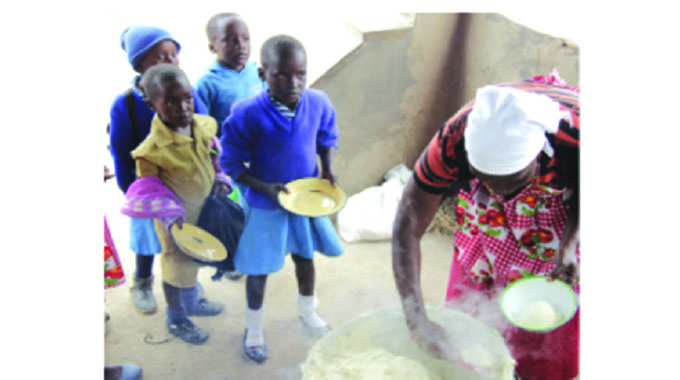
Ruth Butaumocho-African Agenda
From the time the world recorded its first case in China in December 2019, the Covid-19 pandemic has turned out be more than a health crisis.
Millions of people across the world have lost their jobs, companies have folded with several economies across struggling to survive, amid renewed fears of yet another fierce third wave.
Lives have been heavily disrupted as the world is riveted to several narratives, some alarming and disturbing, while others appear optimistic.
It has also become clear that the pandemic has uprooted lives of millions of people across the world, particularly lives of the youths who are transiting into adulthood.
With reports that there could be a deadly third wave, dealing with the global pandemic has become the globe’s greatest preoccupation-albeit with cost.
Larry Elliot a renowned United Kingdom economics editor working for the Guardian newspaper, summed up the consequential effects of Covid-19 when he said:
“It would be an act of supreme folly to write off 2020 as an aberration and assume that everything can return to normal,.
Apart from being a health crisis, Covid-19 has also revealed other fault lines such as weak and inadequate social service delivery systems and institutional challenges in a lot of countries.
The poverty and inequality fault lines are unlikely to be redrawn or removed unless new and innovative evidence-based solutions are found to respond to these interlocking problems.
It is against that background that several African countries have begun to increase their social safety nets to cater for vulnerable groups across the continent.
Since the onset of the pandemic, several countries have been relying on social protection policies that are turning out to be a bedrock of social policy responses to the disease.
From food hand-outs, medication and even agricultural inputs, social safety nets have played a big role, protecting people from falling deeper into poverty and rescuing them from the brink of starvation.
Introducing social safety nets was not an easy process as several scenarios had to be taken into account and proper systems put in place when it became inevitable that lockdowns were going to become the new normal in reducing the further spread of the virus.
Several factors also had to be taken in consideration on which interventions were to be the most effective to ensure accountability of public spending and the long-term implications, to avoid the problem of over dependence on the social safety nets.
Despite the challenges that the social nets were likely to pose, it became easy for countries with pre-existing systems of social protection and institutional capability to scale up more rapidly, and to implement the programmes fairly effectively, than those that did not.
Zimbabwe did not struggle to hit the ground running and has since increased support to vulnerable groups since the Covid-19 outbreak last year, with 54 percent of needy families being assisted by Treasury, the Zimbabwe Vulnerability Assessment Committee (ZIMVAC) 2021 Rural Livelihoods Assessment Report shows.
As a result of the pandemic, the country has witnessed increased support from Treasury and, a reduction of assistance from the Development Partners.
At least 54 percent of the households received support from Government, with development partners complementing these efforts by supporting 25 percent of the households.
The average household monthly income increased from US$33 in 2020 to US$75 in 2021.”
According to a report was presented to Cabinet by Vice President and Minister of Health and Child Care, Dr Constantino Chiwenga, as chairman of the Cabinet Committee on Food Security and Nutrition, 27 percent of communities had irrigation schemes across the country while the prevalence of food across the country had gone down from 56 percent the previous year to 27 percent this year.
This reflects Government’s ability to reduce the problem by over 50 percent compared to the previous season.
Despite of the economic downturn that have seen some companies scaling down on operations, several families are being cushioned by the recorded bumper harvest of maize and other small grains across the country.
Most families can now afford to have at least two meals in a day.
However, when faced with such a serious pandemic like Covid-19, there is a limit to what any government can do, hence the need to rope in contribution from other private organisations and the citizens across.
It is in situations like these, when the community, citizenry and other players should stand up and be counted by chipping in, in whatever way they can to ameliorate several challenges the country is facing.
Bottom-up community social solidarity initiatives should be enhanced to insulate millions of people against hunger, poverty, lack of medical supplies and even pyschosocial support as the world battles to wade through the misery that Covid-19 has brought among communities.
With most countries and traditional donors seized with taking care of their own citizens, the country now needs local philanthropists of repute to assist the Government and ensure that resources are sustained in ongoing humanitarian contexts.
Yes, governments do have responsibilities to take care of their own citizenry, but sometimes the resources might not meet the aspirations, hence the need of a community buy in such onerous tasks.
Experts are now saying countries should begin to evaluate the critical role that local responders will play in relation to Covid-19.
Given their geographical proximity, local philanthropists can act fast, engage communities and maintain delivery in the context of national and international travel restrictions.
Countries now need to build basing on the resilience of its people, the internal resources and the goodwill of its local donors and philanthropist to protect the vulnerable, as the globe battles to tame the global pandemic.
Feedback: [email protected]



 Online Reporter