Nqobile Bhebhe
Zimpapers Business Hub
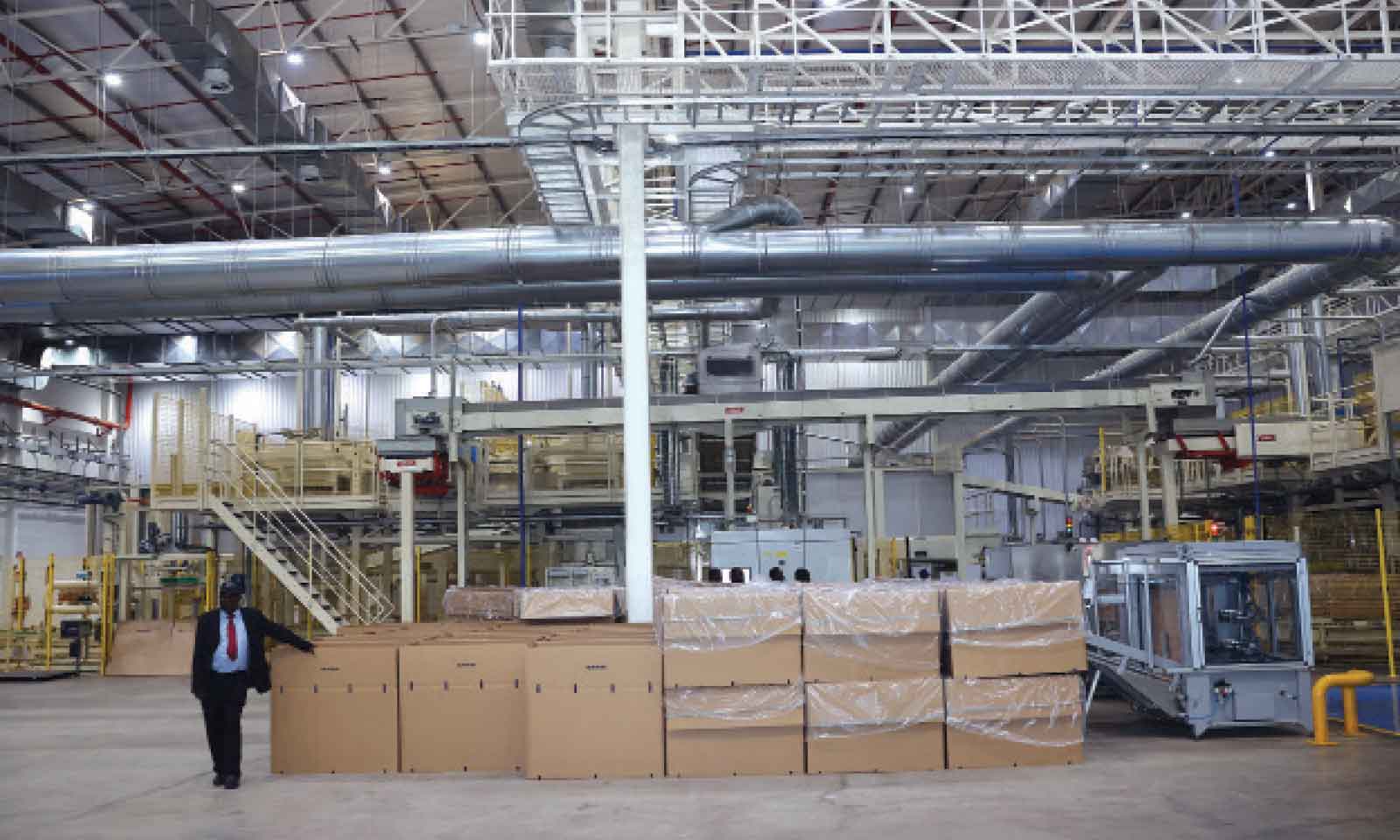
ZIMBABWE’S plans to build a solar panel manufacturing plant, which has attracted global interest, mark a shift in the country’s energy and industrialisation strategy, according to a top African solar industry report.
The thrust signals a deliberate push to attract foreign investment into renewable energy and clean technologies, while building domestic clean energy production capacity.
It reflects growing recognition among policymakers that solar panel manufacturing is not only about expanding power generation, but also strengthening national energy security.
Investment in this area would significantly reduce import dependence and embed renewable energy within Zimbabwe’s broader industrialisation drive.
This could position the country as a regional production hub, unlock regional export opportunities, create jobs, accelerate essential technical skills and support the transformation of Zimbabwe’s energy sector and manufacturing base.
The plans are spotlighted in the Africa Solar Outlook 2026, a flagship annual report by the African Solar Industry Association (AFSIA), which provides a comprehensive country-by-country assessment of solar energy development across the continent. AFSIA is the reference group for solar professionals in Africa.
The association is headquartered in Kigali, Rwanda, and carries out solar-related activities and programmes across Africa.
“Southern Africa has also shown renewed interest in domestic production. Zimbabwe announced plans to establish a local solar panel manufacturing plant as part of a broader strategy to attract foreign investment into renewable energy and clean technologies,” AFSIA said.
“While the project remains at an early stage, it reflects growing recognition among policymakers that solar panel manufacturing can support energy security, while contributing to industrialisation and export potential within the region.”
Energy experts say the move positions Zimbabwe not only as a consumer of renewable technologies, but also as a potential regional supplier.
“Local manufacturing of panels is a game-changer for Zimbabwe’s energy transition because it reduces import dependence and builds technical capacity within the country,” said renewable energy consultant Dr Monica Chirwa.
“It also sends a strong signal to investors that Zimbabwe is serious about building a green industrial base.”
Zimbabwe is seeking to reach 2 640 megawatts (MW) of renewable energy capacity by 2030, with plans to add 1 575MW of solar, 275MW of bioenergy, 150MW of small hydropower and 100MW of wind.
The strategy is anchored in expanding generation while improving access.
The country seeks to have 3,1 million households electrified and achieve 70 percent access to clean cooking by 2030.
Zimbabwe’s current electricity access rate stands at 62 percent, with sharp disparities between urban areas (at 83 percent) and rural areas (at 27 percent).
The authorities have set a target to attain universal electricity access by 2030.
“Zimbabwe’s renewable targets are ambitious, but achievable, especially if policy consistency and bankable project pipelines are maintained,” said Dr Chirwa.
“The manufacturing push complements generation projects and strengthens the entire value chain.”
Zimbabwe has vast solar potential and the Government’s policy framework supports independent power producers.
Several large-scale projects underline the country’s growing solar footprint.
For instance, Energywise is developing the 100MW Runde River solar park, while Infraco is behind the 30MW Vungu solar plant.
Prospect Lithium Zimbabwe is setting up a 70MW solar plant, Afreximbank is funding the 1GW (gigawatt) Kariba floating solar project and platinum miner Zimplats has broken ground on the second phase of its 45MW solar plant.
“Seeing mining houses and industrial players investing in solar for self-generation demonstrates strong private sector confidence in renewables.
“It reduces pressure on the grid while accelerating decarbonisation,” said Engineer Patrick Ncube, a solar systems developer.
In its outlook, AFSIA said solar deployment in Africa had been significantly underestimated for years.
“Africa has long been perceived as a marginal solar market,” said Mr John van Zuylen, CEO of AFSIA.
“The Africa Solar Outlook 2026 demonstrates that this perception no longer reflects reality. Solar is already far more widespread than previously believed and Africa is now experiencing the fastest solar growth of any region worldwide.”
The report notes that in 2025, solar energy continued its record-breaking expansion, with the world adding an estimated 544GW to 660GW of new solar capacity — the largest annual increase ever recorded.
Solar and wind together generated more electricity than the increase in global demand during the first half of 2025, while renewables surpassed coal in the global power mix for the first time.
“What is clear, however, is that solar — supported increasingly by energy storage — is reshaping power systems worldwide,” the report says.
AFSIA said by the end of 2025, it had documented more than 42 000 solar projects in Africa, representing 296 GWp of cumulative capacity, with 23,4 GWp operational — a 26 percent increase compared to 2024.
“The combined analysis produces a substantially revised picture. While 23,4 GWp of operational solar capacity has been uniquely identified in Africa, export data suggest that approximately 63,9 GWp of solar capacity has been exported across the continent,” the report notes.
“This indicates that solar may be nearly three times more prevalent in Africa than previously estimated.
“As a result, Africa’s share of global solar capacity rises from below 1 percent to around 2,5-3 percent, positioning the continent as a far more significant contributor to the global solar market than earlier narratives suggested.”
Battery energy storage systems (BESS) are emerging as a defining trend.
“Recent analysis shows that it now costs approximately US$33/MWh to convert daytime solar into fully dispatchable power using storage,” said Mr Van Zuylen.
“Combined with generation costs, this delivers 24-hour solar electricity at around US$76/MWh, already competitive and often cheaper than new fossil fuel generation, particularly in countries dependent on imported fuels.”
“Solar with storage is no longer a future concept. It is already one of the most competitive and reliable power solutions available to African economies today.”