Online Reporter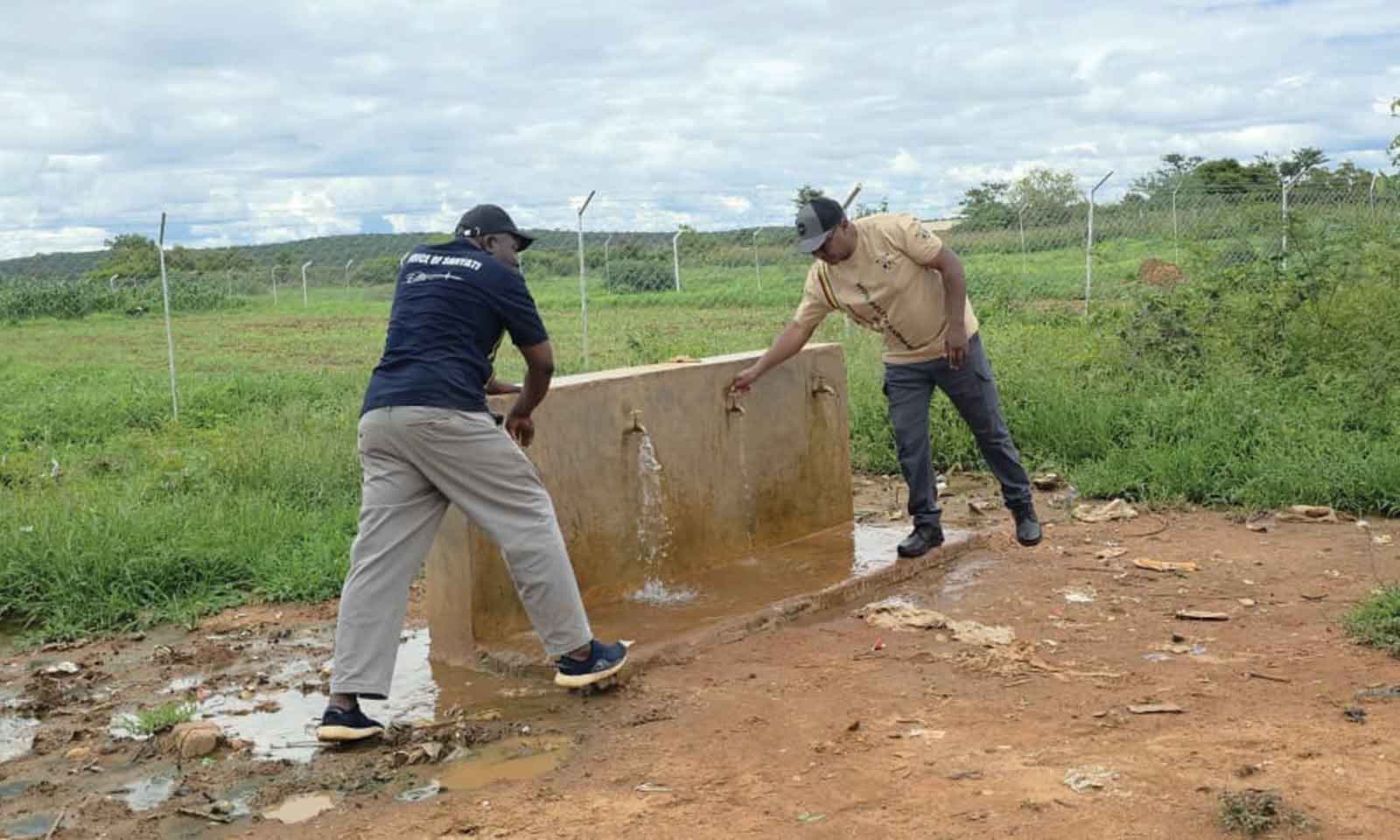
Conrad Mupesa
Mashonaland West Bureau
In the heart of Zimbabwe’s Sanyati District, the rhythm of life is no longer dictated solely by unreliable rains, but by the quiet hum of solar pumps and the communal bustle around green gardens.
Here, a transformation is unfolding, one Village Business Unit at a time.
What began as 27 solar-powered boreholes in 2025—serving nearly 2 000 families—is now poised for a major expansion. Plans are underway to launch 50 new Village Business Units (VBUs) this year, with 43 additional boreholes already drilled and awaiting solar systems.
For a region long plagued by climatic uncertainty, this represents more than infrastructure; it is a fundamental rewrite of rural possibility.
At the Kabhanga VBU, established just months ago in September 2025, the change is palpable.
Chairperson Gladys Vunganai stands surveying a thriving plot of vegetables, where maize and tomatoes grow in defiant rows against the dry-season dust.
“Before, we were spectators to the weather,” she says, her hands resting on the pipe from the solar-powered borehole. “Now, we are managers of our own food. This water has turned time itself into a resource we can use.”
Her words capture the essence of the VBUs; they are not just water points, but integrated hubs of resilience.
Each unit combines a solar-powered borehole with communal gardens and, increasingly, small aquaculture projects.
The model is designed to tackle multiple challenges at once—water scarcity, food insecurity, poverty, and rural unemployment—by turning villages into sustainable enterprises.
The journey to this point has been one of shifting mindsets as much as installing hardware.
For decades, water collection was a daily struggle, primarily shouldered by women and girls, often involving long, arduous trips to distant and sometimes contaminated sources.
Livestock losses during dry spells were common, crippling family assets.
Now, at sites like Kabhanga, the dynamic has flipped.
The VBU supports 42 members—22 women and 20 men—who work collectively.
The reliable water source enables year-round irrigation, breaking the cycle of seasonal hunger.
Surplus produce is sold locally, generating a communal income stream that is reinvested in seeds, tools, and village projects.
“We are no longer just waiting for the Government or NGOs,” said Muchineripi Matambo, a member of the Kabhanga unit.
“We are the Government and the business here. Our goal is to grow this so powerfully that our young people see a future right here, not in the cities or across the border. This is how we fight the despair that leads to drugs and idleness.”
The architect of this expansion in Sanyati is local legislator and Mines and Mining Development Minister, Dr Polite Kambamura.
For him, the VBUs are a personal and political mission.
“The story of rural Zimbabwe has too often been one of vulnerability,” he says, during a visit to one of the sites.
“We are changing the narrative. Water is the first foundation. With it, we can build food security, nutrition, and economic activity.”
Dr Kambamura’s vision extends beyond vegetables.
His mandate now includes ensuring each VBU has a fish pond.
“It’s about layering resilience,” he explains. “Protein from fish improves family nutrition and health. It also adds another valuable product to sell. We are building ecosystems, not just gardens.”
The 43 boreholes awaiting solarisation represent the next chapter.
Their completion will dramatically expand the district’s arable land and water security.
The technology is deliberately low-maintenance and sustainable, powered by the abundant Zimbabwean sun, freeing communities from fuel costs and mechanical complexity.
The impacts ripple outwards in unexpected ways.
George Gwai notes the profound health change: “The stomach aches, the skin diseases in children—they have dropped. Clean water in the home is a simple medicine.”
For women like Idah Zinyama and Taura Mbombe, the benefits are measured in time and safety.
“The solar pump is a silent worker day and night,” said Mbombe.
“It gives us hours back in our day—hours we can use to tend crops, care for family, or learn new skills. And our livestock are healthier; they don’t waste energy searching for water.”
The path is not without obstacles.
The initial investment in drilling and solar equipment is significant, and long-term sustainability depends on strong local governance and maintenance capacity.
There are also concerns about groundwater levels with increased extraction, requiring careful management.
Yet, the overwhelming sentiment in Sanyati is one of cautious optimism, forged by tangible results.
The VBUs have become more than agricultural projects; they are centres of community planning and solidarity.
As the sun sets over the Kabhanga gardens, casting long shadows from the solar panel array, Gladys Vunganai reflects on the future.
“They say we will get 50 more of these,” she says, a smile breaking across her face. “Imagine that. Our biggest problem then won’t be drought, but what to do with all our harvest.”
In Sanyati, water is flowing, and with it, a new current of hope is charting a different course for rural life—one defined not by scarcity, but by collective enterprise and growing green shoots of prosperity.