Precious Manomano-Herald Reporter
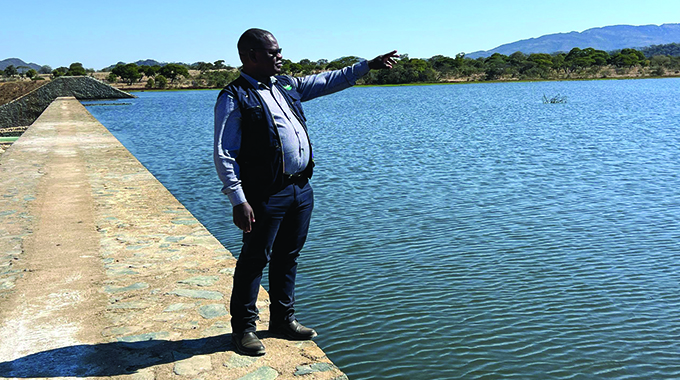
ZIMBABWE is heading into the 2026-27 summer cropping season with national dam levels averaging 82,6 percent full, providing a critical water reserve as below-normal rains are expected to affect rain-fed agriculture.
The high water levels are expected to provide a buffer for irrigation-dependent farmers and help sustain agricultural production if rainfall is inadequate.
Data from the Zimbabwe National Water Authority (ZINWA) shows that several major dams are almost full, despite high temperatures and continued water withdrawals by farmers and local authorities.
Siya Dam in the Save Catchment is at 100 percent capacity, while Tugwi-Mukosi, one of the country’s largest reservoirs, is 99 percent full.
Mtshabezi Dam is 98.4 percent full, Muzhwi 96.1 percent, Manyuchi 91.3 percent and Whitewaters 89.6 percent.
Lake Mutirikwi, which supports water supplies and irrigation in Masvingo Province, is 88,7 percent full, while Masembura stands at 88.5 percent.
Other major reservoirs with substantial reserves include Rusape at 86.8 percent, Zhovhe at 86 percent, Amapongokwe at 85.9 percent and Osborne at 83.6 percent.
The reserves are expected to provide an important cushion against the anticipated dry conditions, particularly for farmers with access to irrigation infrastructure, while also supporting livestock, urban water supplies and industrial activity.
Agriculture, Mechanisation and Water Resources Development Permanent Secretary Professor Obert Jiri said Zimbabwe needed to use its water resources to reduce dependence on increasingly unreliable rainfall.
The Government, Prof Jiri said, was accelerating the completion of major dams, including Gwayi-Shangani and Kunzvi, as part of efforts to expand irrigation and strengthen the country’s resilience to drought.
“There are 12 dams that were active in the last two or three years. Over the last two years, we have really been focusing on two major dams, which is Gwayi-Shangani Dam and Kunzvi Dam. We expect that we should be able to complete this dam at the end of 2026,” he said.
Prof Jiri said Zimbabwe had enormous potential to expand irrigation through its extensive network of water bodies, which could provide a critical alternative to rain-fed production as climate change made rainfall patterns increasingly unpredictable.
“For us to put it into perspective, we have more than 10 600 water bodies. A lot of these are actually large dams with the capacity to irrigate more than two million hectares.
“If you look at Tugwi-Mukosi Dam, it has the capacity to irrigate over 40 000 hectares, Marovanyati Dam can irrigate more than 5 000 hectares and Gwayi-Shangani Dam, which is coming up, can irrigate up to 10 000 hectares,” he said.
He said Zimbabwe needed at least 350 000 hectares under irrigation to guarantee cereal self-sufficiency and reduce the vulnerability of agricultural production to drought.
The challenge, he said, was now to ensure that water stored in dams was translated into productive economic activity.
“Constructing the dam wall is the easier part. The important thing is converting every water body into an economy that supports irrigation development, fisheries, hydropower generation, livestock production and water reticulation for surrounding communities.
“If we do that, we improve livelihoods around the dam. We develop industries around the dam and create centres of economic activity, employment and prosperity,” he said.
The current water position, however, is uneven across the country.
In the Manyame Catchment, Biri Dam is 81.1 percent full, while Manyame and Chivero are at 69.2 percent and 61.7 percent respectively.
Some reservoirs have significantly lower levels, with Mazowe Dam standing at just 11.2 percent and Harava at 17.3 percent.
In the Mzingwane Catchment, Inyankuni is 27.5 percent full and Mzingwane Dam 30.4 percent, while Upper Ncema and Lower Ncema are at 39.7 percent and 39.6 percent respectively.
Mwenje Dam in the Mazowe Catchment is 39 percent full.
ZINWA head of corporate communications and marketing Mrs Marjorie Munyonga urged farmers planning early summer irrigation to secure water abstraction agreements with the authority.
“Farmers intending to do early summer irrigation should approach their nearest ZINWA Service Centres and obtain water abstraction agreements. These agreements will allow ZINWA to reserve their irrigation water requirements in the dams,” she said.
The agreements also allow ZINWA to plan and allocate available water among competing users, including farmers, local authorities and other economic activities.
Mrs Munyonga warned that abstracting water from ZINWA-managed dams without the necessary documentation was an offence under the Water Act.
ZINWA urged farmers, local authorities and other users to conserve water, saying prudent management would be critical in ensuring that the country’s reserves remained adequate throughout the dry season.