admin
admin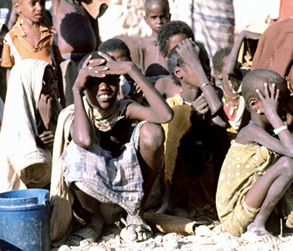
International Committee of the Red Cross said yesterday.
Malnutrition rates were believed to be significantly higher in other conflict-torn parts of central and southern Somalia, where few aid groups have been allowed to bring food relief.
“Levels of malnutrition have reached a new peak and are currently the highest in the world,” the ICRC said in a statement.
The independent aid agency, one of very few with access to Somalia’s worst-hit areas, said that even in the Bay and Lower Shabelle regions, the traditional breadbaskets, nearly 11 percent of children under five had severe acute malnutrition.
This meant they were at risk of starving to death. Rates were believed to be significantly higher in other areas.
“In some parts of Somalia, the number of children with severe acute malnutrition has almost doubled since March.”
The disturbing findings were based on data from 39 clinics and 18 therapeutic feeding centres run by the Somali Red Crescent with its support. The ICRC said it was opening 10 new feeding centres in Bakool, Gedo and the Afgoye corridor.
The United Nations said on Tuesday it was struggling to keep up with an exodus of hungry Somali refugees.
Emaciated children were dying of malnutrition along the way or after arriving in neighbouring Kenya and Ethiopia, it said.
More than 11 million people in the Horn of Africa now need assistance to survive the crisis sparked by the worst drought in decades, UN Secretary-General Ban Ki-moon said.
Somalia has had no effective central government for two decades, worsening the impact of recurring droughts. Islamist al Shabaab rebels have refused to allow food aid to be delivered in areas under their control, saying it encourages dependency.
The world body is looking into security guarantees to return to southern Somalia following an unexpected announcement by al Shabaab last week that it was lifting its ban.
The World Food Programme (WFP), in a statement yesterday said it could return to the south “if conditions allow and if the necessary security clearance from the United Nations is granted”.
The UN food agency withdrew from areas under al Shabaab control in southern Somalia in early 2010 “because of threats to the lives of our staff and the imposition of unacceptable operating conditions, including the imposition of informal taxes and a demand that no female staff work for us there”, WFP said.
The WFP said it had continued to provide food to 1,5 million people in Mogadishu and central and northern Somalia.
In the south, the hardest hit groups are rain-fed farmers and pastoralists unable to gain access to alternative pastureland, Andrea Heath, the ICRC economic-security coordinator for Somalia, said.
“Significant crop failures, very high livestock losses, increased food prices, recurrent fighting and the absence of humanitarian aid are the main reasons that an already desperate situation has become even worse,” she said in the statement. – Reuters.



 Online Reporter