admin
admin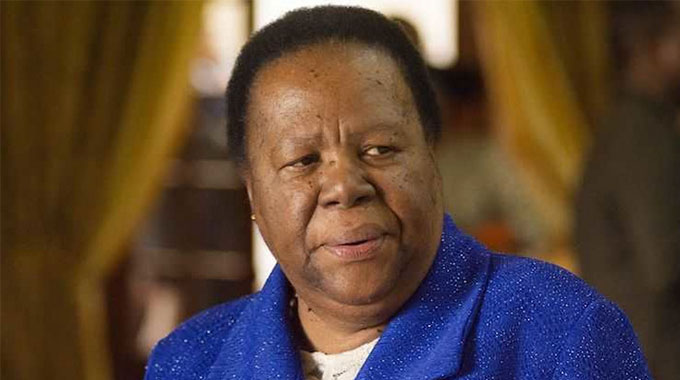
South Africa has temporarily closed its embassy in Nigeria following violence against South African businesses in reprisal for attacks on foreign-owned stores in Johannesburg, while Nigeria has announced plans to evacuate its nationals from South Africa.
South African Foreign Affairs Minister Naledi Pandor said yesterday that the embassy was closed temporarily after threats led to fears for staff safety.
“There is Afrophobia we are sensing that exists, there is resentment and we need to address that,” Pandor told Reuters news agency.
Foreign ministry spokesman, Lunga Ngqengelele, confirmed that the diplomatic missions in the Nigerian cities of Lagos and Abuja have been closed since Wednesday.
The announcement, which signals worsening diplomatic relations between the two African countries, comes after Nigeria introduced plans to evacuate its nationals from South Africa following a wave of attacks on foreigners, including Nigerians. The Nigerian foreign ministry said Air Peace, a commercial airline, had offered to send an aircraft on Friday to evacuate nationals who were willing to return, “free of charge”.
“The general public is hereby advised to inform their relatives in South Africa to take advantage of this laudable gesture,” Nigerian foreign ministry spokesman Ferdinand Nwonye said on Wednesday.
“Interested Nigerians are therefore advised to liaise with the High Commission of Nigeria in Pretoria and the Consulate General of Nigeria in Johannesburg for further necessary arrangement.”
The statement was made after Foreign Minister Geoffrey Onyeama said Nigeria would not cave to Pretoria. “The South African government has to assume its responsibilities and protect Nigerians in South Africa and we have to hold them to account and they have to do that as well as pay full compensation,” he said.
It also came a day after Nigeria pulled out of the World Economic Forum (WEF) gathering in Cape Town, South Africa, casting a cloud over initiatives to boost intra-African trade. Nigeria also recalled its High Commissioner to South Africa, Ambassador Kabiru Bala.
A presidential source told the News Agency of Nigeria (NAN) that Nigeria also demanded full compensation for the loss of life and property of Nigerians affected by the attacks.
Rioting in South Africa has killed at least five people in Johannnesburg and Pretoria in recent days.
Police in the country has yet to pinpoint what triggered the violence, which began on Sunday, when protesters armed with makeshift weapons roamed the streets of Pretoria’s business district, pelting shops with rocks and petrol bombs and running off with goods.
Authorities have made almost 300 arrests, while people across the continent have protested and voiced their anger on social media.
Meanwhile, Nigeria has pulled out of an African economic summit in South Africa, intensifying a diplomatic row after a series of deadly attacks on foreigners, including Nigerians, in South African cities.
The withdrawal of Nigerian Vice President Yemi Osinbajo from the World Economic Forum (WEF) gathering in Cape Town cast a cloud over initiatives to boost intra-African trade. He was scheduled to address a panel on universal energy access on Thursday.
The rioting has killed at least five people in Johannesburg and Pretoria in recent days.
On Wednesday, South African companies MTN and Shoprite closed stores in Nigeria after retaliatory attacks on their businesses.
“I lost millions of naira,” said Jadesola, a boutique owner at Surulere mall that also houses a Shoprite outlet in the commercial capital, Lagos. “Everything I have is invested there. All my sweat.”
The political repercussions of the violence also continued to unfold. “Clearly with this climate, he [Osinbajo] and Mr President have agreed that he should not go [to WEF],” Nigerian Foreign Minister Geoffrey Onyeama told a news briefing.
Summit organisers confirmed Osinbajo would not attend the three-day summit, which started on Wednesday.
South African President Cyril Ramaphosa, on a charm offensive to attract $100bn of new investment, tried to limit fallout from the violence, which has rekindled memories of previous deadly attacks on foreigners that also led to reprisals on South African businesses abroad.
Ramaphosa said on Wednesday that South Africans should never take justice into their own hands against people from other countries.
λ Rwandan President Paul Kagame and Malawi’s Peter Mutharika also pulled out of the Cape Town conference, but their governments did not give an official reason for their no-show.
WEF spokesman Oliver Cann said Kagame and Mutharika had informed conference organisers by Saturday — before the attacks had started — that they could not attend. South Africa’s Department of International Relations and Cooperation, commenting before Nigeria announced Osinbajo’s withdrawal, said the attendance was “satisfactory”.
Police in South Africa have yet to pinpoint what triggered the violence, which began on Sunday when protesters armed with makeshift weapons roamed the streets of Pretoria’s business district, pelting shops with rocks and petrol bombs, and running off with goods.– AFP


 Online Reporter