Gibson Mhaka, Zimpapers Politics Hub
ZIMBABWE and the wider African continent should aggressively leapfrog traditional developmental hurdles by adopting advanced Russian artificial intelligence (AI) technologies and embedding them within higher education institutions to achieve digital sovereignty, fortify cybersecurity, and accelerate economic transformation.
This strategic thrust formed the bedrock of President Mnangagwa’s engagements at the landmark Third Russia-Africa Summit and Russia-Africa Economic and Humanitarian Forum held recently in Moscow, where the continent’s leadership recalibrated its geopolitical and economic ties with the Russian Federation.
The high-level gathering, held under the overarching theme, “For Peace, Security and Development,” drew participation from 48 African nations, including 20 Heads of State and Government. It culminated in key outcomes, notably the Declaration of Cooperation on Artificial Intelligence Technologies and the Russia-Africa Partnership Forum Action Plan for 2027–2029.
Speaking upon his return, President Mnangagwa expressed satisfaction with the outcome of the diplomatic mission.
Besides holding a bilateral meeting with Russian President Vladimir Putin to deepen historical ties, President Mnangagwa, who attended the summit in his dual capacity as Head of State and
Chairperson of the Common Market for Eastern and Southern Africa (COMESA), advocated for practical, technology-driven cooperation between Russia and Africa.
Addressing the plenary assembly, President Mnangagwa urged African nations to leverage their youthful population, fast-growing markets, and vast natural resources alongside Russia’s industrial trajectory and cutting-edge digital expertise to drive domestic industrialisation.
“The complementary strengths of our cooperation should scale up Africa’s industrialisation, technology sharing, innovative skills development, sustainable economic development and transformative impacts to the daily lives of our people,” said President Mnangagwa.
Focusing on the rapidly evolving digital landscape, the President noted that Russia’s technological strides in AI and cyber defence present an invaluable opportunity for African universities, research centres, and corporate entities.
He stressed that adopting these advanced systems would build local research capacity and safeguard critical national assets.
President Mnangagwa’s call aligns with Zimbabwe’s Education 5.0 doctrine, which emphasises research, innovation, and industrialisation. Integrating Russian AI tools into African tertiary curricula will equip young scientists with specialised skills in coding, data science, machine learning, and automated threat detection, transitioning universities from theoretical centres into industrial incubators.
During the summit, President Putin reiterated Russia’s readiness to assist African countries in casting off economic reliance on traditional Western frameworks, emphasising that true sovereignty requires technical independence.
“Africa needs solutions that will allow it to manage its resources at its own discretion, direct them toward its urgent needs and requirements, and accumulate significant capital and long-term investment in energy, industry, transport, and logistics.
“This would help to finally cast off the shackles of the colonial legacy and ensure the political, social, and economic stability of African nations, as well as genuine national sovereignty in all its manifestations,” stated President Putin.
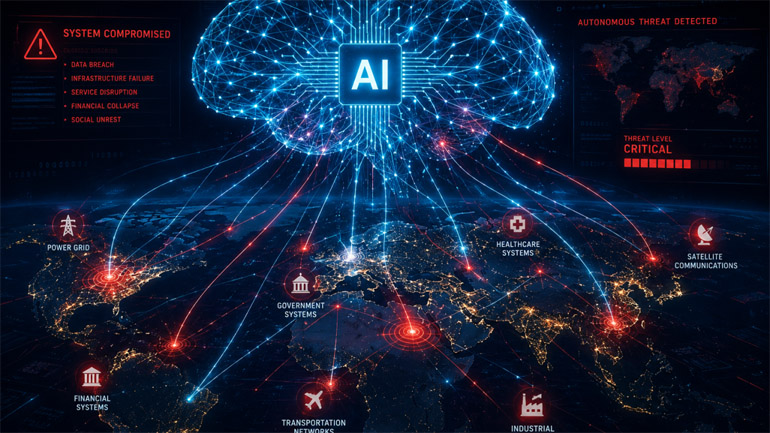
The imperative for robust technological cooperation is underscored by the escalating complexity of global cyber threats. Information infrastructure experts at the summit highlighted that modern cyberattacks have transitioned from simple service disruptions to sophisticated operations targeted at destabilising core state and commercial systems.
Advisor to the President of the Russian Federation, Mr Anton Kobyakov, observed that the proliferation of commercial AI applications has lowered the barrier to entry for malicious actors, amplifying risks for national infrastructure and international events.
“We are witnessing a fundamental change in the nature of cyberthreats. In the past, the main goal of threat actors was to disable information resources, while today, attacks are increasingly aimed at destroying the systems themselves, interfering with their operation, and exploiting technological vulnerabilities.
“The increased use of AI is making the situation even more complex: tools that once required substantial expertise to use are now available to almost anyone,” Mr Kobyakov highlighted.
In response, defence frameworks are shifting toward automated anomaly detection and adaptive machine-learning models.
For Zimbabwe and the COMESA region, importing and co-developing these AI-driven security tools will ensure national payment systems, public administration networks, and power grids remain resilient against external disruption.
Chairman of the board and chief executive officer of the Roscongress Foundation, Mr Alexander Stuglev, emphasised that digital security is inextricably linked to economic development.
“The use of AI for criminal purposes raises the stakes; cybersecurity extends far beyond technical measures for events and is directly linked to the resilience of international communications and business growth,” Mr Stuglev noted.
Foreign Affairs and International Trade Minister, Professor Amon Murwira, confirmed that President Mnangagwa’s engagements laid a solid foundation for translating political goodwill into measurable economic and technical achievements.
“It is commendable that His Excellency the President, Dr Mnangagwa, undertook this visit to the Russian Federation in his capacity as President of the Republic of Zimbabwe and as Chairperson of COMESA.
“The whole idea is to strengthen the working relationship between the Russian Federation and Africa, and specifically between the Russian Federation and Zimbabwe,” Prof Murwira said.
He added that Zimbabwean institutions are structured to follow up on the 146 intergovernmental and institutional agreements signed during the forum, covering trade, energy, geology, transport, agriculture, and academic exchange.
“Most importantly, to ensure that the long-term friendship between Africa and the Russian Federation is translated into economic gains and improved livelihoods for the people of the Russian
Federation and the people of Africa, particularly Zimbabwe,” said Prof Murwira.
As Zimbabwe pursues Vision 2030, the adoption of advanced Russian AI and digital tools across tertiary institutions offers a viable pathway to build high-tech capacity, defend national infrastructure, and foster sustainable, self-reliant industrial development.