admin
admin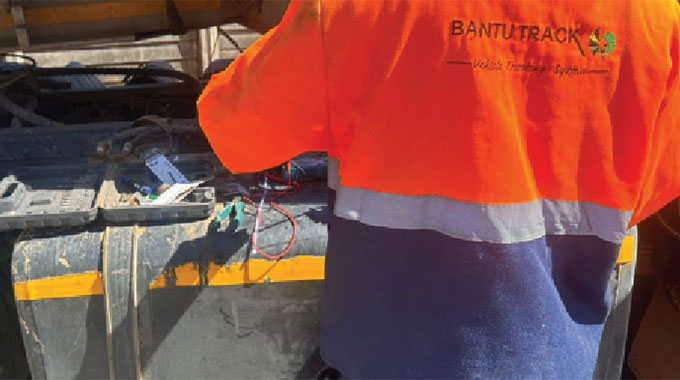
Kudakwashe Mugari
Deputy News Editor
In response to the increase in road accidents in the country, the Government has made it mandatory for all public service vehicles, including buses, to be fitted with speed limiters and monitoring devices, as specified in Statutory Instrument 118 of 2023.
The legislation aims to reduce accidents by capping the maximum speed of buses at 100km/h on open roads.
Law enforcement authorities have arrested more than 700 truck and bus drivers for speeding and flouting road regulations since the statutory instrument came into force on January 1 this year.
To facilitate effective monitoring, bus operators and the police established a dedicated monitoring centre at Harare Central Police Station.
These robust enforcement measures, coupled with the intensified road safety awareness campaigns by the Traffic Safety Council of Zimbabwe (TSCZ), help in creating a safer road environment that prioritises the preservation of human life.
The speed tracking centre enables authorities to closely monitor the adherence of bus operators to the prescribed speed limits.
TSCZ has since intensified road safety awareness campaigns to educate the public on the need to preserve the sanctity of human life by following traffic rules.
The legislation has two different requirements: speed limiting and monitoring using on board computers.
Speed limiting
The devices only limit the maximum speed of heavy vehicles and buses.
This maximum speed is 80km/h for heavy vehicles and 100km/h for buses, .
Speed monitoring
There are many advantages presented by these devices as they also monitor driver behaviour, vehicle movement, real time location, route diversion and engine running time. Another advantage is that the devices also monitors fuel usage.
They also vary in functionality.
There are different types of monitors, from simple entry level to high-end sophisticated devices.
The entry level devices monitor the exact location of the vehicle without additional reporting and analysis.
The beauty of these devices is that they do not only enable one to monitor the fleet, but also help to manage costs and save lives.
These systems have now been adopted by stakeholders such as vehicle owners, Government and the general public.
Can we ever be able to put a cost on human life?
Many accidents have been attributed to speeding and reckless driving.
Driving too fast in dangerous areas such as escarpments, under adverse weather conditions and failing to observe road rules can result in serious accidents.
Loss of life robs the country of the much needed talent, bread winners and economically active people just to mention a few. But saving lives is linked to cost cuts.
The better the vehicle is driven, the less the running cost. Zimbabwe does not manufacture vehicles, spares or tyres, which are imported and cost the country a lot of foreign currency. The major vehicle running cost is fuel (up to 30 percent), followed tyres and wages.
Through implementation of the speed limiting and monitoring devices, drivers do not only save lives, but reduce operating costs substantially — far outweighing the initial cost of the monitoring device.
Moreover, bad driving practices such as over revving damage the engine and reduce its lifespan.
Excessive idling is a major cause for concern for any fleet manager. Vehicles that are left idling for too long waste fuel and damage the engine.
Other common examples of bad driving include harsh breaking which damages the vehicle and tyres, while bad acceleration strains the drive line on take-off, damaging differentials, the drive and prop shafts.
Driver training is a continuous process that aims to improve the skills and safety of drivers.
By monitoring driver behaviour, such as speed, acceleration, braking and other metrics, potential dangers can be identified and addressed through training.
Some monitoring devices can even assign a performance score that reflects the driver’s overall performance.
This score can be used to incentivise safe and efficient driving behaviour.
The benefits of driver training are not only limited to the safety of drivers and other road users, but also extend to the economic and environmental aspects of transportation.
In addition to monitoring driver performance, some devices feature a buzzer that sounds an alarm when a driver exceeds preset parameters such as speed limits or over-revving.
The warning persists until the driver adjusts his behaviour to comply with the limits, thus eliminating the possibility of claiming ignorance of their unsafe behaviour.
This alarm system provides a real time feedback loop that can encourage and promote safer driving habits.
Aside from the obvious safety benefits of driving in compliance with limits, improved driving can also translate into significant cost savings for the fleet owner.
Driving a vehicle correctly has several advantages. By not straining the engine, one will save on fuel costs and extend the life of parts by up to two years on some vehicles.
The reduced stress on the tyres results in less damage and a longer lifespan, translating to fewer replacements over time.
Additionally, by reducing accidents and lowering repairs and maintenance, a driver can save on costly spares.
Economical driving not only saves lives, but also money. The Government and the Standards Association of Zimbabwe have taken a giant step in improving road safety by approving 35 companies to install speed limiters on public vehicles.
The companies, which include GABE Remote Asset Management, Ezytrack, Sendem Technologies, and Guard Alert Technologies, have been chosen for their expertise and technological capabilities in delivering solutions for both the country and the public transport sector.
GABE Remote Asset Management, a locally founded telemetry technology company is one of the key players in this initiative.
Telemetry is the automatic measurement and wireless transmission of data from remote sources.
Telemetry data can be used to monitor the health and performance of systems, identify problems and make decisions about how to improve performance. For example, it can be used to monitor the fuel efficiency of a fleet of vehicles, the performance of a manufacturing plant, or the health of a patient in a hospital.
To combat the rising levels of road carnage, it is critical that all stakeholders work together to enforce road safety measures.
Vehicle owners must comply with the new regulations, while the police, the Vehicle Inspectorate Department (VID) and TSCZ should ensure that these regulations are adhered to.
The public, too, has an important role to play by reporting errant drivers.
The root cause of many accidents can be attributed to dangerous driving behaviour, such as speeding, overloading, and disregard for traffic laws.
Feedback: [email protected]. Contact: 0774129976



 Online Reporter