Online Reporter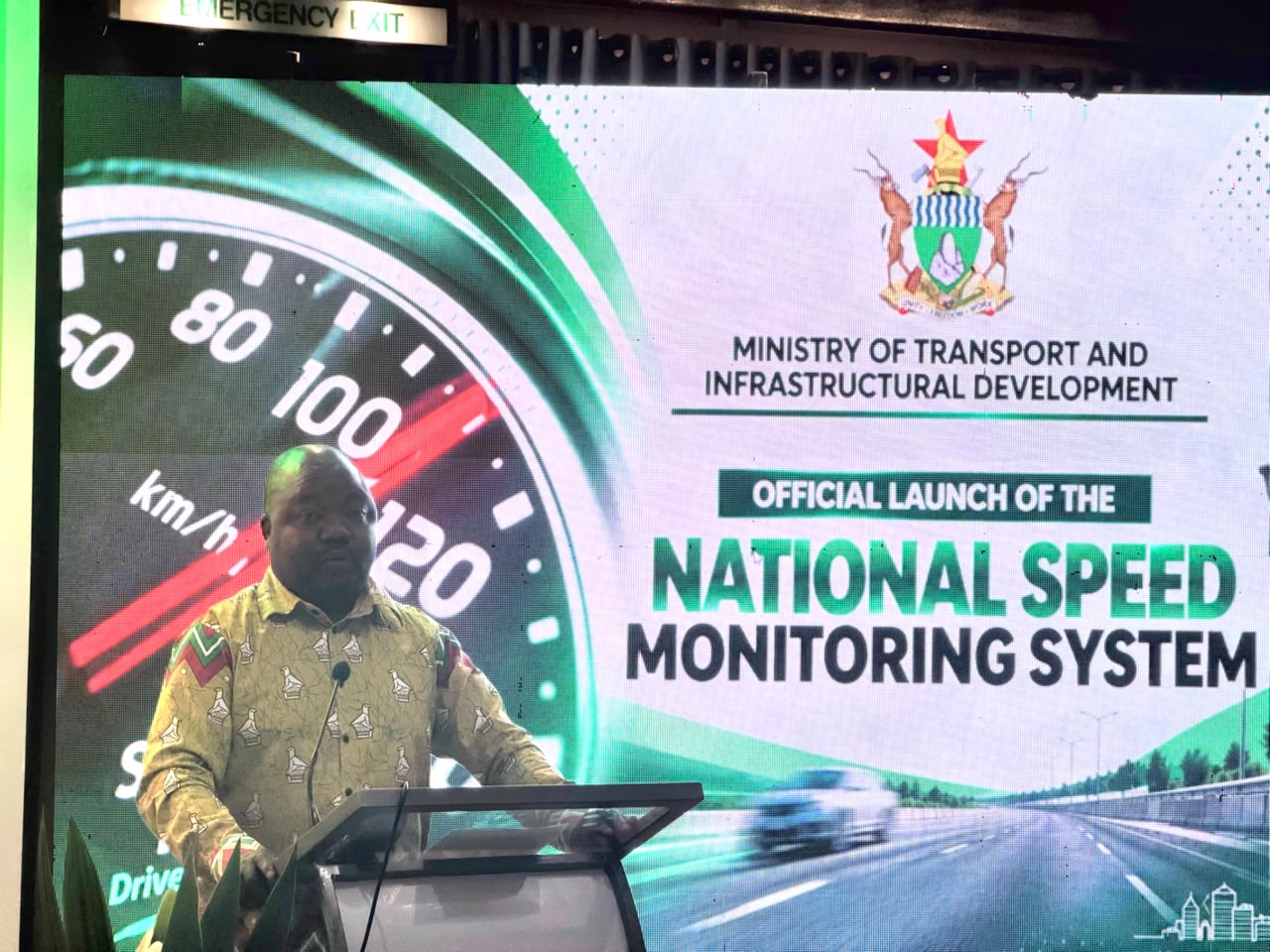
Mthabisi Tshuma [email protected]
THE launch of the National Speed Monitoring System (NSMS) is part of Government’s drive to build a digital economy by using artificial intelligence and other emerging technologies to improve road safety and service delivery, Deputy Minister of Information Communication Technology, Postal and Courier Services Dingumuzi Phuti has said.
Speaking at the launch of the NSMS in Harare on Wednesday, Deputy Minister Phuti said the system, which uses technologies including Automatic Number Plate Recognition (ANPR), speed monitoring and red-light violation detection, demonstrated how digital solutions could be deployed in critical sectors.
“By deploying AI-powered systems capable of Automatic Number Plate Recognition (ANPR), speed monitoring and red-light violation detection, we are not just improving enforcement but we are creating an enabling environment for economic activity. Road traffic accidents cost Zimbabwe approximately 3% of GDP annually. By reducing these incidents, we are protecting our economy, reducing the cost of doing business, and boosting investor confidence,” he said.
Deputy Minister Phuti said the system was aligned with the country’s broader digital transformation strategy, including the National ICT Policy, National Broadband Plan and Smart Zimbabwe 2030 Masterplan.
He said Zimbabwe had recorded a mobile penetration rate of more than 108 percent and internet penetration of more than 87 percent.
“These statistics are not mere numbers; they represent the foundation upon which we are building a digitally enabled economy that can compete on the global stage,” said Deputy Minister Phuti.
He said the NSMS also demonstrated the benefits of collaboration between Government ministries.
“This intervention is a direct response to the call by His Excellency, President Dr. E.D. Mnangagwa, to embrace a Whole-of-Government approach in all our developmental endeavours. The days of working in silos are behind us. The NSMS is a product of collaboration between the Ministry of Transport and Infrastructural Development, the Ministry of Home Affairs, and my Ministry, working in concert to address a shared national challenge,” he said.
Deputy Minister Phuti said the system formed part of Government’s wider digital transformation agenda aimed at improving service delivery, enhancing transparency and saving lives.
He said it was also aligned with the National Development Strategy 2 (NDS2) and Government’s objective of reducing road fatalities by 25 percent by 2030.
The Deputy Minister said the NSMS was also a practical application of the Zimbabwe National Artificial Intelligence Strategy (2026–2030), launched by President Mnangagwa earlier this year.
“This Strategy, structured around six key pillars including among others AI Adoption and Service Transformation, provides the blueprint for integrating AI into critical sectors such as transport and logistics. The systems deployed here today, utilising radar and optical tracking technologies operating both day and night, are a testament to our commitment to embracing emerging technologies for the public good,” he said.
He said Government was also prioritising the identification of high-potential innovations for pilot implementation in strategic sectors, alongside strengthening ethical standards, cybersecurity and data governance.
“The NSMS is a shining example of how we are translating the vision of our AI Strategy into tangible, life-saving action,” said Deputy Minister Phuti.
He said the ultimate measure of the country’s digital transformation agenda would be its impact on ordinary citizens.
“Our vision is to build a digitally empowered, knowledge-based society through universal access, innovation, and digital transformation. We are acutely aware that connectivity and digital services must not be a luxury for the few, but a necessity for all,” said Deputy Minister Phuti.
Follow on X: @mthabisi_mthire