admin
admin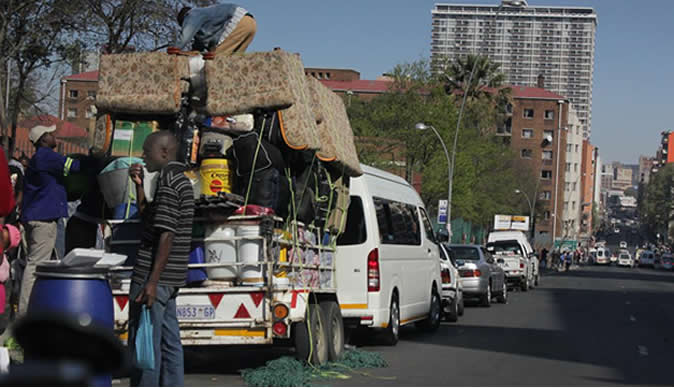
Ngonidzashe Chiutsi
THE paltry contribution by African countries to world trade is worrying considering that the world is fast becoming a global village. According to a recent report by the World Trade Organisation, intra-trade among African countries stood at 10 percent last year.During the same period, the level of intra-trade among African countries compares unfavourably with other regions of the world.
Last year, intra-trade among the European Union-27 was around 70 percent, 52 percent for Asian countries, 50 percent for North American countries and 26 percent for South American countries.
Although efforts are currently being made to resolve the challenge by integrating economies into a single, strong, robust, diversified and resilient one, experts say the process should be sped up otherwise the economies risk collapse.
South Africa’s director of export promotion, Julius Nyalunga, said fragmented African economies resulted in poor performance in world trade.
He said African economies were contributing a paltry percentage to the world market due to failure to fully integrate.
“The economies in Africa are small and fragmented and because of that, they’re only contributing three percent to world trade. The key issue is that economic growth and development in the region must be done through investment in infrastructure development and intra-Africa trade,” said Nyalunga.
He said African economies had potential to grow through economic integration.Nyalunga challenged African industries to diversify products and enhance economic growth.He said African countries should promote sectors in which they are competent.
“We should look at the sectors that we’re competent in and in which we’re able to compete globally and support them so that we can grow our economies,” said Nyalunga.
International trade expert James Jowa said in light of regional integration efforts being spearheaded by the Common Market for Eastern and Southern Africa (Comesa), member states should be more innovative and produce quality and affordable products that could compete with others on the international market.
“Comesa member states like Zimbabwe have to be innovative, bring in new methods of production in light of increasing competition due to the opening up of trade across borders. For example, by 2020 more than 80 percent of Zimbabwean products will be open to competition from products coming from the European Union within the Comesa region,” said Jowa.
“So it means we’ve to be productive enough to withstand that kind of competition, otherwise Zimbabwe will remain a consumer market without its own industry. And this obviously has a strong bearing on the ability of the country to create sustainable jobs and employment.”
Experts say Africa’s trade is overly dependent on a narrow range of primary products.
A senior lecturer at the University of Zimbabwe’s economics department Albert Makochekanwa said local companies should invest in technology and produce goods that will be able to withstand competition on the global market.
“Companies within Comesa member states should ensure that they produce quality and affordable goods that can compete with others on world markets,” said Makochekanwa.
He said due to globalisation, goods could now move freely across borders, leading to intense competition.
“Local companies should reduce the cost of business and ensure that customers get goods and services at affordable prices,” said Makochekanwa.
The senior lecturer said regional integration was important for the African continent to generate high rates of economic growth and development.
The continent has not fully integrated and currently has poor hard and soft infrastructure.
The delay in totally removing the material and immaterial barriers to trade remains a critical bottleneck for regional integration.
A recent visit to Zimbabwe’s Beitbridge Border post gave a classic example of why economic integration was necessary in order to ensure barriers to trade were reduced or eliminated.
Beitbridge Border Post, the busiest inland port in Southern Africa, is characterised by long queues which have seriously affected the flow of business.
The port links Zimbabwe to many traders from Zambia, Malawi, the Democratic Republic of Congo and many others with South Africa.
According to official reports, the border post handles about 9,000 travellers from across the region into South Africa in a single day.
The figure sometimes soars up to over 25,000 during holidays.
Tourism players have repeatedly called on government to resolve the problem of congestion at the border post arguing it was a “death penalty” to the tourism industry.
In 2012, a Zimbabwe-South Africa Joint Commission also expressed concern at the high level of congestion at the Beitbridge Border Post.
It met with several government ministries and departments, calling for the establishment of a one stop border post to facilitate the quick flow of trade not only between the two countries but on the continent as a whole.
According to the African Development Bank, delays, congestion and inefficient service delivery experienced at the Beitbridge Border Post are costly in terms of waiting time with transaction costs ranging between $29,3 million and $35 million a year.
The costs are limiting the prospects for intra-regional trade expansion.
The holdups at border posts significantly constrain not only Zimbabwe’s trade but reduce the region’s competitiveness both within the region and globally. The situation is reportedly hampering the region’s socio-economic advancement.
Zimbabwe introduced the one-stop border concept at Chirundu, a border post shared with Zambia that has created many benefits such as reduced supply chain transaction costs, increased Government revenues and reduced duplication of efforts.
The one-stop border has brought down transit time from about seven days to less than a day.
Recently, President Robert Mugabe emphasised the “indispensability of regional integration” to achieve “balanced development” between landlocked and transit countries.
Speaking in Austria at a United Nations conference on Landlocked Developing Countries, President Mugabe, who is also the Sadc chairman and AU deputy chairman, said regional integration was indispensable for land locked countries like Zimbabwe in order to reduce the cost of trade.
“This special geographic circumstance, however, heightens our countries’ consciousness of the indispensability of regional integration and cooperation for survival and progress,” said President Mugabe.



 Online Reporter