admin
admin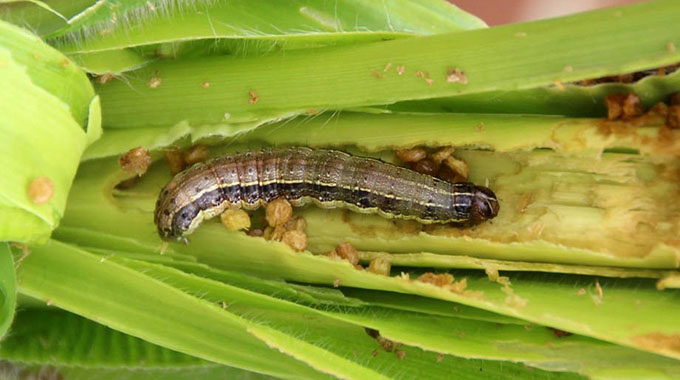
Sifelani Tsiko-Agric Editor
Outbreaks of the native African armyworm (Spodoptera exempta) have been reported in Muzarabani in the northern part of the country, but quick intervention by the Plant Protection Research Institute has helped to reduce damage to maize and sorghum crops.
The Government’s chief entomologist Mr Shingirai Nyamutukwa told The Herald yesterday that they had detected smaller outbreaks of the African armyworm in the Dambakurima and Machaya wards in Muzarabani district.
“The African armyworm was detected on January 24 and we quickly moved in and provided chemicals to control the pests. The situation is under control and not much hectarage was affected,” he said.
“Less than 10 hectares of both maize and sorghum crops were affected including three hectares of pastures.”
Mr Nyamutukwa said the smaller outbreaks were not of the new invasive species called the Fall armyworm (Spodoptera frugiperda) which was now endemic across the world where it was causing considerable damage to maize and other crops.
However, he said Zimbabwe, including other southern African mainland countries, remained at high risk of an armyworm outbreak that could threaten the 2021-2022 harvest if no control mechanism were put in place.
In 2020 and 2021, Zimbabwe, Botswana, Namibia and Zambia experienced outbreaks of locusts that were controlled.
Heavy rains in the 2020-2021 period and in the current cropping season have created conducive conditions for swarms and moths to breed in these countries forcing plant protection agencies to take steps to control any outbreaks.
“We have placed traps in various parts of the country to help detect moths and swarms of locusts and other pests such as the armyworm. We are receiving high numbers of moths in Murombedzi, Magunje and parts of Midlands,” Mr Nyamutukwa said.
“Farmers in these areas should be on the lookout. They should scout for the African armyworm.
“If they notice velvet black caterpillars that feed on maize, sorghum, millets and crops including pasture, they should notify us or report to the nearest Agritex office.”
Locust populations, he said, were still low and were not a big threat at present.
“We have detected smaller outbreaks of the elegant grasshoppers in Mwenezi district. We also dispatched teams to control the outbreaks. Again not much damage was reported,” said the head of the Plant Protection Research Institute.
“We are urging farmers to also report outbreaks of quelea birds which can attack sorghum and millet crops reaching maturity.
“The birds are breeding and farmers should also notify us, Agritex or the ZimParks.”
Locusts, a combination of the African armyworm and fall armyworm, quelea birds and other pests can easily reduce yields for the affected communities, despite most other parts expecting a bumper crop this season.
The coming days in the last few weeks of the second half of the cropping season will be crucial as crops reach the maturity stage and risks of fresh outbreaks of the pests widen.



 Online Reporter