admin
admin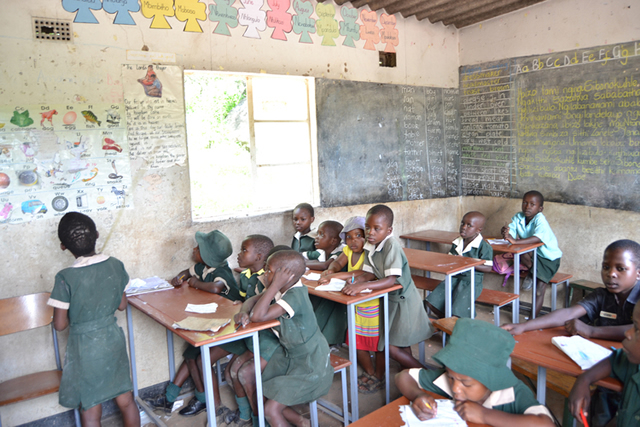

Factmore Dzobo
Mpofini and Emboqane primary schools are a tale of two schools with one ending.
More than a 100km separate the two schools, one in Matabeleland South and the other in Bulawayo Metropolitan province, but this year, shame has brought them together after registering a zero percent pass rate in the Grade Seven public examinations.
Tucked deep in a thick forest of indigenous trees and overgrown grass, are three seemingly deserted thatched huts.
However, as one approaches the huts, one hears a clatter of children’s animated voices. Welcome to Mpofini Primary School in Umzingwane district of Matabeleland South province.
The school has been consistently recording zero percent pass rate since its establishment in 2001.
Last year, the school had seven Grade Seven pupils who wrote their examinations and again, all of them failed.
The school, located in a resettlement area, is an annex of Sikhoveni Primary School.
With the dilapidated infrastructure, Mpofini has an enrolment of 120 pupils from grade 0 up to Seven and is a feeder school to secondary schools in Umzingwane district.
The failure rate at the school according to one of the teachers, is due to a shortage of teachers. She said most of the classes have between 25 and 35 pupils. The classrooms are inadequately equipped and too small to hold three classes at the same time.
“One teacher is responsible for three different grades and all the pupils are accommodated in one classroom. There’s a serious shortage of teachers as there are only three of us who are qualified yet the school has an enrolment of about 120 pupils,” said the teacher who refused to be named.
She said it was difficult for children to excel under such a learning environment. She said teaching compound classes was cumbersome and demanded a lot of time.
“A teacher is expected to scheme for three different grades for almost five different subjects. It gives them too much pressure and this compromises the quality of education. If one teacher goes to a workshop, children are left on their own,” she said.
The School Development Committee (SDC) chairperson, Edmore Maphosa, blamed district education officers whom he said continued to deploy non-Ndebele speaking teachers at primary schools in the area.
“We can’t blame children for their poor performance but District Education Officers (DEOs) who continue to deploy non-Ndebele speaking teachers to teach our children using a second language (English) in most subjects should take the blame. Children at their early childhood stage can’t be taught in English throughout; they need at times to be taught in their mother language (IsiNdebele) for them to understand better some of the concepts,” said Maphosa.
He also noted the absence of parental guidance as one of the problems affecting children’s performance.
“Most of the children in the communities were left under the custody of their grandmothers and grandfathers who might not be able to encourage them to go to school. If children decide to play truant, some of the grandparents might not be able to discipline them,” said Maphosa.
Sifanele Sibanda, a parent, said many of the children walked long distances to schools hence their poor performance.
“The long distance travelled by some pupils to school affects their learning. The school’s sphere of influence is too distant and most of the communities served by the school are more than 10km away. Some pupils walk for more than 15km to school and because of economic hardships, young children can’t walk such a long distance hungry. Usually during the rainy season the plight worsens as there will not be adequate shelter to protect the pupils at school,” said Sibanda.
A parent from Ward 17, Laina Moyo blamed shortage of classrooms which she said did not provide a conducive learning environment.
She said the Rural District Council and donors promised to build proper classroom blocks and provide enough resources some years back but nothing materialised.
“The former governor Cde Angeline Masuku promised to push for the construction of more classrooms and donors promised to provide other resources and we’re still waiting,” she said.
Emboqane Primary School in Umguza district but under Bulawayo Metropolitan province has better infrastructure than Mpofini. The school has properly built classroom blocks.
However, all pupils who wrote Grade Seven examinations last year failed and the school came last at 120 on the provincial ranking list.
Mbongeni Khumalo, a Grade Seven pupil at the school, said long distances, hunger and shortage of textbooks were the major issues affecting their learning.
“Due to long distance we travel to and from school, we don’t have enough time to study because we leave home at 5am and walk a journey of about 10km to school and at times without eating anything,” he said.
Vulindlela Ncube, a member of the School Development Committee (SDC) for both Emboqane primary and secondary schools, blamed deployment of non-Ndebele speaking teachers in the province.
“The major problem for the poor performance of pupils is the issue of non-Ndebele speaking teachers. At one time my child came from school and told me that her teacher always misspells Ndebele words and most of the time pupils corrected him. Can we expect the same teacher to assist our children to pass?”
Emboqane Primary School’s headmistress declined to comment on the school’s poor performance saying she was not allowed to speak to the media.
According to a recently released Zimbabwe School Examinations Council examination results, 15 primary schools in Matabeleland South province recorded zero percent pass rate in the 2014 Grade Seven public examinations compared to 13 the previous year. Among the province’s schools which scored a zero percent pass rate were Mpofini, St Theresa, Emhlonhlweni, Dwala, Gcabayi, Zhomphembe, Seula, Towla, Bgemura, Phelela, Zvukwe, Newune, Malabe, Makombe and Mashumba primary schools, which had an average of 20 candidates.
Matabeleland South provincial education director, Thumisang Thabela said 2014 results showed a great improvement despite the fact that some schools recorded zero pass rate. She said the greatest challenge affecting most of the rural schools in the province was staff shortage and lack of resources.



 Online Reporter