dyton mupawaenda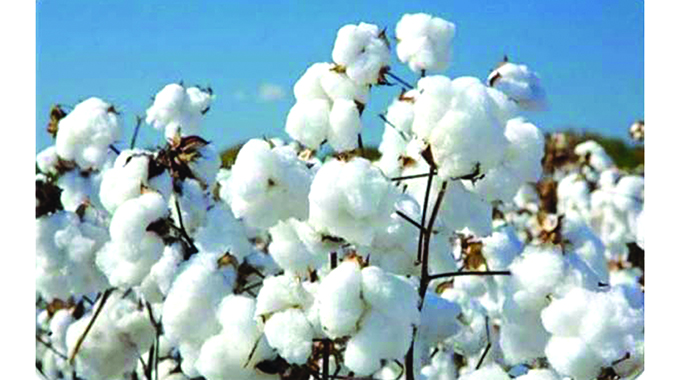
Precious Manomano-Herald Reporter
Stakeholders in the cotton industry are urging the Government to put in place mechanisms that promote value addition to enhance the viability of the grower through recognising ginning as a farm gate operation to enable growers to gin their own free cotton and move up the cotton value chain.
This will restore the viability of the cotton farmer so that the uptake of cotton farming is sustained.
Speaking during the Cotton indaba held in Harare last week, stakeholders have indicated that farmers’ viability is only guaranteed by the participation of the farmer in value addition, primarily ginning and oil seed crushing to manufacture oil and animal feed stocks.
Under the contract scheme, the seed cotton produced belongs to the contractor and hence the farmer cannot add value to it.
Cotton Council of Zimbabwe Trust chief executive officer Eng Christopher Murove said cotton farmers, therefore, need to produce free cotton which they can then gin as their own crop either through toll-ginning arrangements or by using their own farm gate ginning facilities.
“Allowing and enabling free cotton farmers to add value to their ‘free cotton’ through ginning, oil seed crushing, will enhance the ability of these farmers to easily pay back their loans to the financiers. It is therefore of utmost importance that the regulations pertaining to “farm gate” ginning and cotton seed processing are prepared and finalised before the ginning season of 2024 commences,’’ he said.
Contracts should be simple for the farmer to understand and should state what each party expects to benefit from the contract.
“The contract should clearly specify under what circumstances free cotton can arise and how such free cotton will be quantified to avoid disagreements and arguments at the onset of cotton buying season and seed cotton deliveries. The way to stimulate free cotton production by un-contracted or free farmers lies in making it easier for them to freely access planting seed and obtain credit from banks such as the Agricultural Finance Corporation and other financiers or lenders and enabling these farmers to add value to their seed cotton,’’ he added.
Cotton Ginners Association Mr Jonasi Chindanya said there is low production of cotton because inputs are diverted to other crops.
“Farmers who are receiving cotton inputs are not all planting the crop. The database is there but not everyone will be using the inputs as they were meant for. We need to enforce accountability in these growers. Proper monitoring and agronomic services on those growers will enhance productivity. What is needed is transparency and monitoring of inputs so that they reach the correct farmers,’’ he said.
The 2023 cotton marketing season has been described as a success with farmers saying how the crop has changed their lives.
Mr Marvellous Mushe who is a farmer and beneficiary of the Presidential Cotton Input Scheme from Gokwe, said the foreign currency component was a good incentive for him to continue growing cotton.
“I intend to invest my money into a grinding mill. My four wives and I have agreed to buy a grinding mill while the excess will be used to purchase other things that we are lacking at the farm.”
Mr Bushe said because of the bright prospects that the cotton crop had for farmers, he was going to save some money to rent 15 hectares he wished to lease this coming season.
“I target to put 15 hectares under the crop as part-payment of it in forex gives us hope to continue cotton farming,” he said.
“I am quite positive that the Second Republic will make sure that our local currency becomes stable so that more farmers plant the crop,” said Bushe.
Another cotton farmer, Ms Doreen Chiedza from Mauya, in Hurungwe district, who is yet to try her luck this season, said she was being motivated by the handsome payouts.
“I will try to do cotton this season as most farmers in my area and surrounding places have managed to realise more from the crop,” she said.
Cotton is mostly grown under contract arrangements in Zimbabwe with ginners providing inputs and buying the seed cotton.
The Government through Cottco is the main contractor accounting for more than 85 percent of all cotton production.
Zimbabwe seed cotton mainly produced by smallholder communal farmers with small plots ranging from half a hectare to five hectares, is the most sought after globally, as it is hand-picked with minimal contamination thereby maintaining good quality standards.
Cotton remains the most viable drought tolerant crop to grow in marginal rainfall areas under Natural Regions 3, 4 and 5.
The provision of free inputs under the Presidential Input Programme coupled with considerable knowledge and experience act as incentives in cotton production.
Production of cotton can transform rural communities through its rich pickings and has huge benefits to the economy at large as a major source of cooking oil for local consumption and cotton fibre for export markets.
At peak Zimbabwe produced 351 000 tonnes of cotton in 2010-2011 season and the Government has set a target to raise production to 300 000 tonnes by 2025.



 Online Reporter