Online Reporter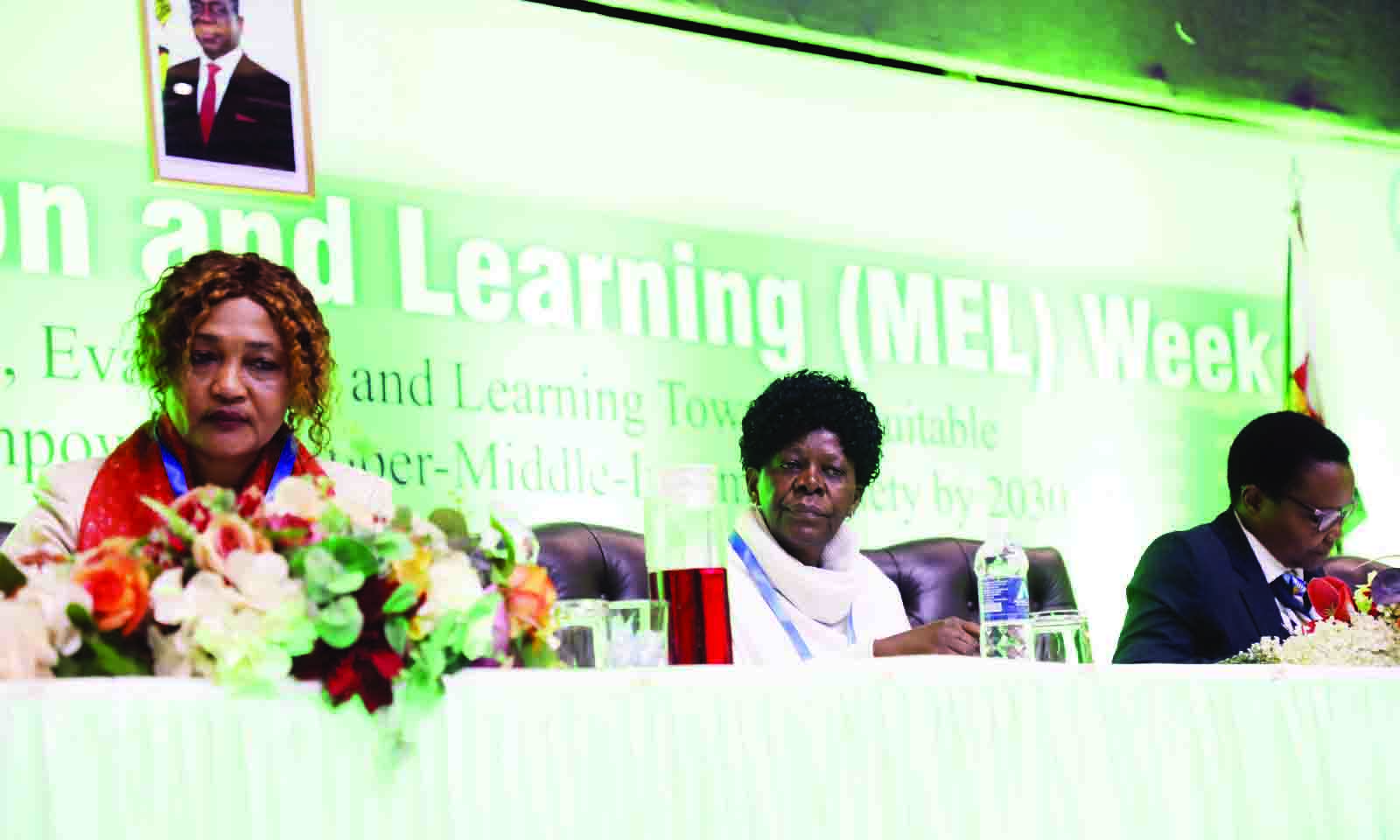
Remember Deketeke
Herald Correspondent
STAKEHOLDERS attending Zimbabwe’s Monitoring and Evaluation Week in Harare have underscored the critical role of robust monitoring, evaluation, and learning systems as key drivers for achieving the country’s Vision 2030 and UN Sustainable Development Goals.
United Nations Population Fund (UNFPA) representative in Zimbabwe Ms Miranda Tabifor said leveraging accurate and timely data is central to driving inclusive and equitable progress.
“The United Nations is deeply committed to harnessing the power of data as a transformative enabler to achieve Sustainable Development Goals by 2030,” she said.
The week-long Monitoring and Evaluation Week is being held under the theme: “Strengthening monitoring, evaluation and learning towards equitable development for a prosperous and empowered upper middle-income society by 2030.”
Ms Tabifor highlighted the UN Secretary-General’s Data Strategy for Action by Everyone, Everywhere, a global framework meant to enhance data-driven decision-making and which anchored it.
She said the United Nations Sustainable Development Cooperation Framework, a partnership between Zimbabwe and the UN, is aligned with NDS1, NDS2 and Vision 2030.
The framework, Ms Tabifor added, encompasses three key areas that support the monitoring and evaluation system.
“Firstly, data production, strengthening national capacity, which focuses on the national statistical system to enhance quality and frequency in Zimbabwe, for example the 2022 Census, supporting Zimbabwe’s demographic survey, and advancing thematic reports, among other areas,” she said.
“Secondly, promoting data use in decision-making, such as strategic planning and budgeting; and lastly, operationalising the principle of leaving no one and no place behind, which is embedded in Zimbabwe’s national blueprints.”
ZimStat Director-General Ms Tafadzwa Bandama said the agency was actively working to address key challenges it was facing.
“As ZimStat, I want to highlight that it is not only going to end in mourning that the national statistical system is weakly co-ordinated, but we are working tirelessly to ensure that the system works efficiently and effectively,” she said.
Ms Bandama revealed that efforts are already underway to amend key legislation to enhance the statistical environment in Zimbabwe.
“We are in the process of amending the Census and Statistics Act so that we improve the statistics doing-business environment.”
Respondent-related challenges were also raised, with Ms Bandama highlighting issues such as non-response, biased answers, and survey fatigue.
“The first challenge of respondents is non-response, leading to low response rates when we carry out our surveys and censuses,” she said.
“Sometimes our respondents have a habit of giving us biased responses. Sometimes they give us answers that they think we want to hear, or sometimes they give us socially acceptable answers instead of telling us the truth. We also have respondent fatigue due to over-surveying and many surveys.”
Ms Bandama underscored the impact of weak data generation on national planning and accountability.
“A weak data generation capacity undermines our ability as ZimStat and policymakers to produce reliable statistics,” she said. “It also undermines the ability to monitor and evaluate policies and programmes and to remain accountable to our national programmes.”
The conference comes as Zimbabwe accelerates efforts to meet its Vision 2030 goals, which aim to transform the country into an empowered and prosperous upper middle-income society.
National institutions were urged to invest more in data systems, build capacity in monitoring and evaluation, and strengthen partnerships to ensure no one is left behind in the development process.