Online Reporter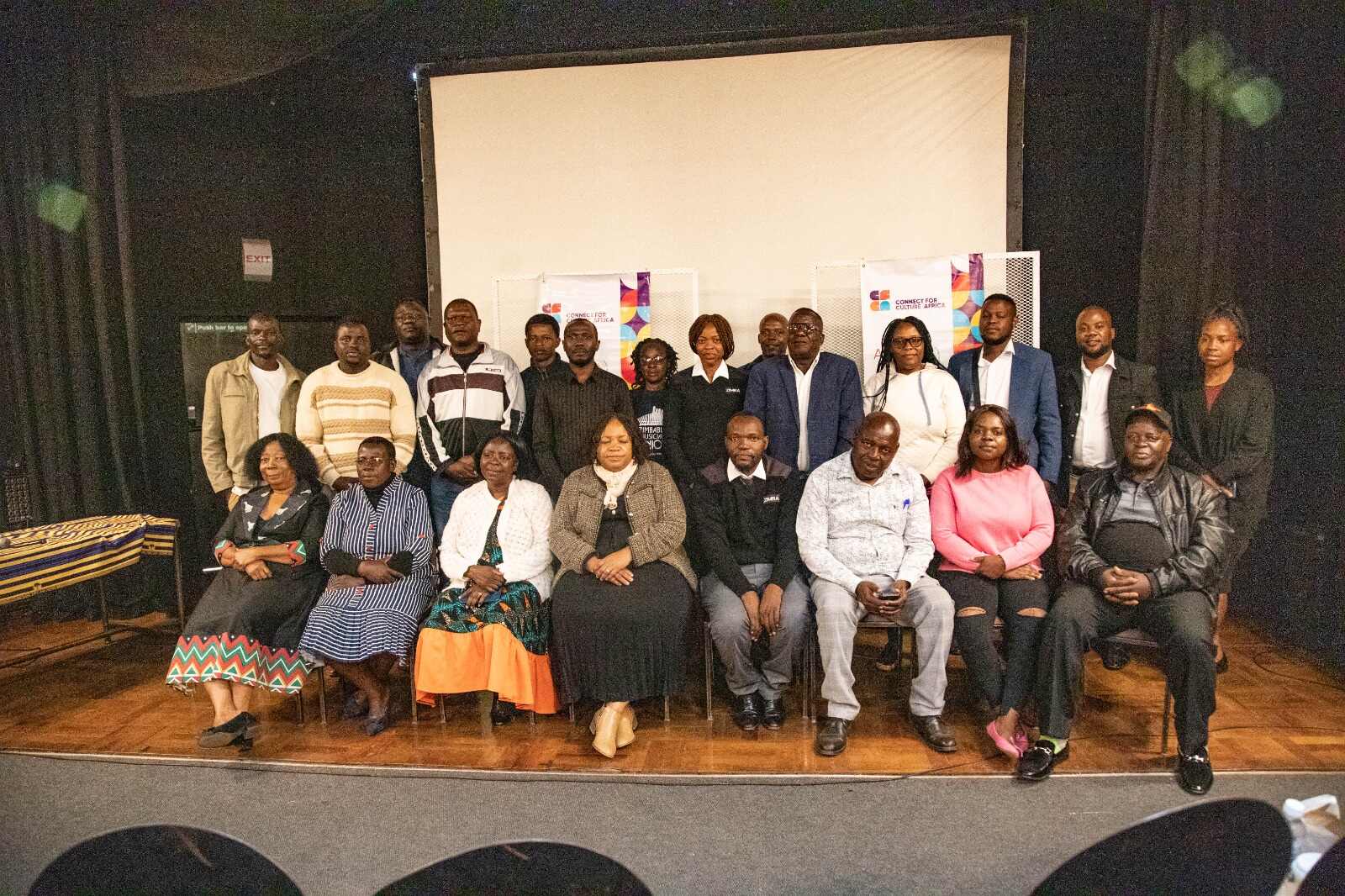
Mthabisi Tshuma [email protected]
Cultural practitioners, policymakers and industry experts from across Zimbabwe recently convened for the official validation workshop of a draft report titled “Study on the Economic Contribution of the Cultural and Creative Industries (CCIs) to Gross Domestic Product (GDP), Employment, and Informal Sector Dynamics in Zimbabwe”.
The crucial validation session was organised by Chenhaka Trust, a Mutare-based arts organisation, under the Connect for Culture Africa (CfCA) Project. The study was commissioned by Selam and compiled by a team of consultants comprising Florence Majachani, Farai Mpfunya, Simbarashe Mudhokwani, Clapton Munongerwa and Tendai Maparara.
The high-level meeting brought together national arts associations, unions, industry experts, artists, National Working Group members, academic institutions and representatives from the Revenue Department under the Ministry of Finance and Economic Development.
The research used a mixed-method approach, combining macroeconomic modelling with qualitative data collected from all 10 provinces of Zimbabwe. This was done to address gaps in existing data systems and provide a clearer picture of the country’s creative economy.
The study found that the Cultural and Creative Industries contributed approximately 5.92% to Zimbabwe’s GDP in 2024, equivalent to about US$2.7 billion. Television broadcasting and book publishing were identified as the leading sub-sectors.
The sector also accounts for about 0.7% of total national employment, representing an estimated 22 223 jobs, with strong activity in design-related fields such as fashion, graphic design, interior design and photography.
However, the report highlights that the industry remains largely informal, with 59.5% of creative workers self-employed or working as freelancers. It also notes that 62% lack social protection, while 52.2% operate from home-based setups due to limited access to proper creative infrastructure.
In terms of trade, CCI-related goods accounted for 0.22% of national imports and 0.14% of exports in 2024, with South Africa emerging as the key regional trading partner and gateway to global markets.
Despite Zimbabwe’s strong cultural heritage and growing digital creative space, the study notes that the sector’s growth is being slowed by several challenges. These include limited access to finance, weak infrastructure, skills gaps in business and technology, high licensing fees, and poor enforcement of intellectual property rights both online and offline.
Speaking at the validation workshop, National Arts Council of Zimbabwe (NACZ) chief executive officer Napoleon Nyanhi, who was represented by assistant director for Arts Development and Promotions Barbra Gotore, said the findings provide long-needed evidence for the sector.
“We are deeply focused on the economic contributions of the Cultural and Creative Industries to our national GDP, employment patterns, and the informal sector. The lack of such data has, for years, made it extremely difficult for the sector to justify funding from government.
“Without evidence, our arguments have often been met with goodwill but without the hard numbers to back our worth. This research changes that. It gives us a credible tool to demonstrate, beyond rhetoric, what the arts and culture contribute to Zimbabwe’s economy and society,” said Nyanhi.
He also applauded researchers, stakeholders and government for their support throughout the study.
“This research belongs to you. Your participation has been the heartbeat of this entire process. I also thank the Ministry of Sport, Recreation, Arts and Culture for their continued support. Without the Ministry’s hand, this research and today’s validation session would not have been possible,” he said.
The validation marks a key step toward finalising a comprehensive national reference document expected to guide policy, investment and development within Zimbabwe’s creative economy.