admin
admin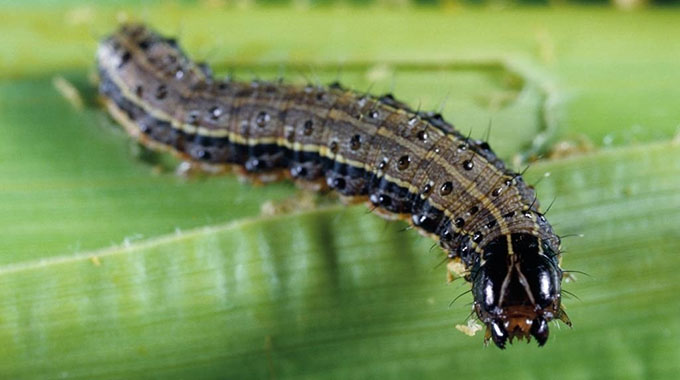
Agriculture Reporter
Chemicals to fight the African armyworm are available and some have already been dispatched to areas at high risk of outbreaks, the Plant Quarantine and Plant Protection Services Institute (PQPPSI) has said.
The institute said farmers must continue scouting for pests to reduce losses.
PQPPSI has so far dispatched Carbaryl 85 WP, as it encourages farmers to detect the pests at egg stage.
Entomologist, Mr Shingirai Nyamutukwa, said presently there was no armyworm outbreak in the country and the pests being seen by farmers were a result of population fluctuations.
“We do have chemicals for the African armyworm in stock but we only dispatch to areas with high chances of an outbreak and we are guided by the number of moths caught by the traps. We urge farmers to continue scouting because pest infestation is building up. The armyworm is voracious,” he said.
Mr Nyamutukwa said it was important for farmers to correctly identify the African armyworm.
He said a number of farmers are now aware of both the African armyworm and the fall armyworm.
Extension officers have also trained farmers on the pest.
The African armyworm originated from Zambia, Uganda or Tanzania and is carried by strong winds from one area to another. The armyworm is the larvae stage of a moth that is common in Southern Africa.
The moth is easily identified by the colour of its wings, which are dark brown with black spots, while hind wings are white with dark edges.
Migratory moths travel in multitudes and cover long distances during the night and can cross national boundaries within a short period while being driven by winds.
Experts note that the moths follow humid areas and lay eggs at a very fast rate.
The armyworm can wipe out the whole crop during the night if not controlled on time, as it has a monster appetite for foliage.
Young armyworms are small and it is hard to see them, but the best time to check for the pest is in the morning or evening.
Farmers can expect an armyworm outbreak when they see sudden swarms of moths around cooking fires and candles.
Armyworm caterpillars are most dangerous when in their gregarious form when they gather together in large numbers on plants.
In this form, the caterpillars are 30mm long and have dark stripes that make them appear black.
Agricultural experts always urge farmers to continue scouting for the pests and advise them to report to any nearest Agritex or Government office if they see the pest or if they suspect its presence.



 Online Reporter