Online Reporter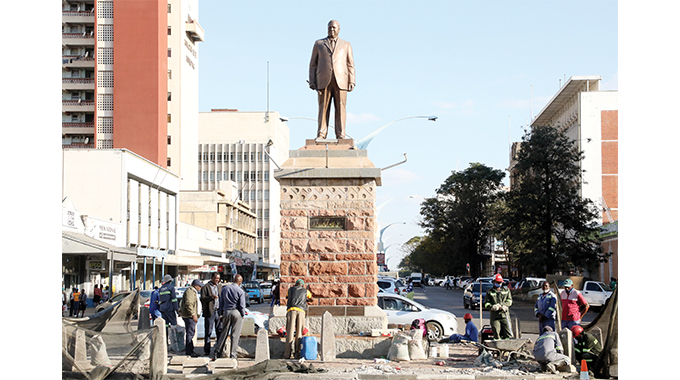
Phineas Chauke, [email protected]
WHILE Bulawayo is inundated with numerous statues scattered across the cityscape, there are three towering statues representing different chapters of Zimbabwe’s complex and fascinating history. Behind the Natural History Museum of Zimbawe in the Centenary Park, Bula stands monuments of Cecil John Rhodes and Sir Charles Patrick John Coghlan, two men whose deeds were pivotal to the early developments of Rhodesia.
Right in the heart of the central business district overlooking the bustle of modern-day Bulawayo, stands the statue of Father Zimbabwe, Dr Joshua Mqabuko Nyongolo Nkomo.
Separated by distance and ideology, these three figures nevertheless share a common connection: each played a significant role in shaping the country that today is Zimbabwe. Together, their statues tell a story stretching from colonisation and settler administration to the struggle for liberation and the birth of the independent nation of Zimbabwe.
A statue is a sculpted representation of a person, animal or event, usually created to commemorate, honour or remember.
Throughout history, societies have erected statues to preserve the memory of important individuals, celebrate achievements, inspire future generations and mark significant moments in their collective journey. Statues are more than works of art. They are historical signposts that provide visible reminders of people and events that helped shape communities and nations. Whether admired, debated or even contested, statues encourage society to engage with its past.
The statue of Cecil John Rhodes represents the beginning of colonial rule in the territory that became Southern Rhodesia. Rhodes was a British imperialist, businessman and politician whose expansionist ambitions led to the establishment of British control over vast areas of southern Africa in the late 19th century. Through the British South Africa Company, Rhodes spearheaded the occupation and administration of territories north of the Limpopo River.
The country was named Rhodesia after him, reflecting the enormous influence he wielded during the colonial era.
Rhodes had intended to amass territories across Africa “for the glory of England”. By the time of his death at age of 49, his railway line that was supposed to link Africa from Cape to Cairo had reached the Victoria Falls bridge.
For some, Rhodes symbolised enterprise and expansion and yet for many others, particularly in contemporary
Africa, he represents colonial dispossession and imperial domination. His statue therefore stands not only as a memorial to a historical figure but also as a reminder of a controversial chapter in Zimbabwe’s history.
Standing facing Rhodes, as if in some serious conversation is the statue of Sir Charles Patrick John Coghlan, architect of settler government and Southern Rhodesia’s first Prime Minister. Coghlan played a crucial role in shaping the country’s political institutions during the early 20th century. Following a referendum held on 27 October 1922, in which settlers chose responsible government over incorporation into South Africa, Coghlan became the first Prime Minister of Southern Rhodesia in 1924.
Sir Charles Patrick John Coghlan was a renowned lawyer and a founding member of Coghlan and Welsh law firm, still in existence to this day. He led the legal case against the annexation of Rhodesia to the union of South Africa as its fifth province at the time. When elections were held in 1924, he was elected to be the Prime Minister, a post he held until his death in 1927. Only three blacks purportedly voted in that election. For a black person to be eligible to vote, they were supposed to have accumulated a certain level of property and attained a certain level of education.
Under Coghlan’s leadership, the colony developed many of the administrative structures that would influence governance for decades. Roads, railways, public services and state institutions expanded during this period.
While his government primarily served the interests of the settler population and excluded the African majority from meaningful political participation, Coghlan remains a key figure in understanding how colonial Rhodesia evolved from company rule into a self-governing colony.
At the heart of Bulawayo stands the statue of Dr Joshua Nkomo, a veteran nationalist affectionately known as Father Zimbabwe. Born on 7 June 1917, Dr Nkomo emerged as one of the leading voices against colonial rule. Through trade unionism, political organisation and nationalist mobilisation, he became a central figure in the struggle for majority rule and national liberation. As leader of the Southern Rhodesia African National Congress, the National Democratic Party, ZAPU and later a key figure in independent Zimbabwe, Dr Nkomo dedicated much of his life to the pursuit of freedom, equality and self-determination. At the time of his death on 1 July 1999, he was Vice-President of Zimbabwe.
His statue symbolises resilience, sacrifice and the aspirations of millions who fought for independence. Unlike the statues of Rhodes and Coghlan, which represent colonial authority, Dr Nkomo’s monument commemorates the struggle to dismantle that very system.
Three statues, one national story. Viewed together, these monuments form a chronological narrative of Zimbabwe’s history. Rhodes represents the establishment of colonial rule, Coghlan represents the consolidation and administration of settler government and Dr Nkomo represents resistance, nationalism and the birth of an independent Zimbabwe. These are chapters of the same story. One cannot fully understand Zimbabwe without understanding all three periods and the individuals associated with them.
In recent years, statues around the world have sparked debate about who should be commemorated and how societies should remember difficult histories. Yet whether celebrated or criticised, monuments perform an important function: they keep history visible. Understanding history requires engaging with both its triumphs and its injustices.
Statues provide opportunities for education, discussion and reflection. They encourage citizens and visitors alike to ask questions about the past and consider how it continues to influence the present.
For museums and heritage institutions, monuments serve as outdoor classrooms. They connect people to historical narratives in tangible and accessible ways. These statues stand as silent storytellers. They remind us that history is rarely simple. It is layered, complex and sometimes contested. Yet it is through understanding these layers that nations gain a deeper appreciation of where they have come from and where they are going.
n Phineas Chauke is National Museums and Monuments of Zimbabwe Marketing and Public Relations Manager. He can be contacted on +263776058523.