Online Reporter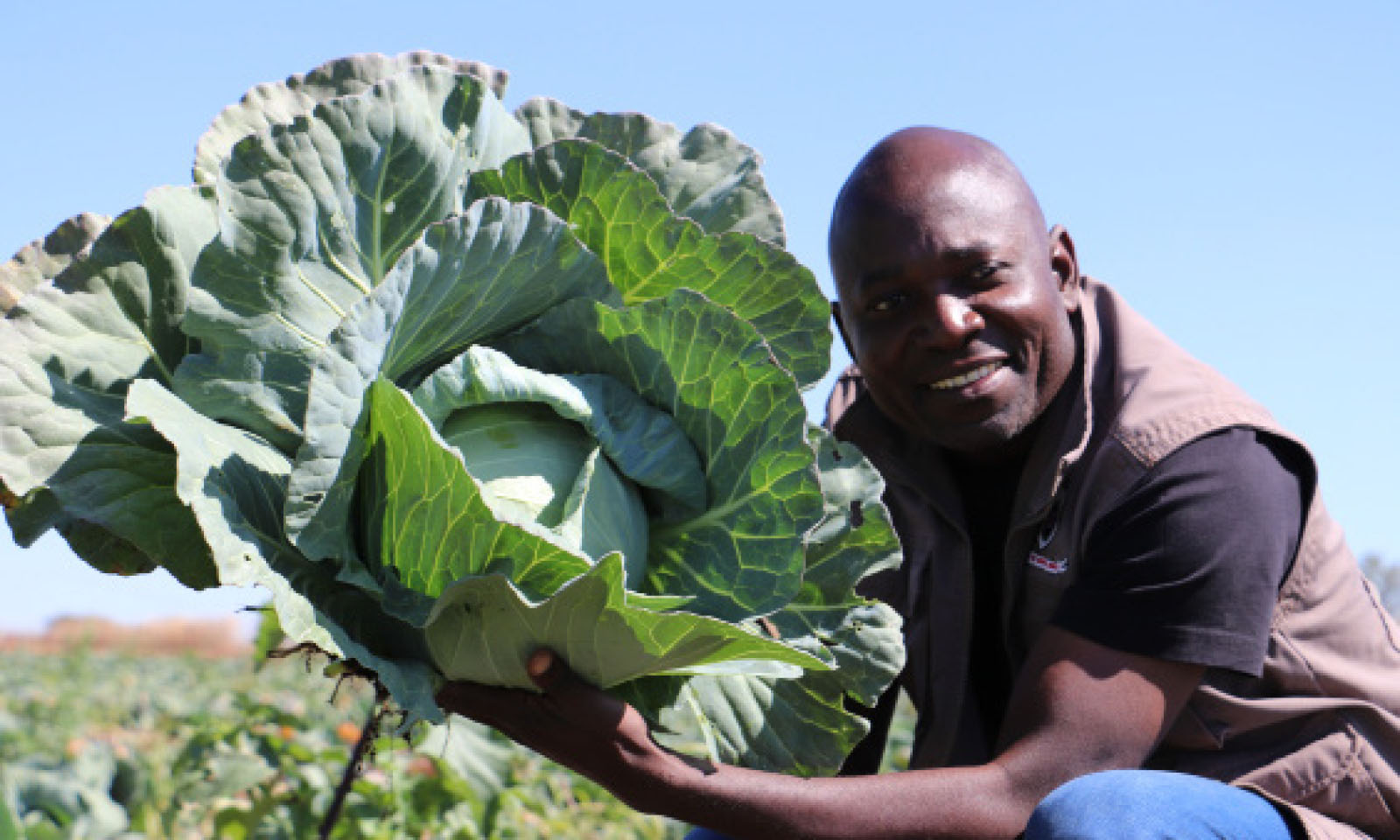
Theseus Shambare
Features Writer
FOR years, Mr Kennedy Shonhiwa navigated the highways of Zimbabwe as a professional heavy-duty truck driver for the Zimbabwe Electricity Supply Authority (Zesa).
His days were spent behind the wheel, transporting vital energy equipment across the nation.
But deep down, Mr Shonhiwa harboured a different kind of ambition, one rooted in the soil of his homeland.
Today, he is not just driving trucks; he is driving agricultural transformation, proving that with the right partnership and an unwavering spirit, anyone can cultivate success.
Mr Shonhiwa is one of those farmers at the forefront of Zimbabwe’s agricultural resurgence, a shining example of the Government’s impactful joint venture framework.
His journey from humble beginnings, farming alongside his father on a small plot, to overseeing a thriving 52-hectare (ha) operation in the fertile lands of Seke, Mashonaland East province, testifies to perseverance and the power of strategic collaboration.
“Before the Fast-Track Land Reform Programme, wheat farming was a preserve of commercial farmers, who were predominantly white,” Mr Shonhiwa said in an interview recently, standing amid his lush green fields at Munengwa Farm.
“I had never imagined myself being part of such success stories.”
His foray into commercial farming began on his father’s six-hectare A1 plot at Evergreen Farm in Seke.
While invaluable for gaining initial experience, the land soon became too small for their growing ambitions.
The high cost of acquiring larger land proved to be a significant hurdle, leading Mr Shonhiwa to explore the innovative path of a joint venture.
He found his ideal partner in the son of a late land reform beneficiary, who had inherited a substantial 52-hectare piece of land in the area close to Beatrice, with 30ha arable.
This land, strategically chosen for its water access and proximity to Mr Shonhiwa’s roots, formed the perfect foundation.
He brought his agricultural expertise, financial resources and relentless drive, while his partner contributed the crucial land.
This symbiotic relationship, now being formally registered as a joint venture, breathed new life into a defunct irrigation system, paving the way for remarkable growth.
“We are in our third year and the results are amazing,” Mr Shonhiwa beamed.
Their first foray into wheat farming began modestly with just five hectares.
This year, armed with invaluable advice from extension officers, they are targeting an ambitious nine tonnes per hectare, a significant leap from last year’s six tonnes.
Always looking ahead, Mr Shonhiwa has since purchased a centre pivot, a crucial piece of irrigation technology, which he hopes to have installed before the upcoming summer cropping season, promising an even greater boost to productivity.
But Mr Shonhiwa’s farm is a tapestry of diverse crops, a strategic move to ensure the farm’s financial liquidity. Beyond wheat, he cultivates thousands of heads of cabbage, rotates potatoes with maize, achieving an impressive average of 56 tonnes per hectare for potatoes, and nurtures 45 000 green mealie plants.
Behind every successful farmer, there is often a strong support system, and Mr Shonhiwa’s family has been his bedrock.
“My wife and family have given me huge support in my ventures,” he shared. “At first, she didn’t like farming until we harvested our first potato crop. Now, she is the first to go to the farm.”
This shared dedication underscores the deep personal investment in their agricultural enterprise.
Mr Shonhiwa’s story is far from an isolated incident. The Government has processed over 2 500 joint ventures, predominantly on farms acquired under the Fast-Track Land Reform Programme.
Launched officially in 2020, the joint venture framework aims to boost agricultural productivity by formalising partnerships between landowners, often land reform beneficiaries, and investors with capital and expertise.
Under this framework, all agricultural joint ventures must be formally approved by the Ministry of Lands, Agriculture, Fisheries, Water and Rural Development, ensuring Government oversight and support for sustainable land utilisation and food security.
This initiative is dramatically transforming the agriculture sector, shifting the focus from mere land ownership to professional, high-yield farming.
Lands, Agriculture, Fisheries, Water and Rural Development Permanent Secretary Professor Obert Jiri emphasised this paradigm shift.
“It is no longer a case of owning land, but a case of being in professional agriculture. You can be a farmer without a farm, through Government-monitored joint ventures. We mean business when we talk of agriculture,” he said.
As Mr Shonhiwa continues to expand his horizons, from the driver’s seat of a Zesa truck to the thriving fields of Munengwa Farm, he embodies the promise of a new era for Zimbabwean agriculture.
It is an era where collaboration, innovation and a passion for the land are yielding bountiful harvests for all.