admin
admin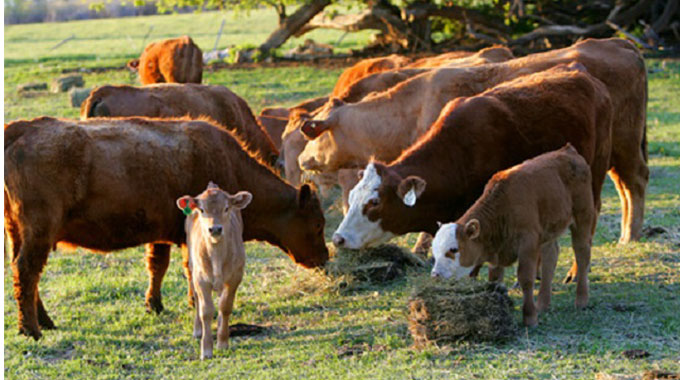
Mhlupheki Dube
LAST week we discussed the due diligence requirements when one is considering employing a stockman for his/her animals.
This week we continue by looking at how smallholder livestock farmers can derive maximum value from their stockman.
The efficiency and effectiveness of your stockman is a general function of what I term employment hygiene and this broadly encompasses staff development, staff welfare and operational environment issues.
Staff development component is very important for smallholder livestock farmers’ stockmen because most of them are not trained in agriculture and in worse cases they are barely literate. Livestock farmers behave as if the stockman will be responsible for driving cattle in and out of the kraal only yet they are actually overseeing the general welfare of your animals daily.
It is thus important to provide supporting training to your stockman so that he is able to carry out essential functions that you expect to be done at the farm. You can provide this basic training if you have the time and skill to do it. Alternatively you can take your stockman to the short courses that are provided by various institutions in the country. The short courses will equip the stockman with basic but very essential knowledge on how to manage your animals.
It is of no use to have a stockman who cannot administer a simple intramuscular jab of an antibiotic.
It is vital to have a stockman who can identify a sick animal and take corrective action even if he is unable to reach you.
While the ideal situation is that farmers should stay at the farm tending to their animals every day, it will be naive to ignore the reality on the ground which points to the fact that the majority of smallholder livestock farmers are either employed elsewhere or are running a business in town hence they are not present every time.
Providing short courses training improves that confidence and esteem of your stockman and inevitably results in improved service.
The other important issue is on staff welfare and this is where most smallholder farmers fail.
The stockman is provided with sub-slavery working conditions and still expected to oversee your 100 head which is worth thousands of dollars.
The employer cannot even provide a bicycle for easy mobility but still expects the stockman to walk several kilometres to call a local veterinary officer in case of emergency.
Some employers go for more than two months without visiting the farm, leaving the stockman with no basic household necessities and they resort to illegal activities such as poaching for survival.
Some stockman work all year round with no single off day to visit their relatives.
I would say if you cannot tolerate the conditions for you or your children, then do not apply them to your stockman.
Provide your stockman with decent shelter, access to clean water and adequate decent ration.
With regards to the operational environment, it is important to avail equipment for use by your stockman so that they do not only find it easier to do that task but they do it correctly. If you are using a knapsack sprayer for dipping your animals, please get the sprayer and all the protective clothing that goes with it so that your stockman can be keen to do the task rather than relying on borrowing from a neighbour.
As part of operational environment it is not a bad idea to buy your stockman a bicycle or even a motorcycle for mobility. This will not only motivate him but make him function efficiently. It is not spoiling your stockman to buy him a motorcycle but making him efficient. This way he can easily ride to pick a veterinary officer and save you the cost of driving from town to pick the veterinary people from the district offices.
It is my opinion therefore that smallholder livestock farmers need to improve working conditions and general welfare of their stockman as well as providing staff development programmes to improve output from the stockman. These guys are looking after your investment and you don’t want to be losing animals simply because your worker cannot administer a hitet 120 jab.
Uyabonga umntakaMaKhumalo.
Feedback [email protected] / cell 0772851275


 Online Reporter