

 Online Reporter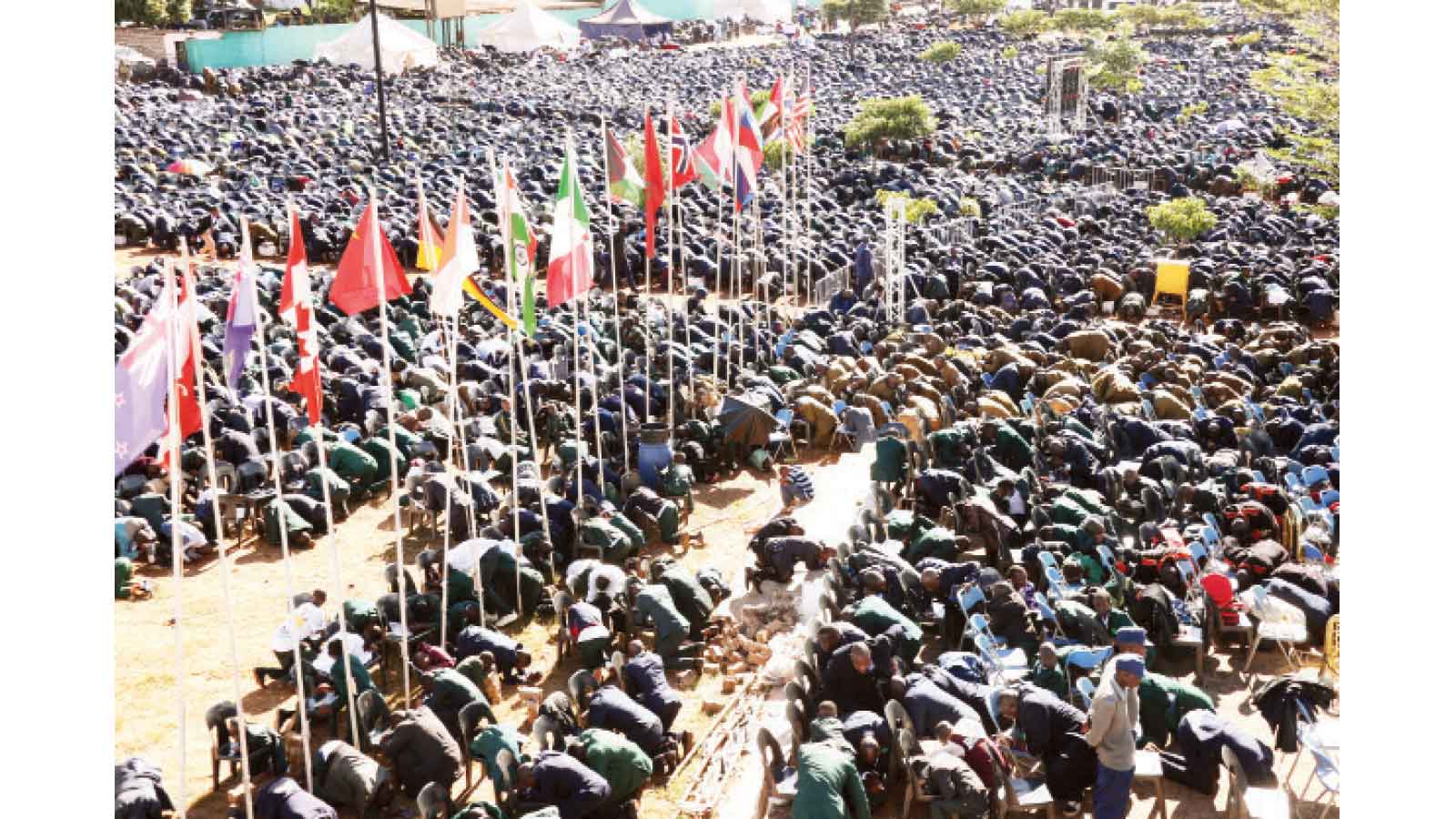
MacDenias Moyo-Correspondent
CONSTITUTIONAL Amendment No.3 Bill is not a passing exercise in legislative tinkering.
It is a structural reform designed to stabilise governance, strengthen institutions and propel Zimbabwe towards Vision 2030.
The people have already spoken during the ninety‑day consultation process that reached every one of our seventy‑one districts. Their voices were unambiguous, bold and overwhelming in support of CAB3.
Justice Minister Ziyambi Ziyambi has made it clear that CAB3 follows a transparent and participatory roadmap.
After the consultations, he stated, “The Committee will collate all feedback into a written report for Parliament. The Bill will then be introduced in the week of May 18th and I will deliver the Second Reading speech explaining each clause in detail. Debate in the National Assembly will follow, guided by the Committee’s report. There will be no referendum because the Bill does not touch entrenched provisions requiring one.”
This roadmap demonstrates that CAB3 is not being rushed nor imposed. It is a structured process that respects constitutional requirements and ensures that citizens’ voices are central.
At Mbungo Estate in Masvingo, before more than 200 000 congregants of the Zion Christian Church, Bishop Nehemiah Mutendi declared, “If Parliament can impeach a President, then the same Parliament can vote for a President.”
He reminded the nation that “Serious assignment must be finished not adjusted halfway, not abandoned halfway. It must be finished.” His endorsement underscores the moral legitimacy of CAB3 and the necessity of stability.
Cde Farai Marapira, ZANU PF Director of Information and Publicity, defended CAB3 as a reform designed to address long‑standing structural challenges. He stated, “The reforms seek to resolve recurring issues such as disputed elections, governance inefficiencies and a perpetual election cycle that has contributed to political paralysis and societal polarisation.”
He emphasised that the proposed changes are intended to promote national cohesion, reduce political toxicity and create a stable governance framework capable of driving the country’s development agenda forward.
Cde Marapira further noted, “Overwhelming participation during parliamentary public consultations demonstrated broad public interest and support for the Bill, which is a product of citizens’ views and aspirations.”
He reaffirmed ZANU PF’s stance against violence, echoing the President’s position and explained that the seven‑year electoral cycle would apply uniformly to the presidency, Parliament and local authorities.
“The reform is aimed at fostering stability and ending cycles of political intolerance rather than extending any single officeholder’s tenure.”
Public hearings were held in every district. Citizens gave their endorsement. The only disruption occurred at the City Sports Centre in Harare, where agents provocateurs sought to manufacture a crisis.
Their intention was clear and it was to provoke a predictable reaction from a crowd overwhelmingly supportive of the Bill, then capture that reaction on camera for international consumption.
Yet even there, the process endured. Parliament continued. Citizens spoke. The integrity of the hearings remained intact. Across the country, the people gave CAB3 their endorsement. This is democracy in action. This is legitimacy.
President Mnangagwa has consistently emphasised the importance of stability and reform. His leadership since 2017 has been about strengthening institutions, consolidating sovereignty and creating space for development. Vision 2030 is his horizon.
It is the goal of becoming an upper middle income economy. It is about industrialisation, modernisation and empowerment.
It is about infrastructure, jobs and opportunities. It is about positioning Zimbabwe as a regional powerhouse.
CAB3 is part of that trajectory. It reduces political paralysis. It stabilises governance. It creates the conditions for development.
Bishop Mutendi’s words resonate again.
“Your Excellency, it is on this understanding of completion that we, as a church, also observe all voluntary national conversations, including Constitutional Amendment No3 Bill.”
His endorsement is not about politics. It is about completion. It is about finishing the assignment. It is about staying the course.
Zimbabwe stands at a decisive moment. The Constitutional Amendment Bill No3 is a structural reform that strengthens governance, stabilises institutions and anchors our march toward Vision 2030. The people have endorsed it. The church has endorsed it. Parliament has debated it. The nation has given it legitimacy.
Minister Ziyambi’s roadmap shows that CAB3 is a transparent, structured and participatory process.
Bishop Mutendi’s endorsement provides moral authority. Cde Marapira’s defence highlights structural necessity. The people’s overwhelming support during consultations provides legitimacy.
The opposition’s attempts to manufacture crisis must be ignored. Their rhetoric must be rejected. Their obstruction must be exposed. Zimbabwe must stay the course.
CAB3 is about institutions, stability and development.
It is about Vision 2030. It is about finishing the assignment. The people have spoken and the path forward is clear.



