

 Chronicle Editor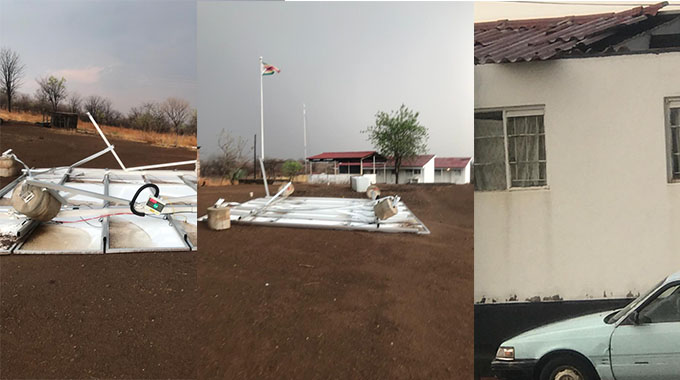
Leonard Ncube, Online Reporter
A storm characterised by strong winds and thunder struck the Kanywambizi area along the Zambezi River in Hwange, leaving a local clinic without a roof and destroyed solar panels.
The incident occurred on Friday, which was ironically International Day for Disaster Risk Reduction. The health facility’s roof was damaged, and the solar panels were destroyed, leaving the clinic without electricity.
The clinic serves remote communities along the Zambezi River, and the lack of service will mean that communities will have to walk long distances to the nearest health facilities. Hwange District Development Coordinator, Mr. Simon Muleya, confirmed the tragedy.
“We are waiting for a report from the Public Works Department which attended the scene to assess the extent of damage,” said Mr Muleya.
He said no other places were affected.
Hwange District Medical Officer Dr Fungayi Mvura said the storm damaged the roof and solar panels and Public Works team was on site assessing the extent of damage.
International Day for Disaster Risk Reduction is observed every year on 13 October as the United Nations office for Disaster Risk Reduction encourages people to take action to break the cycle of disaster and growing inequality. It is an international day that encourages every citizen and government to take part in building more disaster-resilient communities and nations.
This year’s theme for the day focused on fighting inequalities for a resilient future and aligns with the Sendai Framework, the international agreement to prevent and reduce losses in lives, livelihoods and basic infrastructure which are key in achieving Sustainable Development Goals.
So the 2023 International Risk Reduction Day explores the reciprocal relationship between disasters and inequality which creates the conditions that render people exposed and vulnerable to disasters disproportionately impact the poorest and most at risk people, thus worsening inequality.
According to the UN, greater investments are needed in the collection and use of disaggregated data, both to better understand disproportionate disaster impacts and exposure, and to inform resilience-building plans.
The destructive power of hazards can be averted through careful and coordinated planning that is designed to reduce people’s exposure and vulnerability to harm. It is estimated that by 2030, with current climate projections, the world will face some 560 disasters per year and an additional estimated 37.6 million people will be living in conditions of extreme poverty due to the impacts of climate change and disasters by 2030.
Zimbabwe is however pursuing Vision 2030 where livelihoods will have improved due to policies that the Second Republic is pursuing.
Environmental expert Mr Daniel Sithole who is director of Green Shango Environment Trust said climate change remains our number one adversary of sustainable development.



 Online Reporter