Online Reporter
Roselyne Sachiti recently in CHONGQING, China
FOR the Harare City Council, street vendors are a problem — they are a source of litter, congestion and chaos.
But for this writer and my colleague Debra Manyasi, one evening in Chongqing, China, flipped that script.
We did not just eat street food; we watched a symphony of order and wordless communication.
No words needed — just a masterclass for any African city grappling with informal trade.
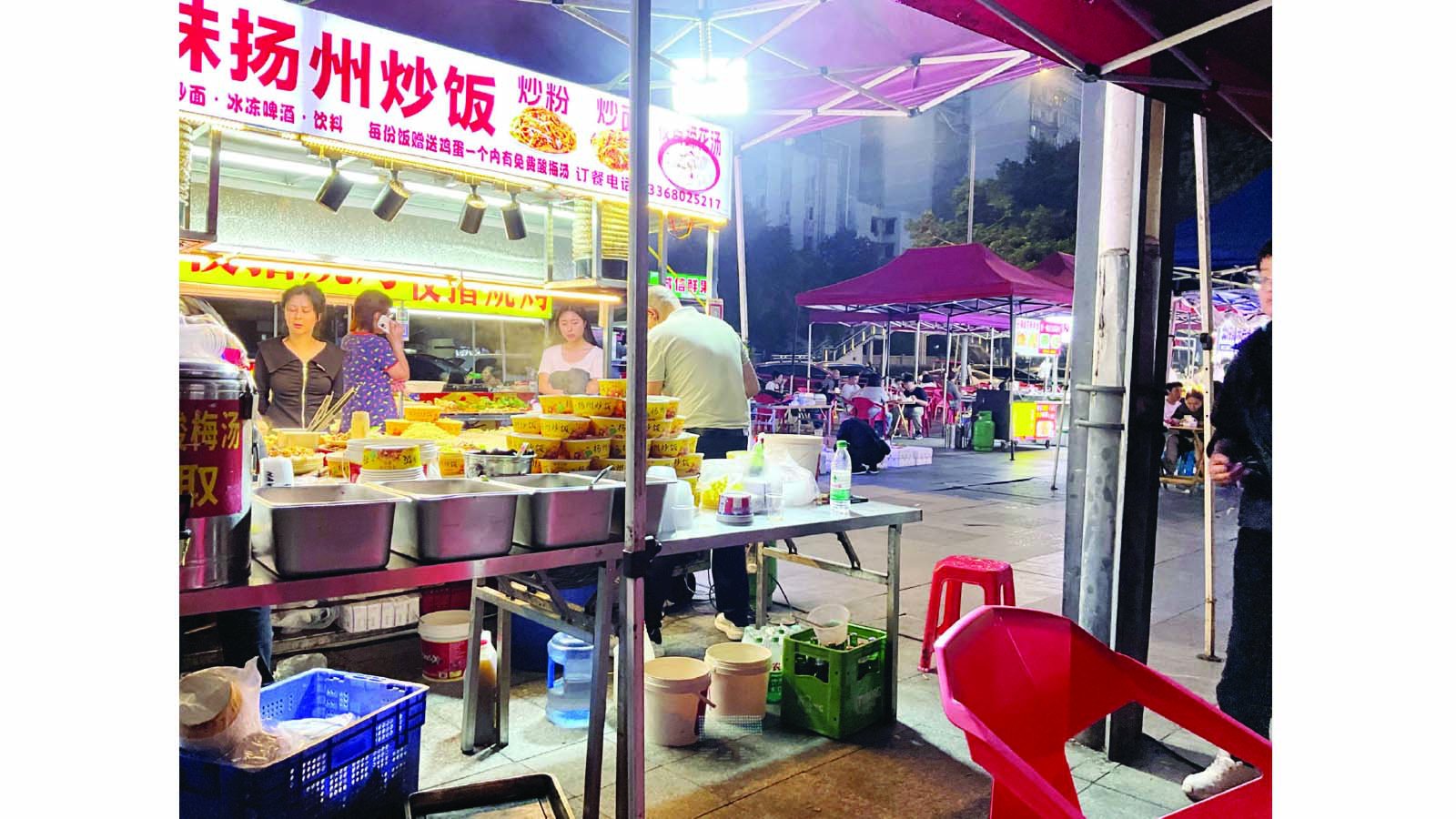
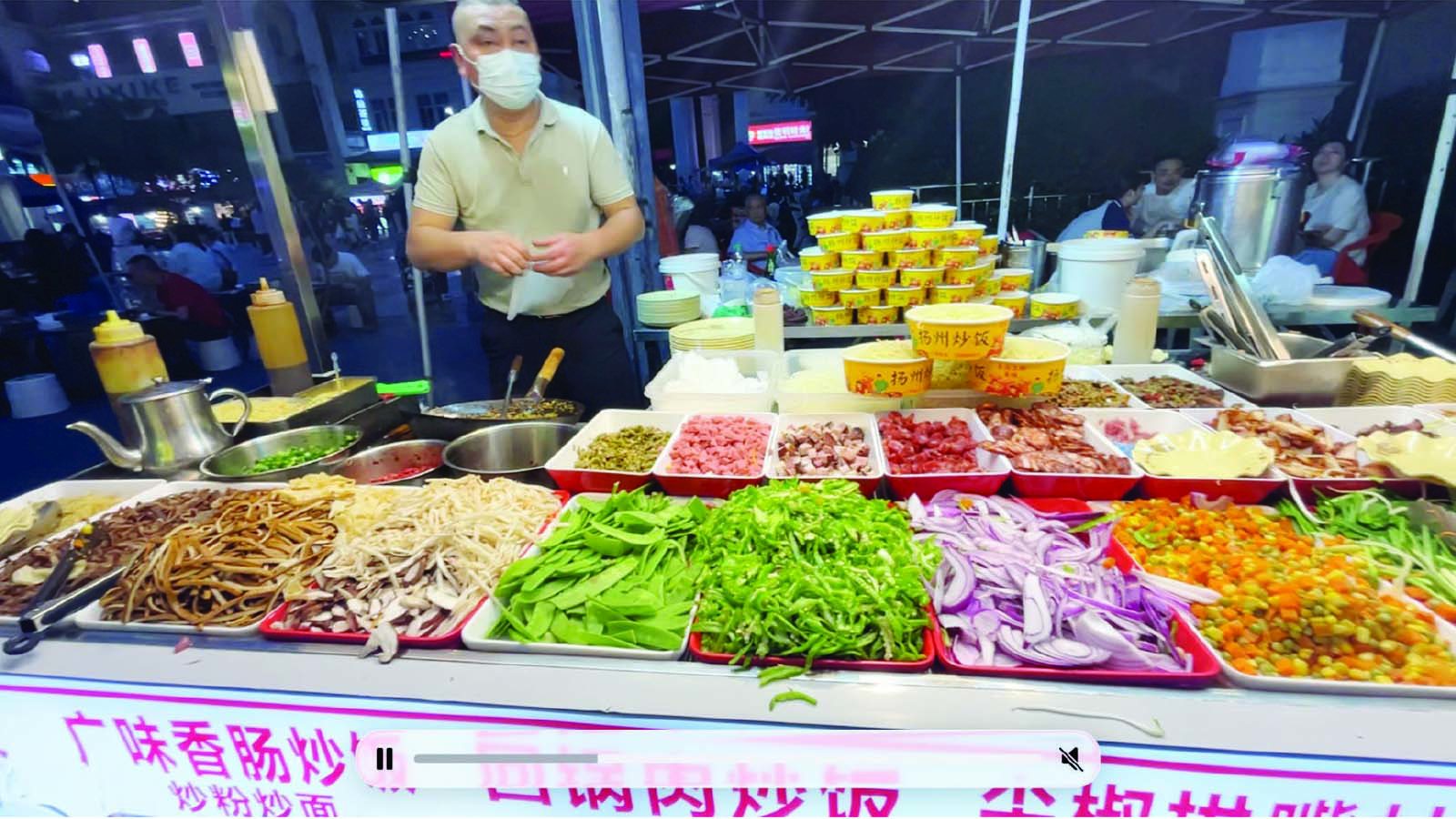
We grabbed plastic plates at a lantern-lit alley, picking up a variety of raw vegetables, tofu, mushrooms and glistening meats — neatly sorted by colour and type. A husband-and-wife team worked in silent, efficient tandem.
We struggled with chopsticks when the food arrived, sending a mushroom dancing off Debra’s plate and a piece of broccoli flying from mine.
The stall owner’s wife laughed and called her husband, who demonstrated the proper technique, gently guiding Debra’s hand. Though food ended up scattered, they patiently waited until we finally lifted a chunk of meat to our lips. The experience was not just a meal; it created memories, a skill and a story.
A lesson for Harare
The streets were spotless. Sweepers moved like ghosts, whisking away skewer sticks seconds after they fell.
Stalls were as organised as a surgical ward — numbered stations, uniform carts, clear cooking areas versus dining zones.
Electric delivery motorbikes slithered silently through the tight maze. You stayed alert or got swallowed by the organised chaos.
Back home, the Harare City Council is locked in a perpetual battle with informal vendors.
There are evictions, confiscation of wares and accusations of heavy-handedness. The streets around Market Square, Copacabana and Charge Office are often clogged, littered and tense.
This is equally true of Robert Mugabe Road, Park Street and First Street. But watching the organised chaos of Chongqing, we could not help but wonder: What if Harare learned to organise rather than evict?
In Chongqing, street food vending is not illegal. It is zoned. The stalls are packed in specific, pedestrian-friendly alleys, away from the main traffic.
You will find street vendors just outside restaurants, but instead of competing for customers, they coexist peacefully.
Diners freely pick their spot, and vendors and restaurant owners operate in surprising harmony.
Harare could move faster to create vending zones with basic infrastructure — drains, bins and water points.
In Chongqing, policies encourage clustering and industrialisation rather than banning mobile vendors outright.
This is exemplified by the “360 Bowls of Chongqing Flavour” initiative, which has promoted 10 signature dishes and created nearly 500 specialty restaurants and food streets.
Large-scale plans have designated 49 core commercial districts and 33 municipal-level night market streets around the Two Rivers and Four Banks area.
Specific areas and time frames are legally allocated for temporary roadside vending, guided by resident needs. Illegal vending outside these zones is subject to penalties.
In Chongqing, vendors register with district authorities and display permits. Jurisdictional lines are clearly defined between the municipal administration, market regulation, as well as health and other authorities.
A graduated framework — involving one warning, two reminders and three penalties — paired with a no-fine list for first-time minor infractions, effectively encourages compliance.
Shared responsibility for cleanliness
Every stall in that Chongqing street food market had a bin. We gathered that vendors who kept their patch clean were rewarded with loyal customers.
The Harare City Council could adopt a polluter-pays or clean-as-you-trade bylaw, making the vendor, not the council, the primary cleaner.
The chaos of Harare’s street food vending often arises from the lack of uniformity in the market setups — a car tyre, a cardboard box, a plastic sheet laid on a pavement, a rusted oil drum, an old dish with charcoal.
In Chongqing, all the carts look similar. They are organised, visible and safe.
Even those who roast fresh maize do so on specially designed grills.
The Harare City Council could provide standardised carts for a monthly fee, turning a nuisance into a tourist attraction.
Archaic bylaws
Harare’s bylaws are divorced from economic realities, failing to acknowledge that vending is a primary source of survival for many families.
The most fundamental shift is in mindset. Under the 2014 bylaws, street vending on most pavements is, in effect, illegal, leading to a destructive cycle of arrests, confiscations and the acceptance of daily bribes.
Chongqing, in contrast, starts with a principle of accommodation, recognising that properly planned vending zones are essential to a vibrant city.
In February this year, Harare Mayor Jacob Mafume expressed concern over the growing number of vendors, particularly along First Street, saying it is surprising to see people preparing various delicacies in the open, making the city unpleasant. He warned that tough decisions will have to be made.
He also proposed designating areas for vending and creating “no-go” streets.
Policies
In a significant shift, the new City of Harare small to medium enterprises (SMEs) policy advocates for inclusive trading spaces.
However, until the 2014 by-laws are formally amended, this is just a progressive vision on paper. The first and most crucial step is to legally empower these zoning proposals.
Waste management
In Chongqing, waste management is not an afterthought. Vendors must use designated bins, and cities like Yongchuan require unified garbage containers and mandate that shops strictly implement the delimitation of business plus hygiene responsibility system.
Harare, where markets are left blanketed in litter, could mirror this by providing centralised bins on every block and holding vendors responsible for their immediate surroundings.
In Harare, there is a notable lack of proper regulations governing cooked food vendors, particularly those operating from mobile stalls. This regulatory void hinders efforts to formalise this specific sector.
Harare Residents Trust chairperson Mr Precious Shumba says what is happening in China is representative of the Chinese interests.
He added that what must happen in Harare should be informed by the citizens’ input, planning frameworks and the socioeconomic context.
“Development initiatives are context-specific and tailored to geographical areas, rather than a one-size-fits-all approach.
“The only thing worth noting, and we have been consistent about it, is that it is possible to designate some sections of streets in the evenings and weekends for the convenience of vendors,” he said.
According to Mr Shumba, the City of Harare has to fully implement provisions of the SMEs (small and medium enterprises) Policy and ensure that all vendors are electronically documented and allocated operating zones with clear identifiers.
“The vendors should be able to register and pay a token fee to the City of Harare to be allowed to operate in a given area zone, and pay month/quarterly/half yearly fees with minimal human interaction,” he said.
Mr Shumba added that all the revenues generated from vendor registration fees should be directed towards the construction of decent market stalls in some parts of the city centre, thus bringing order and cleanliness to the city.
“Once vendors have trust and confidence in the system, vending will be easier to manage and regulate with their full cooperation.
“Presently, council officials are enriching themselves from the arrest and harassment of vendors who end up paying bribes to corrupt municipal police officers,” he alleged.
“The current conflict between formal businesses and the vendors arises mainly from inconsistent policy implementation and unfair enforcement of council bylaws on vending.”
Harare City Council spokesperson Mr Stanley Gama said they acknowledge the need to modernise and formalise its street vending systems, drawing lessons from global best practices such as those observed in China.
Regarding the enforcement of the 2014 Vendors By-Laws (SI 159 of 2014), Mr Gama said the “designated place” system has faced implementation challenges primarily due to rapid urbanisation, high unemployment, and the resulting surge in informal trading.
“Existing designated spaces have been insufficient to accommodate demand, leading to encroachment into undesignated areas. Enforcement has also been constrained by resource limitations and the need to balance public health concerns with livelihoods,” he said.
According to Mr Gama, going forward, the City of Harare is strengthening enforcement through a dual approach.
This, he said, is being done by expanding and upgrading designated vending sites, and intensifying compliance monitoring.
“The intention is to make designated spaces both adequate and attractive, thereby naturally transitioning vendors away from illegal street trading. He added that the City is actively identifying and mapping vending zones across the central business district and high-density suburbs.
This includes categorising areas into permitted vending zones, prohibited zones for safety and traffic management reasons.
“Plans to develop modern vending infrastructure are underway. The goal is to transform such areas into organised, hygienic, and economically vibrant markets,” he added.
He said the City recognises that compliance with food safety regulations is challenging for small-scale operators, and the recommendation from City Health Department is for vending to be confined only at designated sites where there is access to basic amenities; water, sanitation and hygiene enablers.
“We are also conducting regular training in food hygiene and safety; reviewing policy frameworks to accommodate safe, regulated mobile food vending.
“The objective is not to exclude vendors, but to progressively bring them into a safe and regulated system that protects public health,” he explained.
He said food vendors are required to meet strict health standards, including medical certification, safe food handling practices, and access to clean water and functional sanitary faicilities.
“These measures are critical in preventing outbreaks of diseases such as cholera and typhoid.
Measures, he added, include enforcement of hygiene standards through routine inspections and routine waste collection services.
“The City acknowledges concerns regarding enforcement operations such as ‘Operation Chenesa Harare.’
“While enforcement is necessary to restore order and protect public health, it is being complemented by efforts to provide alternative trading spaces,” he said.
He added that the Harare City Council’s approach is to combine regulation with inclusion ensuring that vendors are not simply displaced, but are relocated to safer, more sustainable environments where they can continue their livelihoods.
He also said the City Health Department is expediting policy provision to register and license safe, regulated mobile food vending in the interest of safeguarding public health.
“Harare has significant potential to transform its street vending sector into a well organised, safe, and even tourist friendly component of the urban economy.
“With deliberate planning, stakeholder engagement, and sustained investment, the City is committed to achieving a system that balances economic opportunity with public health and urban order,” he said.
Spice is a unifier
Perhaps the most important lesson is one of attitude.
In Chongqing, eating on the street is a matter of pride, not shame. Businesspeople in suits sit next to students and tourists on plastic stools.
The food is spicy, loud and loved.
For Debra and myself, the night ended with a full stomach, a bruised ego regarding our chopstick skills and a profound realisation.
The couple who owned the stall did not need a council official to harass them.
They needed a permit, a drain and a bin.
They had the rest — the fire and grill, the flavour and the community.
Street food is not a problem to be cleaned up. It is a culture to be curated.
Back home, the Harare City Council is locked in a perpetual battle with informal vendors. There are evictions, confiscation of wares and accusations of heavy-handedness. The streets around Market Square, Copacabana and Charge Office are often clogged, littered and tense. This is equally true of Robert Mugabe Road, Park Street and First Street. But watching the organised chaos of Chongqing, we could not help but wonder: What if Harare learned to organise rather than evict?