Online Reporter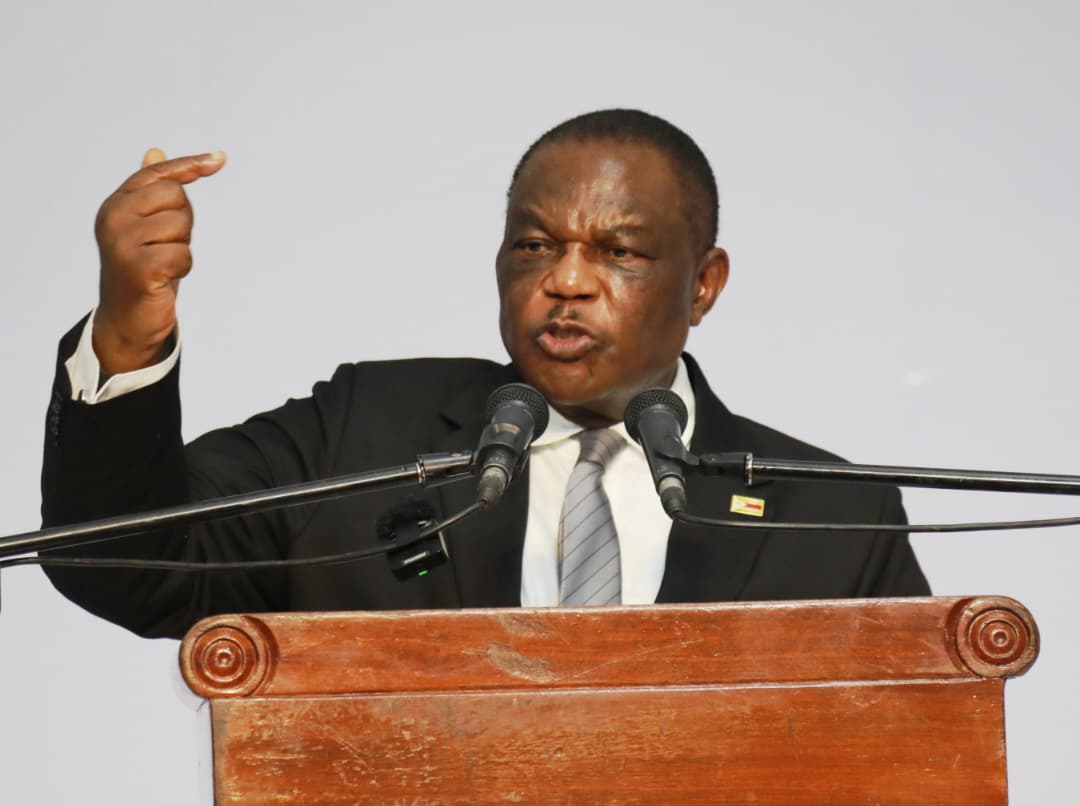
Yeukai Karengezeka and Precious Manomano
Herald Reporters
GOVERNMENT has implored farmers and agribusiness players to strengthen their resilience to climate change and global supply disruptions ahead of the 2026-27 summer cropping season.
Speaking yesterday at the 14th Annual National Agribusiness Conference in Harare, held under the theme: “Agricultural Productivity as a Catalyst for Agribusiness Growth and Food Security”, Vice President Dr Constantino Chiwenga said Zimbabwe could face severe agricultural challenges arising from geopolitical tensions, rising fuel and fertiliser costs and the anticipated El Niño weather phenomenon.
A developing super El Niño for the 2026–2027 season threatens Southern Africa with severe, prolonged droughts, widespread crop failures and escalating food insecurity.
The Vice President said the anticipated weather conditions required the country to take proactive measures rather than wait for the effects of drought to set in.
“The outlook for the 2026/27 summer season represents a critical stress test for Zimbabwe’s agricultural resilience,” he said.
“Our planning is driven by the convergence of two major threats: one of the current geopolitical tensions elevating fuel and fertiliser prices and disrupting their supply and another of a forecasted Super El Niño.”
He said the projected climate pattern could result in extreme dryness and heat in Southern Africa, threatening food and water supplies.
“Therefore, it is imperative to adopt proactive measures in water conservation and food security planning,” he said.
VP Chiwenga urged farmers to increase the production of drought-tolerant crops such as sorghum, millet and sunflower while Government intensifies efforts to rehabilitate boreholes and expand irrigation.
He said Government had developed an integrated response that includes combining Treasury allocations, private sector participation and specialised agricultural credit through the National Enhanced Agricultural Productivity Scheme.
Other measures include ensuring the availability and affordability of inputs, promoting climate-smart agriculture, strengthening early warning systems, increasing strategic grain reserves and developing livestock drought mitigation measures.
The Vice President said Zimbabwe also needed to change the way it approached agriculture by moving away from a predominantly production-focused model towards commercialisation and value addition.
He called on farmers to embrace the “Farm to Fork” approach, which promotes linkages between production, aggregation, processing and markets.
“By strengthening linkages between production and industry, agriculture can serve as an even more powerful driver of economic growth, industrial development, and food security,” he said.
VP Chiwenga encouraged farmers to process their produce at source to reduce costs and increase returns.
He said farmer-owned cooperatives could establish and operate crop-processing plants, supporting Government’s rural industrialisation and value-addition drive. The Vice President added that the establishment of agro-industrial parks would also help connect farmers with processors, markets and investment opportunities.
Further he said improving agricultural productivity remained central to the country’s ambition of attaining an upper-middle-income economy under the National Development Strategy 2 (2026-2030).
He said Government would continue prioritising irrigation development, affordable agricultural finance, mechanisation, research and innovation, extension services, localised production, value addition and efficient agricultural markets.
Dr Chiwenga also called for greater participation of women and young people in agriculture, saying they were critical to the modernisation of the sector.
“The future of Zimbabwe’s agriculture depends on our ability to attract and support a new generation of commercial and technology-driven farmers,” he said.
Apart from that, Vice President Chiwenga said young people had the innovation and entrepreneurial skills needed to transform agriculture into a profitable business sector, while women continued to play a crucial role in agricultural production and household food security.
The Vice President said the success of Government’s agricultural strategy depended on coordinated participation by input suppliers, financiers, processors, transporters, exporters, technology providers and retailers.
He also noted that the country had made significant progress in agricultural recovery in recent years, but there was still scope to improve productivity per hectare and per unit of water.
“A productive agricultural sector guarantees adequate food supply, stabilises prices, generates household incomes and strengthens resilience against economic and climate shocks,” he said.
Dr Chiwenga officially opened the conference, which brought together policymakers, farmers, financiers, researchers, agribusinesses, development partners and industry leaders to deliberate on the future of Zimbabwe’s agricultural sector.