admin
admin
By Charles Dhewa
Many farming communities and value chain actors in Zimbabwe do not have reliable ways of storing and remembering knowledge. It is much easier to generate knowledge than to store and remember it when required. These are some of the pitfalls of an oral knowledge culture. Unless they capture information in their notebooks for the purposes of remembering, the majority of farmers in any community forget intricate details of a previous drought, a bumper harvest or even a field day.
Without deliberate efforts to assist communities to remember internal and external knowledge, efforts by development agents and government to reduce poverty will not achieve meaningful results.
Lack of memory structures largely explains the current duplication of efforts and re-invention of wheels as new organisations find that communities cannot fully remember the benefits and weaknesses of previous programmes. Command agriculture should benefit from memories of Operation Maguta.
The curse of forgetting
Forgetting is not just a preserve of farming communities. Very few people can remember intricate details over a long time because the human brain always loses and distorts knowledge.
Unlike formal systems, mostly in urban areas, where information and knowledge is stored according to socio-economic, political and judicial categories, most rural communities depend on their human memory.
It would make a lot of sense if knowledge at grassroots level can have documented structures for remembering knowledge such as those in urban areas.
At the moment information and knowledge circulating in rural areas loses value as soon as it is gathered because it is never stored properly. Relying on individual participants in a field day means the information and knowledge gained may not be found when needed.
The human brain, despite its many remarkable features, is not great at retaining details in the long term. A lot of the information and knowledge can easily be falsified as people often over-write their memories.
They also adjust information and knowledge to fit their beliefs at the time they are asked to share information or knowledge. Given the weaknesses of the brain in storing long term details, climate trends cannot be entirely gleaned from human memory.
We have to supplement human memory with documentation. The notion that the old generation are the custodians of our tradition assumes the old generation do not suffer from forgetfulness.
A modern economy cannot be based on human memory alone
Farmers and value chain actors can have an accurate recollection of a drought as soon as it occurs but that accuracy declines over time. Very few farmers and policy makers remember the real impact of the 1992 drought and 2008 El Nino. Since we do not have a strong culture of documentation, our national documents lack important details about these events.
Farmers go from remembering specifics to remembering the gist of what happened and quickly fill in the blanks with what would typically happen in case there is a repeat of the drought or El Nino.
Due to a number of factors, farmers who attend a field day or an agricultural show may be absent-minded to a point of not being able to properly encode important details in their memory. When their attention is divided, they do not store information in their memory. On the other hand, some may suffer from blocking — a process where they know they know something, but cannot recall. There are many cases where farmers know names and characteristics of particular crop varieties that can withstand frost but cannot recall the knowledge they know. The situation could be different if the information is properly captured into documents for reference.
There are also numerous cases where knowledge is not properly attributed. For instance, many farmers use tobacco chemicals for aphids that attack vegetables because they think every chemical can deal with all kinds of insects.
Like all human beings, farmers tend to gradually filter their memories to become consistent with their current world views and personal narrative. Unpleasant memories such as a bad encounter with a bank can persist and block new opportunities for creating new relationships with financial institutions.
Refreshing memory through community conversations
Community knowledge centres where farmers and other value chain actors can meet to reflect on many issues are very important in enhancing memory and replenish knowledge with new information. Through conversation, information and knowledge is rehearsed and kept fresh in ways that avoid time-related aspects of knowledge loss.
Through conversations, agricultural value chain actors fill in the gaps caused by absent-mindedness and cement their memories in ways that combat loss of knowledge. Supplementing reflection processes with documentation of ideas can also avoid misattribution.
Farmers who have had a bad experience with an NGO can associate their nasty experiences with every NGO that comes into their community. But records and documentation can ensure there is distinction between different actors and interventions.
The power of documentation
While there is a temptation to under-rate documentation of information and knowledge, it is the only way to retain details in the long term. No matter how imperfect, documentation should be part of a serious development intervention.
However, it should not happen in such a way that all documents are kept in urban centres with nothing at the community level. Documents should be arranged in ways that make finding information and knowledge easier not a daunting task.
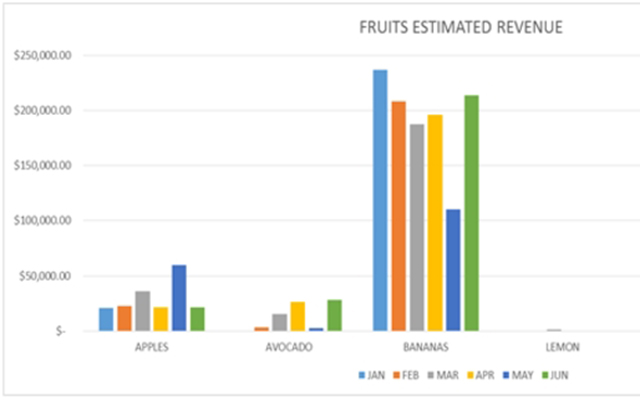
Memory loss is a real threat to collective knowledge. Building a modern economy means going beyond relying on human memory as long term knowledge store. The following graphic depicts an example of information that agricultural value chain actors can document to supplement their memory for decision making:
Accessing the long tail of knowledge through documentation
Building community knowledge centres and a structured documentation process gives farmers and other value chain actors a chance to test their collective knowledge against reality.
This will ensure they do not just believe information from any source, especially when the data are poor, noisy or ambiguous. Creative knowledge sharing structures based on conversations and documents will ensure people keep their minds open until they have tested their knowledge against reality.
It will address the current situation where many farmers are victims of untested and unverified knowledge. There are numerous examples where farmers and potential farmers have followed the wrong advice leading to loss of money and other resources. The sack potato myth was one example.
A combination of community knowledge centres and documentation will not only keep people’s memory fresh but also become a reliable basis for valuable knowledge and social capital. It is through documentation and community conversations that the long tail of community knowledge can be accessed by many people for socio-economic development.
Knowledge exists in many contexts that need to be cultivated so that agricultural value chain actors and ordinary citizens can re-allocate resources currently spent on hunting knowledge from diverse, incomplete sources.
Through structured knowledge sharing mechanisms, crucial pieces of knowledge can be picked from unexpected sources and positively integrated. People who offer incorrect knowledge can be rapidly corrected, thus removing wrong knowledge from the community. Participating in community discussions enables everyone to contribute knowledge and learn through listening.
Charles Dhewa is a proactive knowledge management specialist and chief executive officer of Knowledge Transfer Africa (Pvt) (www.knowledgetransafrica.com ) whose flagship eMKambo (www.emkambo.co.zw ) has a presence in more than 20 agricultural markets in Zimbabwe. He can be contacted on: [email protected] ; Mobile: +263 774 430 309 / 772 137 717/ 712 737 430.


 Online Reporter