Online Reporter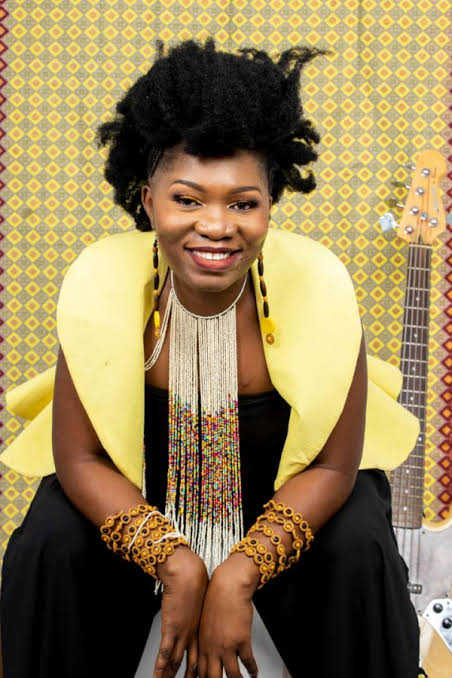
Mbulelo Mpofu, [email protected]
FOLLOWING recent celebrations of the pioneering women who shaped Zimbabwean radio, the spotlight naturally drifts toward another creative frontier where Zimbabwean women are making bold, history-shaping moves: the global music stage.
As the world recent celebrated International Women’s Day (IWD) 2026 and the start of Women’s Month, one name feels impossible to ignore — Edith WeUtonga. The bassist, singer, songwriter and driving force behind her band Utonga has secured a place at the iconic Shrewsbury Folk Festival in the UK this August, an achievement that places her firmly among Zimbabwe’s most influential cultural ambassadors.
Her upcoming performance at Shrewsbury from August 28th to 31st, hosted at the West Mid Showground, isn’t just another stop on an international tour. It’s a milestone. She becomes the first Zimbabwean musician ever invited to this long-running festival, where some of the top folk artistes from around the world take the stage.
The news comes as another recognition circles her career: her latest album, Varipasi, has been shortlisted for the 2025 Folk Album of the Year Award at the inaugural Folk Music Awards, a ceremony rooted in the UK and Ireland’s folk traditions.
For WeUtonga, it’s a moment that feels both exciting and deeply grounding.
“This (selection) makes me happy and I pay homage to God because I couldn’t have done it alone. It’s all because of Him and I can’t wait to perform,” she shared from the UK, her joy gently threading through every word.
Her journey, which began in Bulawayo, carries the unmistakable imprint of Amakhosikazi — the all-women ensemble birthed from the late Cont Mhlanga’s Amakhosi Cultural Centre. For many young women, it was the first time they were positioned not as background performers but as fully-fledged artistes capable of steering the music itself. “My job in the band wasn’t to play the bass guitar but to be the lead vocalist and compose and arrange the music,” WeUtonga said, looking back at those early formative years.
But the bass guitar found her in the most unexpected way.
“The turning point for me was when we got stuck somewhere on our way back from Victoria Falls, and all we had were the instruments in the car. While waiting for the emergency repair car to come, I started playing with the bass guitar to find the music I was singing.”
What began as a way to pass the time quickly became something more. Within a year, she owned her own bass. A year after that, she formed Utonga. And by 2010, her debut album, UTONGA, had launched.
The response was instant and overwhelming.
“Everything just blew up. I got so much recognition…5 stars in two reviews in big newspaper publications. That was when I started getting invited to festivals,” she said, still sounding slightly amazed by the speed of it all.
Her rise since then has been defined by a series of meaningful firsts — not simply career wins, but cultural and political ones too. She became the first young African woman elected Vice-President of the International Federation of Musicians (FIM). She was the first celebrated musician to complete a Midlands State University degree in Music Business, Musicology and Technology, paving the way for others such as Mono Mukundu and Sandra Ndebele. She became the first practising Zimbabwean musician to secure the Canon Collins Trust scholarship for a UK Master’s in Music in Development. She led locally as the first woman President of the Zimbabwe Musicians Union (ZIMU), delivering tangible progress for artists. And she became the first African recipient of Finland’s Nyrrki Award, honouring her music advocacy across borders.
Despite this international trailblazing, her music remains unmistakably Zimbabwean. Her sound knits together the familiar voices of Jiti, Chimurenga, and Shona folk, while allowing space for the colours of Rhumba, Reggae, Calypso and Jazz. It’s music that respects tradition but doesn’t feel trapped by it — music shaped by a woman who knows exactly where she comes from and where she intends to go. She has headlined the country’s major festivals, including Intwasa Arts Festival koBulawayo, Women in Jazz, the Harvest Festival, and Hifa, performing alongside the late Oliver Mtukudzi, Ismael Lo, and international groups like Publish the Quest. Her awards shelf carries the 2018 Bulawayo Arts Award for Best Alternative Act, along with multiple Nama and Zima nominations.
Her story — beginning in a women-centred performance group in Bulawayo and unfolding across some of the world’s biggest artistic landscapes — captures everything IWD 2026 stands for. It is a story about persistence, about saying yes to opportunity even in unexpected moments (like a broken -down car on the road from Victoria Falls), about challenging male-dominated spaces in both music and leadership, and about reaching global heights without losing sight of one’s cultural roots.
This August, when she steps onto the Shrewsbury Folk Festival stage, it will be more than a performance. It will be a moment that carries Zimbabwean music into a larger global spotlight — guided by a woman who has consistently opened the door wider for others. – Follow on X @MbuleloMpofu