Rutendo Nyeve, [email protected]
THE banking sector has made significant strides in recent years, evolving from simply mobilising and allocating capital to structuring bankable deals capable of attracting investment and unlocking funding for key economic sectors.
The shift, underpinned by renewed confidence in the financial system, has helped mobilise domestic capital to finance housing, roads, energy and agriculture, creating employment opportunities and improving livelihoods across Zimbabwe.
The progress comes amid rising bank deposits and an extension of lending tenures, with financial experts saying the sector is increasingly positioned to become a key driver of the country’s economic transformation.
CBZ Group chief strategy and transformation officer Mr Nkosana Ndlovu highlighted these developments at a recent function in Victoria Falls, where he outlined the state of the financial sector and its growing capacity to support national development.
He said the sector had recorded notable achievements despite prevailing challenges, with deposits growing steadily from US$3,2 billion in 2023 to US$5,9 billion by June 2026, almost doubling the deposit base.
Mr Ndlovu said banks were also extending credit over longer periods, with CBZ now offering mortgages of up to 10 years, compared with the previous five-year lending tenure.
“We’re very happy with the progress we’re making as the banking sector. We’ve gone beyond 2030 in terms of our lending time. We’ve gone to 10 years now on mortgages,” he said.
“The first one is to protect deposit sanctity. We know everyone is thinking another one-to-one is coming. We are working with the central bank, and I am very happy that we’re seeing positive direction as an economy at the moment.”
He said the banking sector remained sound, with capital adequacy at 24,1 percent and non-performing loans at 3,19 percent as of June 2026.
Mr Ndlovu cited CBZ Holdings’ recent recognition as Zimbabwe’s Best Bank at the Euromoney Awards for Excellence 2026, alongside other accolades, as evidence of the institution’s growing standing in the financial services industry.
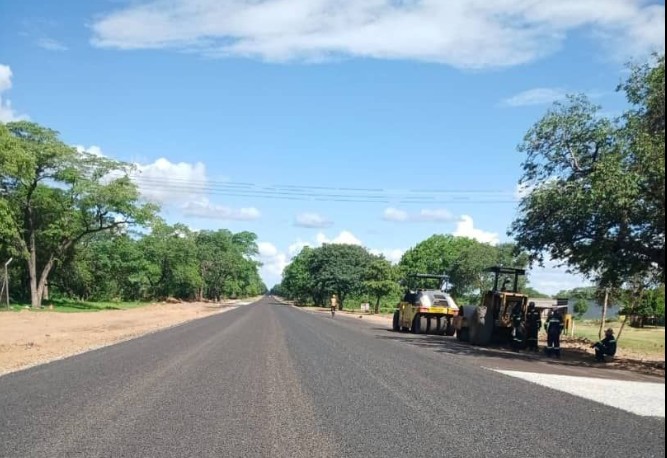
He said the Zinara Infrastructure Bond, which supports a US$600 million roads programme, had demonstrated the potential of properly structured financial instruments to mobilise domestic investment, with its first US$100 million tranche fully subscribed within a short period.
“As soon as we completed the structure, the first tranche we’re supposed to raise was US$100 million, and it was gone in a second. If you structure it right, the funding follows, and then there is trust in the economy. We raised it all locally. Now there is a scramble for the remainder,” he said.
“The construction of the Bulawayo-Victoria Falls road is proof that the equity is now available. In fact, we are raising money faster than the construction is going on the ground.”
Mr Ndlovu also revealed that CBZ had raised more than US$200 million through gold and platinum mining syndications in 2026, while partnering Afreximbank on a US$190 million financing package.
The package comprises US$150 million for trade finance and letters of credit to support exporters, US$20 million for small and medium-sized enterprises and another US$20 million for the ZETDC power syndication.
He added that Zimbabwe had been selected as one of the first three countries to host a national African Trade and Development Corporation (ATDC) hub, a joint venture between CBZ and Afreximbank, with US$1 billion earmarked over the next five years to promote intra-African trade.
Mr Ndlovu emphasised that development strategies required adequate financing to translate national ambitions into tangible outcomes, noting that the National Development Strategy 2 (NDS2) correctly identifies macroeconomic stability and financial sector deepening as the country’s first national priority.
He said the African Development Bank had estimated Zimbabwe’s annual financing gap to 2030 at US$3,76 billion, while the national savings target was 25 percent of gross domestic product, compared with the current level of about 10 percent.
“No one is going to change Zimbabwe for us, and that is where NDS2 becomes very important. Finance is the engine room for the Vision 2030 we are talking about,” he said.
“We have money in the country, which is not in the banking system, and before we start financing, we need to close the confidence gap.”
However, Mr Ndlovu acknowledged that the sector continued to face challenges, including statutory reserve requirements of 30 percent on demand deposits and 15 percent on time deposits, which constrain banks’ capacity to reward depositors.
He also highlighted the concentration of pension fund investments in property, which accounts for 44 percent of pension assets, while prescribed assets represent only about 10 percent, against the 20 percent target set by the Insurance and Pensions Commission (IPEC).
Monetary Policy Committee member Dr Persistence Gwanyanya concurred that the country’s financial and economic environment had improved significantly, with discussions around stability now markedly different from those held three or four years ago.
“The discussions are obviously different from three or four years ago. I can tell you that the discussions are pointing to a significantly improved stability environment,” he said.
Dr Gwanyanya, however, stressed that the progress achieved should serve as a foundation for further reforms rather than a reason for complacency.
“Humans are creatures of milestones. What this says to me is our work is not yet done. We need to keep pressing ahead with the transformation, the good work that has produced these results,” he said.