admin
admin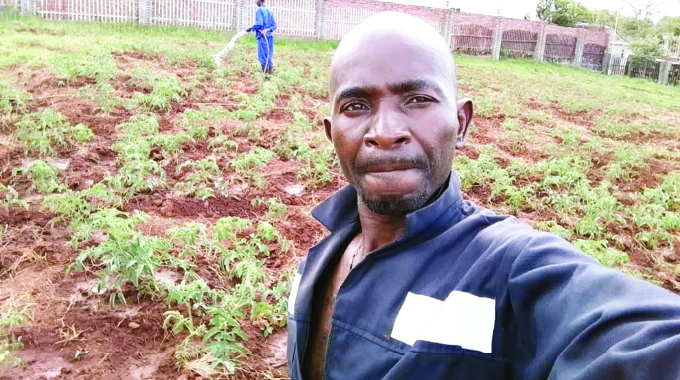
Kundai Marunya Art Correspondent
At a time local visual art is advancing on international markets, some visual artists are struggling to earn a living, leading them to pursue other money making schemes.
The struggle is not limited to rising artists trying to make a break into the market, but established names as well.
This has been the case with multi-award-winning Raphael Jamu, who recently made headlines for winning art competitions, painting potraits of prominent figures and a failed trip to Brazil, as he failed to manage to raise money to travel.
Jamu, along with a group of artists from Hillock Art Foundation, had been invited for a cultural exchange programme by the Instutito Reggae Art, a renowned art foundation in Brazil that works with children from underprivileged backgrounds.
Having received courtesy visas and part sponsorship for the travel, Jamu and his team failed to raise the remaining amount, despite wide calls for support and foiled promises. Jamu said he has turned to farming to supplement income.
“We realised that money from art sales was not enough to live on let alone fund art related activities like travelling for exchange programs,” he said.
“We decided that while we wait for other opportunities, as art business is currently down, together with artists I was going to travel with to Brazil, we approached prominent businesswoman Zodwa Mkandla for space to plant our horticulture produce in her backyard.”
Jamu said Mkandla ended up funding the whole project.
“She ended up buying us inputs and assisting us with financial and material needs for a project which we hope will start paying soon,” he said.
Jamu said their area of focus was horticulture.
“We are growing tomatoes and lettuce on a large scale hoping to keep on expanding so that we will be able to fund future activities,” he said.
“Even though the doors to Brazil are not yet closed, we will travel someday, funds permitting, but for now we focus on raising money by other means to support our passion for art.”
On the art front, Jamu has been making inroads into the South African markets where his work is on display at a gallery in Cape Town.
“I have seven art pieces on display at Funky Gallery in Cape Town,” he said. “I will auction them in January next year. Demand for art in Zimbabwe is quite low to the extent that people negotiate on prices of work to pay small amounts that are not sustainable.”
Winstone Mudumo, who was supposed to travel with Jamu to Brazil, supplements his income by working as a municipal security officer for City of Harare.
Many artists in Zimbabwe have diversified their income streams to be able to feed their families, some taking on corporate jobs and other income generating activities.
This, however, reduces time spent perfecting and producing art.
Renowned visual artist Keith Zenda said the local market needs to grow so that artists can focus on expanding their work.
“There is need to educate our communities about the importance and value of art as an investment not just as home decoration,” he said.
Other visual artists have been doing very well especially on the international front, with the likes of Moffat Takadiwa selling to Hollywood celebrities.
Takadiwa said there is need to grow the sense of appreciation of art locally.
“There is already an interest from the local community but it also takes initiatives from the artists and all the players to be accessible,” he said.
“Our National Arts Gallery of Zimbabwe (NGZ) needs to be accessible, for example with my show there, I made sure that it was accessible to the extent that people could just walk in the gallery and see the show.”
Takadiwa said many artists have been working to make their art more accessible.
“I have a projects space called the Mbare Art Space at the centre of Mbare,” he said. “It’s built there because I wanted people to have access, that’s how we can grow the local market and audience.
“When we talk of an audience its not just about the money we can get from it but us engaging with local people.
“I have been working on that and I know there are many other artists doing the same including Admire Kamudzengerere and Wallen Mapondera in Chitungwiza, Gina and Misheck Masamvu who runs Village Unhu, Chikonzero Chazunguza’s Dzimbanhete.
“These are artists making an effort to establish centres where people can come to experience art.”
For Takadiwa, it is a holistic approach to art that is growing the industry, and artists have already started enjoying the benefits.
“Zimbabwe has so many players at the contemporary arts scene both black and white doing also great things,” he said.
“We have so many people working in the art administration and art distribution network around the world including artists based in Scotland, Paris, New York, South Africa among many other countries.”
It may take time for artists to tap into existing networks, but with the registered growth in the sector, eventually a good artist’s work will be on demand.
Institutions such as the NGZ are always on the look out for the next crop of artists, and that includes nurturing them and taking care of their welfare to the best of their budgets.


 Online Reporter