Online Reporter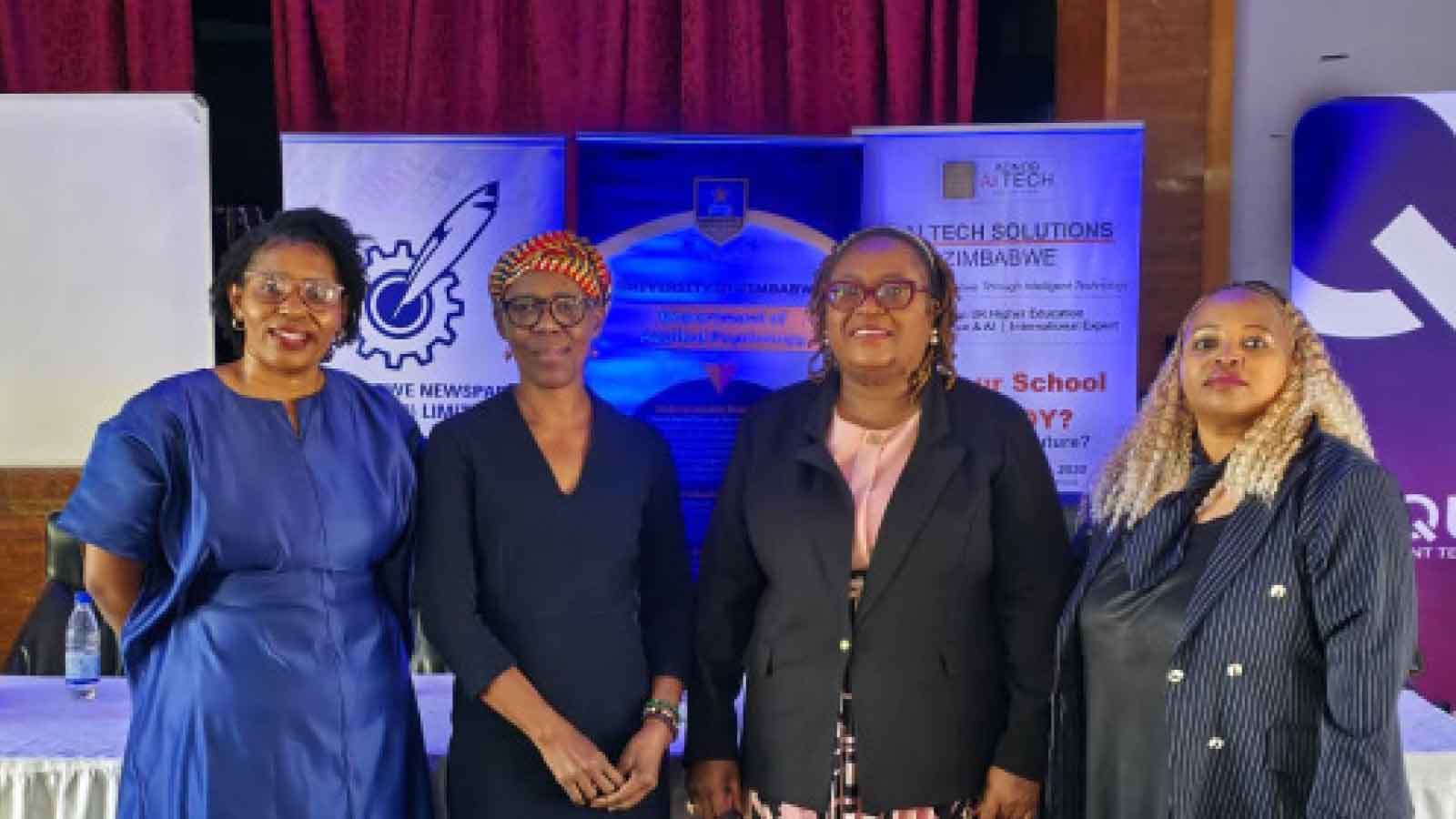
Remember Deketeke-Herald Correspondent
STUDENTS and institutions of higher learning have been urged to embrace artificial intelligence and digital technologies as the Fourth Industrial Revolution continues to reshape industries, workplaces and economies across the globe.
The Herald Editor, Victoria Ruzvidzo, said this at an AI workshop attended by university students at Blakiston Primary School in Harare yesterday.
Ruzvidzo said digital transformation was no longer a future concept but a present reality that demanded immediate adaptation by both learners and professionals.
The veteran journalist said academic qualifications alone were no longer sufficient to guarantee success in the modern workplace.
“Employers today are not only looking for academic qualifications. They are seeking graduates who can navigate the digital environment,” she said.
“Your papers or degree certificate will not take you very far, but you need to be technologically adept.”
Ruzvidzo said digital literacy had evolved from being an added advantage to becoming a prerequisite for employment and career advancement.
“Digital literacy is no longer an added advantage. It is a fundamental requirement for success in the modern economy,” she said.
“If you were looking for a job, digital literacy used to be an added advantage. But now it is a must. It is a prerequisite. You have to have it.”
Ruzvidzo said AI was rapidly transforming key sectors, including healthcare, agriculture, manufacturing, finance, media and education, making it imperative for young people to develop competencies in emerging technologies.
“The ability to understand, utilise and work alongside AI-powered tools will increasingly distinguish those who thrive from those who struggle to remain relevant,” she said.
Ruzvidzo noted that Zimbabwe’s digital transformation agenda is aligned with President Mnangagwa’s vision, in which digitalisation and innovation have been prioritised as drivers of economic growth and national competitiveness.
“The National Artificial Intelligence Strategy and the National Development Strategy recognise that the country’s future prosperity will depend significantly on its ability to harness emerging technologies and build a digitally skilled workforce,” she said.
Ruzvidzo challenged students to position themselves at the forefront of technological change by acquiring skills in AI, digital communications, data analytics, content creation and innovation.
“The skills you require today in artificial intelligence, digital communication, data analytics, content creation and innovation will not only enhance your employability, but also empower you to become creators of solutions, entrepreneurs and leaders in the digital world,” she said.
Participants welcomed the workshop, saying it had broadened their understanding of how AI could be applied in their future careers.
A final year student at the University of Zimbabwe, Mr Tadewa Nashezimu, said the growing influence of AI made it essential for students to acquire relevant skills before entering the corporate world.
“Since AI is becoming more and more prevalent in this day and age, the whole idea is working smart, not hard,” he said.
“I look to gain more knowledge as far as AI is concerned so that when we get into the corporate world, it will be easier to manoeuvre.”
Another participant, Ms Mavukwa Simakuni, a final-year student studying Child Development and Psychology at the University of Zimbabwe, said AI presented both opportunities and challenges for psychologists.
“I am here at the AI workshop to learn how we can use AI in our psychological practice,” she said. “We hope to learn how we can address and adapt to artificial intelligence in psychological training.”
The workshop formed part of ongoing efforts to equip Zimbabwean students with the knowledge and skills required to participate effectively in an increasingly digital and AI-driven economy.
The inaugural AI workshop was spearheaded by two women, Dr Moreen Mudenda, an industrial/organisational psychologist from the University of Zimbabwe and Mrs Liliosa Padenga, the lead consultant from Adnob A.I Tech.
OmniContact and Liquid Intelligent Technologies, financially supported the workshop.
The workshop was held to practically start implementing the goals of the National AI Strategy launched by President Mnangagwa in March, by digitally empowering final-year UZ psychology students in preparation for the future of work.