malvernmugadzikwa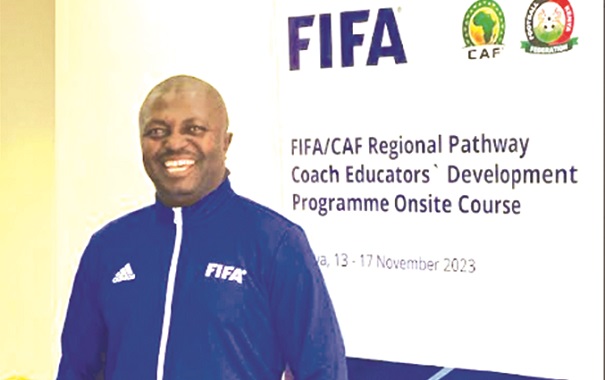
Zimpapers Sports Hub
IT has been seven months since Wilson Mutekede left as ZIFA technical director, but the ex-Shabanie Mine coach and CAPS United team manager has not been lost to the game.
Mutekede has emerged as one of only 17 FIFA-accredited coach educators under the Confederation of African Football (CAF).
He is also a member of the COSAFA Technical Study Group (TSG) tasked with analysing and assisting Southern African nations with reports on their respective teams’ performances.
Zimpapers Sports Hub caught up with Mutekede on his return from a COSAFA TSG workshop last week.
The former technical director expressed concern over the “knowledge gaps’’ he has observed among local coaches and administrators, which he felt was pegging back local football.
Mutekede urged continuous education and warned coaches that their CAF badges expire after three years. They would need to partake in refresher and other courses to build on their capacities.
***************
Q: The football fraternity may want to know what Wilson Mutekede has been up to since leaving ZIFA last year.
A: Wilson Mutekede is grateful for the break he has had from football since November last year. This allowed for a deserved break of recharging and refocusing. It also coincided with courses I had to attend, one under the FIFA coach educators’ development programme, two under the CAF elite instructors’ programme and another was an elite coach educator developer course in Morocco.
The break also allowed me to enrol for a diploma in tactical analysis run by one of the leading football learning institutions.
Q: You were recently in South Africa for a COSAFA Technical Study Group workshop. Can you shed some light on what this entailed?
A: I was in South Africa for the TSG symposium, where I am part of the COSAFA TSG. The theme was “Bridging the gap on technical excellence”. The thrust was to enlighten member associations’ general secretaries, TDs (technical directors) and senior national team coaches for both men and women on the specific functions and roles of the TSG during COSAFA tournaments. It was also meant to draw their attention to the importance of going through TSG reports after tournaments, which highlight important trends, strengths and challenges of teams.
These identify critical areas of need for performance improvement of their national teams. The symposium, the first of its kind in Africa, also touched on sports science (where I was also a panellist), performance analysis, sports psychology and goalkeeping. The idea was to bring the region out of the visual into the information age trends.
Q: We understand you are now one of only 17 coach educators in Africa. What does this mean for you?
A: Yes, and I am grateful to be part of the elite 17 CAF coach educator developers. It has been a challenging journey full of demanding courses, which have shifted from the previous tradition of instructors’ approach to the new coach educator methodology that entails an andragogic, purely learner-centred approach.
Q: What would you attribute this to?
A: I attribute this to grace and a commitment to continuous improvement. You may be aware that coach education now demands people who have academic and professional credentials, with the ability to apply modern blended teaching methods.
Q: How different is it from the old coach instructor?
A: The old instructor approach assumed all the knowledge was with the instructor as he was the centre and source of knowledge. The new coach-educator approach acknowledges that everything is learner-centred. The coach educator just facilitates the learning process through the LEARNS model that acknowledges that adults possess previous knowledge and experience.
Q: A lot has been said about CAF coaching badges, with some appearing to relax once they attain them. What is the lifespan of the licences?
A: A CAF diploma or any other academic or professional qualification does not guarantee permanent lasting knowledge. One has to continuously improve and refresh oneself, especially in football, where trends are very dynamic.
Every CAF diploma is renewed via a refresher course, where a three-year practising licence is issued according to the CAF Convention.
Q: There is a worrying trend of a knowledge gap among local coaches and administrators. What seems to be the problem?
A: The knowledge gap points to a disconnect between continuous learning and the improvement of coaching skills. A decision to further study means overcoming contentment inertia and I guess this is not easy for some of us in the country.
Q: Are there any interventions being made by CAF and COSAFA to capacitate coaches?
A: COSAFA is mooting ideas on running regional coaching courses to try and bridge these knowledge gaps in coaching and football administration as well.
Philosophically, I believe potential has no retirement plan. That which is inside us which we have not used yet is potential should not contemplate retiring until we get our football to competitive levels. Ours is about others.


 Online Reporter