Sundaymail Editor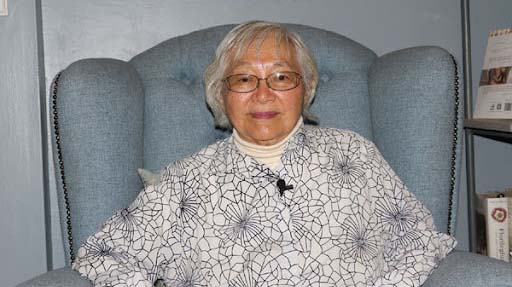
Leroy Dzenga
Senior Writer
ZIMBABWE’s liberation struggle was a process of sacrifice.
Many young men and women left their studies to join the “comrades” on the war front.
They refused to be skilled labour in an unjust society, and elected to forgo education to fight for a more equitable country that they wished for; one which afforded everyone equal opportunity, regardless of their race.
However, there was an unintended consequence in that the new nation that awaited them at the edge of the horizon, would inevitably demand skills gained through education.
There was a risk of a scenario in which those who toiled, risking life and limb, would be bystanders in a country born out of their effort.
Luckily, there were senior participants in the struggle who had the foresight to ensure that as the war raged, freedom fighters progressed with their education, to stand a chance in post-colonial Zimbabwe.
One such person was Dr Fay Chung.
An educator who understood the utility of knowledge, she pushed to ensure that freedom fighters were educated.
“Tens of thousands sacrificed their educational opportunities to go and fight. Now younger people may be more educated than they are.
“This was a conscious sacrifice. Their marriages and lives were affected, both for better and for worse,” Dr Chung told The Sunday Mail in a virtual interview.
Dr Chung, whose grandparents were Chinese immigrants to Zimbabwe, had taught underprivileged learners in Gwelo (now Gweru) and in Mbare in the 1960s.
This was after she had graduated with qualifications in education at the University of Rhodesia and a Masters degree in Education from the University of Leeds in the United Kingdom.
The experience of teaching black children in townships made her understand the inequalities which were born out of the exclusionary colonial system which was in place.
In the early 1970s, Dr Chung would go to Zambia to lecture at the University of Zambia in Lusaka.
At this point, nationalist movements were active in neighbouring countries and she began aligning with their political philosophies.
She officially joined ZANU in 1973.
Her role, primarily, was to assist with ensuring that comrades had the requisite basic education which would at least make them candidates for academic progression in independent Zimbabwe.
She worked together with the likes of Dzingai Mutumbuka, Sheba Tavarwisa, Ernest Kadungure and Sam Geza to establish schools.
These would help comrades during the war and ex-combatants immediately after independence to have an education, in instances where they could no longer assimilate into the conventional system of learning because of age and war experience.
For some period, they worked out of Tanzania and Mozambique, in exile, after the banning of ZANU in Rhodesia.
Some of the schools which were born out of their efforts include Chindunduma in Madziva, Rusununguko High near Marondera, Mavhudzi in Nyazura and Fatima High in Lupane, among others.
Dr Chung was at some point in the line of fire herself, when Mudzingadzi Camp was attacked by Rhodesian forces and she sustained injuries together with a few other comrades.
In post-independence Zimbabwe, Dr Chung was to continue on the same path of pursuing the intellectual liberation of the country, as the silencing of guns meant the war had shifted to the mind space.
After serving in the civil service, which saw her working in the Ministry of Education firstly as a senior administrator between 1980 and 1988, Chung was appointed Minister in 1988, a post she held until 1993, when she left the Government.
Dr Chung was among the pioneering Ministry of Education workers that set the foundation for the proud academic record that Zimbabwe holds to date.
There was a phase of political disagreements, which saw Dr Chung leaving ZANU PF in the mid-2000s.
In the 2008 election she ran for Senate under Simba Makoni’s Mavambo/Dawn/Kusile project.
The election defeat saw her retreat to other aspects of her life, like writing and capturing history.
Although she could not shed light on her current work during the conversation with The Sunday Mail, she gave assurances that she has been working on something whose details would be shared in due time.
Now 80, Dr Chung has found her way back to ZANU PF.
Her re-admission was officially announced by the party last month.
Explaining her decision to return, Dr Chung said she feels at home in the party that brought independence to the country.
“As a veteran and early member of ZANU (I joined in 1973), I believe I have spent a major part of my life under ZANU and later ZANU PF, and am entitled to share in its glory while at the same time not afraid to face some of the challenges it faces today.”
Her decision to re-join the party has been met with optimism by observers who are banking on her to share her insights and experiences with party functionaries who are serving the country.
“ZANU PF is the largest and most important party in the country. It has more than one million members. It is essential that we look at everything it is doing, as its advantages as well as mistakes will lead the country into either great success or serious dangers,” she said.
Dr Chung said even though it is 41 years after independence, there should be sustained commitment to deliver the Zimbabwe that freedom fighters sacrificed for.
“Tens of thousands died in that war, and we should not forget the ultimate sacrifice of their lives,” she said.
Some of the promises that saw many taking up arms included a functioning economy, good education and opportunities for all.
This is in tandem with what the Second Republic is trying to achieve under the National Development Strategy 1.
Dr Chung said Zimbabwe should seek inspiration from how other countries have managed to better the lives of their citizens.
“China was a poor country not so long ago with a per capita income of US$300 a year. Today she is the second wealthiest country in the world with a per capita income of over US$10 000 a year. The USA is the richest country in the world. China has managed to do this in a record period of about 60 years.
“From Zimbabwe and Africa’s point of view, China is likely to invest in Africa, whereas the West is more likely to invest in itself. Already China is investing more in Africa, and is likely to increase this amount,” said Dr Chung.
“Africa is under-industrialised and un-industrialised and has an enormous potential for manufacturing growth which has reached its zenith in the north. Africa also has under-developed agriculture and markets which can benefit from regional economic growth”.
Dr Chung for long has been passionate about women’s education and leadership.
This saw her collaborate with Professor Hope Sadza to set up the Women’s University of Africa.
She said women have a central role to play in the growth of independent Zimbabwe and there is a need for more co-ordination and intent in their efforts.
“A very important aspect of women leadership is to join together intellectual women with grassroots leaders. There are many women intellectuals. There are also many women grassroots leaders. In the past they tended to separate, intellectuals keeping to themselves, and the grassroots to themselves.
By working separately they have weakened their positions. It is essential for the two groups to work co-operatively,” Dr Chung said.
Zimbabwe is set to celebrate Heroes and Defence Forces holiday this month.
During this time, plaudits are usually directed at those who led the politics and those who shot at the enemy using bullets, but there is the forgotten intellect.
The thinkers, who made sure comrades had replicable ideological and academic education during the days of the struggle.
Dr Chung is in the class of selfless educators who decided to abandon their well standing careers to help liberate the country, albeit academically.


 Online Reporter