


 Chronicle Editor
Rutendo Nyeve, Features Reporter
TEN of the 17 bills that have been gazetted and tabled before Parliament are now at the second reading stage in the national assembly, Parliament has revealed.
Parliament last Tuesday released the status of the 17 bills that are set to be aligned to the country’s constitution. The bills are at various stages with the majority now at second reading stage.
While there are two types of bills that can be brought to Parliament, namely the private bills and public bills, the majority of the bills tabled before Parliament are public bills with only one private bill on the August House table.
According to the Parliament of Zimbabwe, Public Bills generally go through various preliminaries, even long before they go to Parliament. However, after gazetting, the bill is referred to a Portfolio Committee of Parliament which looks into the functions of the ministry responsible for administering the bill. The Portfolio Committee conducts public hearings with members of the public especially interested groups, to enable them to make an input.
Once the bill is tabled before Parliament, it goes through various stages that range from the first reading, second reading, committee stage, report stage, third reading, Presidential assent and ultimately the enrolment of an act.
According to a paper by the Parliament of Zimbabwe on legislative review, prior to the first reading, the minister gives notice in either of the two houses of his intention to present a bill.
“On the appointed day the minister presents the bill by reading the long title. No debate takes place at this stage which is the formal introduction of the bill before the House. The bill is referred to the Parliamentary Legal Committee in terms of the Constitution and Standing Orders to determine whether, if enacted, the Bill would be in contravention of the Declaration of Rights or any other provision of the Constitution.
“At the second reading stage, the minister explains the principles of the bill. The Parliamentary Portfolio Committee presents its report containing its findings and recommendations. The debate on the bill then ensues. The bill is then read a second time. If any amendments are proposed to the bill, the House may refer the bill back to the Committee to prepare the necessary amendments for the Committee Stage in the Committee of the whole House,” reads the review.
At the committee stage, the whole House resolves into a committee for the purpose of considering the bill in detail clause by clause. The guiding principle is that the committee should make such amendments in the bill as may seem likely to render it more acceptable. The Committee, however, should make sure that it does not amend the bill in a manner that is in sharp conflict with the principles of the bill. The committee will also consider the recommendations made by the relevant portfolio committee.
The bill then goes to the report stage which is a purely formal stage where the Chairman of the Committee of the whole House reports the recommendations made to the bill and these are either accepted or rejected, thus ensuring that the bill represents the opinion of the majority of the House.
It is then tabled for the third reading where a debate may take place, as at the second reading, on the principles of the bill. However, no new issues which were not raised during the Second Reading may be raised.
When a bill has been duly passed in terms of the provisions of the Constitution or the requirements of the Standing Orders and signed by the Clerk of Parliament, it must be presented to the President for assent within 21 days in terms of the Constitution. The President grants his assent by authenticating a fair copy of the Act with his signature and attaches the public seal. If the President withholds his assent, he must return the Bill to Parliament.
After Presidential assent the Clerk of Parliament must cause the authenticated copy of the Act to be enrolled on record in the office of the Registrar of the High Court and such copy will be conclusive evidence of the provisions of such Act.
The Act then comes into operation on a date published in the Government Gazette on agreement. Thus, cognisant of the procedures explained above, the Parliament of Zimbabwe last Tuesday announced the statuses of the 17 bills before the whole house as follows:
“Six of the gazetted bills namely The Insurance bill, Child Justice bill 2020, Children’s Amendment 2021, Prisons and Correctional Services 2021, Labour Amendment bill 2021, the Justice Laws Amendment bill and the Electoral amendment bill have adjourned debate at second reading stage in the national assembly.
“Four other bills namely the Public Finance Management amendment bill 2021, Medical Services amendment, the Electricity amendment bill 2022 as well as the Criminal Law Codification and Reform are at the second reading stage in the national assembly,” reads the update.
This past week the Private Voluntary organisations amendment bill 2021 became one of the leading in the amendment process as it is now being transmitted to Printflow for production of Act proofs.
“One private bill which is the Institute of Chartered Loss Control and Private Security Managers bill is now at the consideration stage in the national assembly amendment’s notice of presentation has been received,” reads the update.
The Mines and Minerals bill which awaits gazetting has so far had its notice of presentation transmitted to the ministry.
Meanwhile, in an interview with Sunday News, Speaker of Parliament Advocate Jacob Mudenda said the amendments are done to ensure that all laws are constitutionally compliant.
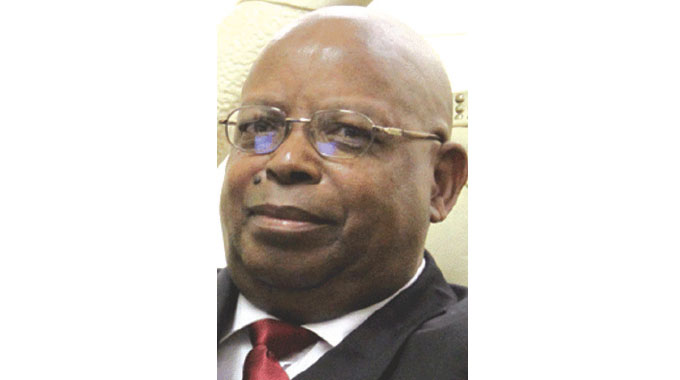
“Chapter 1 article 2 of the Constitution clearly states that this constitution is the supreme law of Zimbabwe and any law practice, custom or conduct inconsistent with it is invalid to the extent of the inconsistency. So all laws must be constitutionally compliant. That is the premise of aligning laws to the constitution. People should read the Hansards to follow the debates on these bills in Parliament. Our website is clear, you can visit our website and look at our Hansards as the debates are clearly captured there,” said Advocate Mudenda. – @nyeve14.


 Online Reporter