peter
peter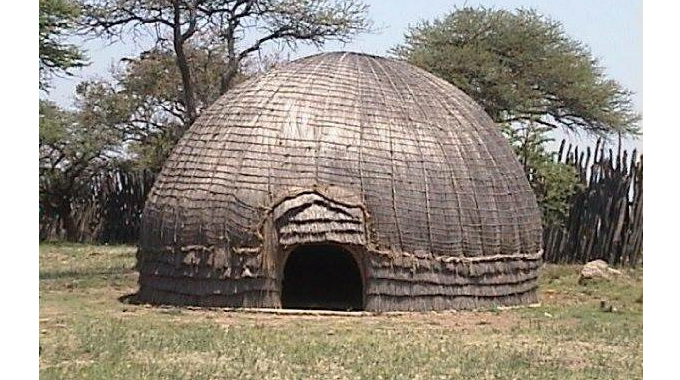
ARCHITECTURAL surveys and excavations between July and August 1997 revealed more about Ndebele royalty, particularly with regard to the King being the central figure within the nation and state.
His occupation of the highest rung in the socio-political and economic ladder was brought to the fore and bared. One theme that was given attention during both the survey and excavations related to architecture.
Architecture was a functional activity that related to the use of space by a given community.
That was done with a view to building structures that served various purposes such as residential houses, structures for grain storage, cattle byres and armouries, inter alia.
Building reflected the architectural traditions of the people including their world-view, history, traditional practices inherited from the past, available natural materials, among other considerations.
At the same time, architecture goes beyond functionality and utility to express a community’s ideas with regard to their aesthetics and beauty.
Design, in particular, expresses a community’s ideas with regard to beauty, what informs it and the attributes inherent in the architecture and related ideas concerning aesthetics and beauty.
For the Ndebele people, and indeed other African groups, the cosmos inspired their ideas and perceptions of aesthetics. Attributes such as movement, circularity, rhythm (regularity, seasonality/periodicity), and symmetry are some of the cosmic characteristics that the Ndebele adopted and incorporated into their architecture and other creative endeavours.
Of interest to us in this article is to see what surveys and excavations carried out between July and August 1997 pointed to the King as the Number one citizen, the most important person and the richest on the land.
The traditional beehive hut that belonged to the King was, as revealed by the topographical survey, the highest structure within the cultural landscape.
The relationship between physical height (altitude) and socio-political and economic “height” has been dealt with in the past. In terms of physical dimensions, the royal beehive was the biggest.
We could say the structure was, in modern day terms, some sort of State House. That was obviously a pointer to the role and importance of the King within the royal town and indeed, the state itself.
The royal town that Gibixhegu, later KoBulawayo, was, made it the site of the most rapid changes to the material culture within the State. White visitors such as hunters, traders, geologists, explorers and missionaries had passed through Gibixhegu. The trend started during the reign of King Mzilikazi.
We know that the London Missionary Society (LMS)’s Reverend Dr Robert Moffat visited the King in 1854 when the latter lived at eMahlokohlokweni west of iSiphongo Hill off the Bulawayo-Inyathi Road.
During his visit to Fountain in about 1872 King Lobengula noticed that some houses for the missionaries were built out of fired bricks. This was quite a departure from what he knew where timber strips and clay were the main materials in hut construction, in addition to the grass of course.
He wanted the same type of houses built for him at his headquarters. He possessed the political power and authority to command that the same be built for him.
Before excavations at Old Bulawayo, there were broken pieces of red bricks that lay scattered about.
However, the foundations, as the substructure was not visible. It was left to excavations to reveal the nature and extent of the building foundations.
Superstructures were captured through drawings made by visitors to koBulawayo especially during Inxwala ceremony, which many whites attended for its glamour and glitter.
The July-August 1997 surveys and excavations exposed the foundations that were covered under the rubble of bricks, soil and grass. It was then that the foundations were revealed, comprising stone slabs laid on the ground.
The rectangular structures, of 90-degree angles, were exposed and that marked the beginning of changes with regard to the hut design for the Ndebele. It could not have started anywhere else other than at Old Bulawayo the site of change and residence of the Number 1 citizen.
Whereas traditional Ndebele architecture was characterised by circularity, Western architectural traditions were making inroads into Ndebele architecture and resulting in changes that would henceforth be associated with new architectural ideas.
The rectangular houses became associated with modernity and so-called civilisation. In later years, up to date, traditional hut design has been associated with kitchen huts where traditional activities take place.
This has translated to modernity being restricted to sleeping houses, which are of a rectangular design, and where cement has replaced clay. Either zinc or asbestos sheets have replaced grass as roofing material.
This, to Africans, has become the hallmark of modernity and progress.
It is an idea which King Lobengula himself expressed. When it came to things traditional and spiritual, he made use of his iqhugwana, the beehive hut, in line with Ndebele traditional architecture.
By so doing, he sought to link with the past spiritual world of his forebears. Spiritual elements were characterised by conservatism or resistance to change.
During rituals, perceived as spiritual and desiring linkage to the past, the King dressed traditionally. It was a question of traditional practices within the context of traditional attire and traditional architecture.
The Western type structures were more massive than the traditional ones especially when the royal huts were compared.
In fact, there were two European type structures with rectangular designs, one of which seems to have been a storage room for royal artefacts. These structures had foundations made from stone slabs, with their designs being rectangular and made of fired bricks.
Both the neighbouring Jesuit Mission, started in 1879, and the traders’ houses, were made out of stone. However, it was a tradition that the Ndebele did not broadly adopt.
The fired brick house was adopted because of associated perceptions, a perception that endures to this day. The “My Beautiful Home/Comba Indlu Ngobuciko” Project in Matobo North District has maintained the aspect of considering what constitutes traditional architecture.
The kitchen huts characterised by traditional architecture are the ones considered in the competition. “Modern” houses, actually the sleeping houses of asbestos/zinc under plastered fired brick wall, are not considered when it comes to the competitions.
Largely, the pigments used in decorating the walls are traditional and are applied to huts that are regarded as the epitome of preserved traditional architectural designs.
The designs themselves are traditional, comprising in the main of geometric icons that are informed by the cosmos. Through maintenance of traditional architecture, room has been left to express connectedness, relevance and rootedness.
The thinking seems to be that the people seek to link with their past and spirituality through things traditional including traditional architecture.
Once again, the archaeological surveys and excavations did bring out the role and importance of the King within the royal settlement and the State itself. It is important in this regard, to appreciate that the royal town was more of an exception rather than the general rule.
What we see are adaptations to meet unique considerations that relate to the King and his role and importance.
Other settlements away from the royal town were organised differently as there was no need to incorporate the same considerations relevant to the royal residence.



 Online Reporter