Chronicle Editor
Business Writer
SUPPLY chain challenges remain one of the primary obstacles for economic growth and diversification in Africa as businesses continue to pay inflated prices for nearly every consumable and operational product that is not locally grown or manufactured.
This emerged during high-level discussions at the ongoing annual African Hospitality Investment Forum (AHIF) in Nairobi, Kenya where leaders from across the hospitality sector and policymakers are gathered to discuss growth opportunities in the region.
Environment, Climate, Tourism and Hospitality Industry Minister, Mangaliso Ndlovu, is among the dignitaries at the conference to share the country’s insights and learn from regional peers.
In a Press statement issued yesterday by Toggle Hospitality Insights, one of the leading tourism players taking part it the forum, industry leaders have expressed the need for Africa to leverage local and regional sourcing and the adoption of innovative ways to reduce operational costs.
“For too many years, African hospitality leaders have worked incredibly hard to maintain operational standards when critical products are unavailable to be sourced on time due to a myriad of reasons, from changing trade restrictions, poor transport infrastructure, currency fluctuations, and supply chain breakages,” reads the statement.
Already, the recent World Bank 2022 AfCFTA report shows that the borders between African countries rank among the most restrictive in the world, and is the main reason there is relatively little intra-African trade and investment.
“The impact of this in real terms is putting the break on the growth of regional businesses while limiting the flow of the international supply chain, which in turn heavily relies on intra-African trade routes (where goods are transported across several borders by land routes) due to poor infrastructure and lack of trade and custom harmonisation,” it said.
For locally grown African hospitality investors and operators, the supply chain challenges remain acute, and ramifications have meant consistent delays in the growing pipeline of projects, along with sometimes turbulent price fluctuations on shipping and logistics services, as well as effects of weakened domestic currencies.
However, there are promising signs that this status quo is changing fast as the African hospitality industry is in the throes of a massive transformation. Ground-breaking trade measures, rapidly evolving technology, and a fresh generation of visionary leaders are seen as key transformation agents.
These forces are challenging the traditional “business as usual” mindset and are reshaping the African hospitality landscape.
The African Continental Free Trade Area (AfCFTA), the largest free trade area globally since the formation of the World Trade Organisation, is also set to significantly bolster intra-African trade.
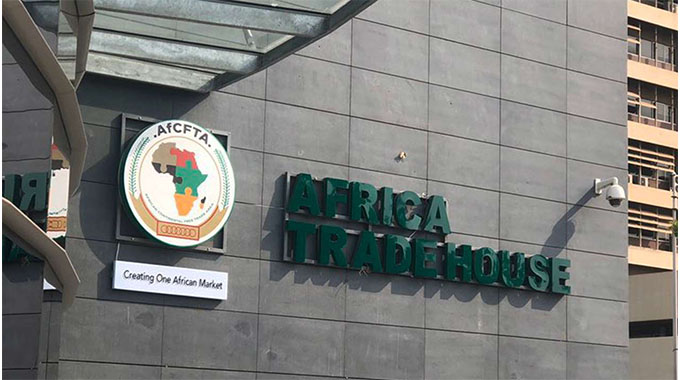
By reducing trade barriers, it allows a more fluid movement of goods, services, and people across borders. The ripple effect will be profound, with the hospitality sector one of the many industries reaping the benefits of this regional integration.
The lessons of the Covid-19 pandemic have been harshest on the world’s largest continent, which has for so long relied on suppliers in far-flung countries, most heavily on goods from China, European Union (EU) countries, United States and India.
Research by Toggle Hospitality on its clients across Africa has shown examples of multiple duties paid to receive goods crossing several borders resulting in highly inflated pricing for essential products and equipment.
“The good news is that there are signs across all industry sectors of more joined-up thinking and increased regional co-operation,” it said.
In addition, Toggle has said the highly lauded and anticipated roll-out of the AfCFTA’s success requires mutual and significant policy reforms and trade facilitation measures to reduce red tape, simplify customs procedures, and make it easier for African businesses to integrate into global supply chains.



 Online Reporter