

 aurora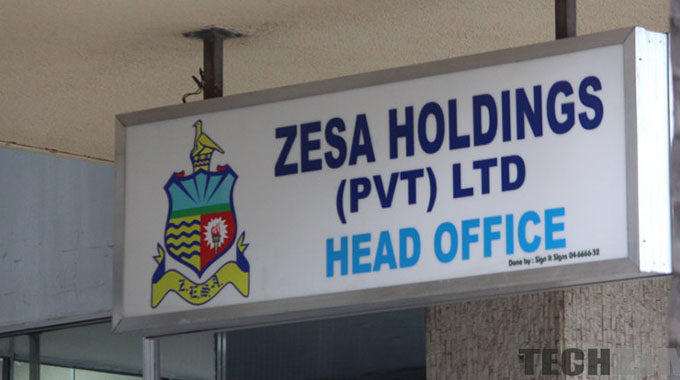
Golden Sibanda
More than 45 directors and senior managers who were suspended by State power utility ZESA Holdings over alleged graft, have been milking the technically insolvent electricity company since October 2018 by drawing hefty salaries and other perquisites without working, sources say.
Their suspension follows recommendations of a forensic audit into the operations of ZESA and its subsidiaries, done by Price Waterhouse and Coopers (PwC), for disciplinary action against senior managers accused of a range of elaborate schemes of impropriety, suspected to have cost the group millions of dollars.
The audit, which unearthed startling accounts of corruption, multi-million dollar tender irregularities, collapse of governance systems and all sorts of corporate malfeasance among others transgressions, was commissioned by the Ministry of Energy and the Auditor General’s Office.
According to the audit, investigations covered ZESA Holdings and its subsidiaries — Zesa Enterprises (ZENT), Powertel, Zimbabwe Power Company (ZPC) and Zimbabwe Electricity Transmission and Distribution Company (ZETDC) — which were haemorrhaged through rampant corruption and gross mismanagement.
The audit has been submitted to President Mnangagwa and Parliament of Zimbabwe as well as the Auditor General’s. Energy and Power Development Minister Fortune Chasi, who last year described the findings as “horrendous” and “frightening”, this week, said internal processes were underway at the power utility to address the issues in line with recommendations of the audit.
“The report has been laid before Parliament, but at the moment we are leaving processes to take place in-house and once they are done they will give me a report on what has transpired.
“Government is very interested in the execution of the recommendations made in the audit report. The key thing for us is that when an audit report is compiled we take it seriously and recommendations that would have been made we take them seriously,” he said.
Most of the suspended directors and senior executives have not reported to work since October 2018 when the disciplinary hearings started although it emerged that some have were absolved of any wrong doing while others were only cautioned.
Reputed lawyers Atherstone and Cook and Winterton conducted the disciplinary hearings and later wrote to lawyers of all the accused persons giving their verdicts. Sources alleged the two law firms pocketed a staggering $17 million from ZESA for their work.
It has also emerged executive chairman Sydney Gata, reappointed to the position for the third time in December last year to clean up the mess at the parastatal and to reposition it on sustainable path, was not happy with the huge bill paid just for the disciplinary processes.
“The executive chairman even questioned it saying how can we be paying people who are not working. If you calculate the total amount that has been paid to people who are not working, it runs into millions. They are paying school feels for the managers’ kids, full salaries and allowances like fuel and everything,” a source said.
While ZESA had renewed the suspensions on expiry since October 2018, the power utility has not issued communication to any of the affected managers since the last suspensions lapsed in February 2020. One of the suspended managers then tried to go back to work but was told the board was still seized with the matter.
Business Weekly understands that the disciplinary panel gave its verdicts on the executives accused of graft across the group’s operations and its subsidiaries that included ZENT, ZETDC, ZPC and Powertel. The verdicts were for either dismissal or final written warning.
And at least five senior executives were reportedly found guilty for misconduct and were recommended for dismissal, but nevertheless the directors, who were implicated but not suspended, have reportedly continued to report for duty.
Among those found guilty were ZETDC managing director Engineer Julian Chinembiri, ZETDC finance director Thoko Dhliwayo, ZPC acting managing director Engineer Robson Chikuri, former ZPC operations director Joshua Chirikutsi and ZENT operations director Engineer Philemon Dhafana.
Contacted for comment ZESA spokesman Fullard Gwasira said: “The disciplinary processes are still ongoing and have not been concluded yet.
“Once they have been concluded the individuals will be advised and only then will ZESA be able to make public the findings.”
No response to further questions could be obtained for clarity.
But findings of the forensic audit are quite telling; after investigators unearthed systematic schemes through which the senior management of ZESA and its units disregarded procurement regulations and invariably overpaid for critical materials needed by ZESA.
In one of the instances, while ZENT was supposed to make a down payment of US$6,2 million to PME, it overpaid by US$3,2 million, curiously at a time when the unit was experiencing cash flow problems.
It was also alleged that ZENT paid PME US$11 million without purchase orders, in breach of Section 45 (c) of the Public Finance Management Act and the Technology Transfer Agreement (TTA) between the two entities.
However, ZENT managers who were interviewed by the PwC blamed ZESA’s former group chief executive officer, Engineer Joshua Chifamba, for the anomaly.
There also seemed to have been a suspicious relationship between ZESA and the Indian firm, which bled the parastatal through inflating the cost of supplied materials after a comparative survey of other global suppliers showed PME’s prices to be 47 percent higher.
In other acts of profligacy, ZESA reportedly splurged US$600 000 between 2012 and 2017 on executive vehicles for Engineer Chifamba; a Mercedes Benz S350 worth US$209 202, a Toyota Landcruiser (ACO3070) valued at US$175 790, a Mercedes Benz GL350D (ADY9279) worth US$126 785,22 and a Toyota Fortuner, which cost ZESA US$65 789,55.
Engineer Chifamba’s contract allegedly did not put a cap on the value of the vehicle the CEO could buy, which made determination of what car to buy him and at what value, essentially, subjective.
PwC also queried circumstances surrounding the award of a 100MW solar power plant development project to Intratrek Zimbabwe, which is fronted by flashy businessman Wicknell Chivayo. According to the audit, terms of the tender were altered to accommodate the Harare businessman’s firm, which it claims had lost out in the initial single tender to Chinese firm China Jiangxi.
Auditors also said ZESA awarded an electricity vending tender to one of Zimbabwe’s biggest retail supermarkets without going to tender, violating standing rules, which is feared could have prejudiced the power utility significant funding from potential excessive commission.


 Online Reporter