Online Reporter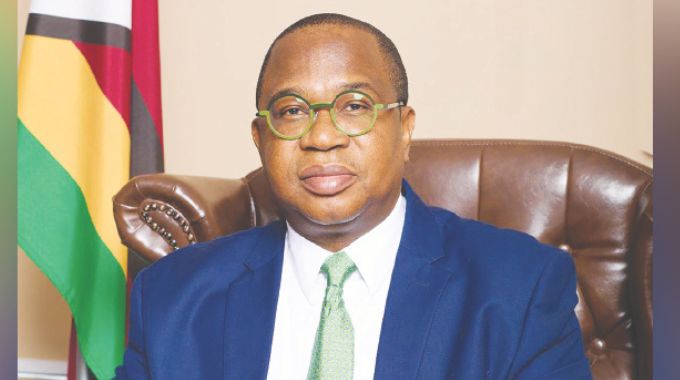
Nelson Gahadza
Senior Business Reporter
Finance, Economic Development and Investment Promotion Minister Professor Mthuli Ncube has called for sustainability to be embedded across Zimbabwe’s financial system.
Minister Ncube said the country must move beyond policy commitments and channel capital towards productive investments that create jobs, generate exports and support long-term economic growth.
In a speech read on his behalf by the Ministry’s director of financial sector policy, Mrs Judith Ncube, at the Reserve Bank of Zimbabwe (RBZ) Financial Sector Sustainability Summit in Harare yesterday, Minister Ncube said sustainability should become a central feature of how Zimbabwe mobilises savings, manages risk, allocates capital and finances economic transformation.
“The capital exists, the opportunities exist and the institutions exist. Our task is to connect all these more effectively,” he said.
He said the two-day summit, which brings together the Government, the central bank, financial institutions, regulators, industry, investors and other stakeholders, should result in practical mechanisms for converting Zimbabwe’s economic opportunities into bankable projects and productive businesses.
“Let us move from potential to projects, from projects to investment, from investment to productive businesses and from productive businesses to jobs, exports and sustainable economic growth and development,” he said.
Professor Ncube said Zimbabwe was approaching the sustainability agenda from an increasingly favourable macroeconomic position, with the economy having grown by 8,3 percent in 2025, while the Government was projecting growth of about 5 percent this year.
He said the projected expansion in 2026 was being supported by improved electricity availability, favourable agricultural conditions, elevated mineral commodity prices and continued investment in the productive sector.
Prof Ncube said strong economic activity recorded during the first quarter of 2026, particularly in manufacturing, mining, agriculture, wholesale and retail trade, demonstrated the resilience of the economy and the opportunities emerging across key sectors.
“These are not mere statistics, they are signals of confidence,” he said.
However, Professor Ncube cautioned against treating macroeconomic stability as an end in itself, saying it must translate into higher investment, increased production and improved household incomes.
“Durable or sustainable stability is the foundation. Transformation is the objective, while sustainable prosperity for all Zimbabweans is the ultimate desired outcome,” he said.
He said the Government remained committed to fiscal discipline and close coordination between fiscal and monetary policy to preserve price, currency and exchange-rate stability.