admin
admin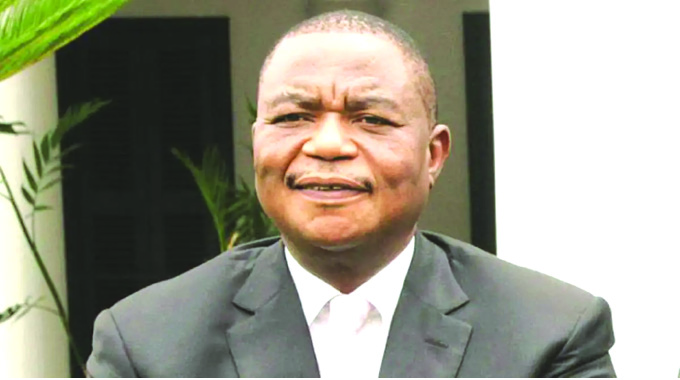
Rumbidzayi Zinyuke in Victoria Falls
As Africa recovers from the shock of Covid-19, East and Southern African countries have moved to strengthen sexual reproductive health and rights for their populations to ensure vulnerable communities have better access to health services.
This week, 23 countries in the region are meeting in Victoria Falls for a symposium on sexual reproductive health and rights that seeks to take stock of available models and approaches to strengthen this area.
The regional symposium is being convened by the “2gether4SRHR” programme, a comprehensive regional initiative funded by the regional sexual reproductive health and rights team of Sweden.
The programme aims to improve the sexual and reproductive health and rights of all people in East and Southern Africa, particularly adolescent girls, young people and key populations, by promoting an integrated approach to this issue, HIV and gender-based violence. It is being implemented jointly by UNAIDS, UNFPA, UNICEF and the World Health Organisation in partnership with regional economic communities and civil society organisations among other partners.
Officially opening the symposium yesterday, Vice President and Minister of Health and Child Care Dr Constantino Chiwenga, represented by chief director public health Dr Munyaradzi Dobbie, commended the support from partners to fund sexual reproductive health and rights in Zimbabwe and the region.
“In Zimbabwe more than US$10 million from 2018 to date has been invested in the programme. Your support has resulted in improved access to services.
“Most crucially was the flexibility that the funding came with, which made it possible for the Government to respond to some unanticipated challenges such as cyclone Idai and the COVID-19 pandemic,” he said.
VP Chiwenga said the Government was committed to working with all funding and technical partners towards ensuring an improved quality of life for its citizens.
The symposium was an opportunity to take stock of the progress made, celebrate achievements and identify promising practices for replication in other countries.
“It is also a time to rededicate ourselves towards the achievement of universal access to sexual and reproductive health and rights of women, men, boys, and girls in East and Southern Africa.”
UN Resident and humanitarian coordinator for Zimbabwe Mr Edward Kallon said the symposium had provided a timely opportunity to amplify the collective lessons drawn over the past five years of implementation of the programme.
“Funding provided through the 2gether4SRHR programme facilitated identifying and addressing bottlenecks, that were preventing the intended beneficiaries from enjoying their right to appropriate health care and well-being. Integration of available services was identified as a key enabler for broadening service access while at the same time improving quality and demonstrating the value for both human and financial resources,” he said.
He said Cyclone Idai in March 2019 and Covid-19 had affected the vulnerable communities, limiting access to critical health services and supplies, and causing emotional and economic devastation.
“Funding from 2gether4SRHR enabled agility in responding to these public health emergencies through strengthening of community systems that supported the most vulnerable members of society, and the health system through emergency procurement of equipment and supplies – demonstrating the humanitarian-development-peace nexus,” Mr Kallon said.
He encouraged stakeholders to continue collaborative efforts to ensure sexual and reproductive rights were respected, protected, and fulfilled as part of Covid-19 socio-economic recovery and measures to address menstrual hygiene poverty, sexual and gender-based violence, child marriages and teenage pregnancy.
Governments had to take measures to de-stigmatise services for sexual reproductive and health rights that ensure a step towards gender equality while ensuring that all such services including family planning and antenatal care were affordable for all women and girls, particularly those living in poverty.
UNFPA deputy regional director Ms Chinwe Obgonna said the region was still facing many shocks and humanitarian crises and conflicts which called for continuous efforts in sexual reproductive health and rights programming.
“The 2gether4SRHR programme has stood the test of time. The beauty about it is that we had implementation before Covid-19 and implementation during the pandemic and post Covid-19. So indeed what great opportunity it is for us to learn how intergovernmental mechanisms can also be fostered because we have less than 8 years to the Sustainable Development Goals in the region and the aspirations of Africa Agenda 2063, the Africa we want. It is critical that we amplify the demonstrable evidence that we gathered around us,” she said.
She said there were some outstanding issues in the region including HIV, teenage pregnancies, gender based violence, multi-dimensional forms of inequality and limited access to comprehensive abortion care and limited access to modern contraceptives and the age of consent.
“We have learnt from Covid that there are fault lines and weaknesses in these systems that underpin the common agenda that we are here to achieve. It is important for us to pay attention to those and identify how we can unlock the bottlenecks that limit them,” Ms Ogbonna.
Head of the Regional SRHR Team of Sweden Ms Elizabeth Harleman expressed Sweden’s commitment to supporting the provision of sexual reproductive health and rights services in the region.
“Sweden has a long and proud history of standing alongside with our partner countries in advancing common interests in support of health equity and social justice. Sweden is an avid supporter of multilateral cooperation. We see integrations, regional collaboration as integral to realising a safe and inclusive world that leaves no one behind,” she said.



 Online Reporter