admin
admin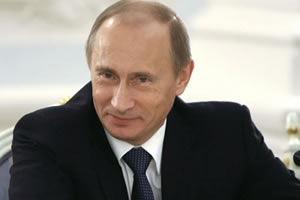
Sharon Hofisi Correspondent
The Syrian crisis raises pertinent questions which are multifarious: Is it geopolitics at its worst in the Middle East? Is the crisis enmeshed in national interests and survival of states on a polarised international scene? Is the superpower intervention a clear testimony to the inaction of supranational
bodies such as the United Nations: the envoys and the United Nations Security Council?
Is the serious humanitarian crisis affirming the need to respect individual sovereignty — human rights —s0 in the contemporary world? To what extent can it be said that the intrastate conflict and the prolonged belligerence are indicators of identity, power politics or P-5 hegemony the world over? The Syrian crisis. What does the crisis mean, and what do I think it means?
What is axiomatic? Syria is important in biblical idiom and to the study of contemporary politics. Biblically, Syria had alliances with Ephraim or Northern Israel.
The Syro-Ephramite Alliance was a political alliance meant to thwart the menace of Assyria, the latter a chastising instrument of YHWH, the tetragrammaton God of Israel. Assyria would sign suzerainty treaties with its client states or protectorates. Syria today is located in the hotbed of politics, the Middle East. The Assad regime has enemies who wish it away even in the event of a transitional government — such as the US, and allies, such as Russia, who want the regime to be part of any transitional government. With Syria’s cultural heritage unparalleled, pillaging and looting of historical object d`art may exacerbate the crisis — the Iraq looting provides the precedent of what might happen after the demise of an incumbent. Iraq relics were looted following the demise of Saddam Hussein; the Syrian relics may be the target of the belligerent IS, the rebels, and other states involved in the conflict.
Who dominates the Middle East?
The Middle East, to which Syria is but a big party, is home to ‘oil’ resource wars. Geopolitics has seen countries like Iran competing with superpowers such as Russia and the US. Geopolitics provides us with the following explanations: Iran, a potential nuclear state, has to be controlled by powerful nations such as the US through the US-Iran deal of 2015. The US once considered Iran part of the `axis of evil` with North Korea. The Obama administration has been considering Iran to be an `outlier`.
The US-Iran deal is of strategic significance when it comes to the US’s re-engagement strategy with Iran. The deal has allowed Iran to pursue its hegemonic interests in the Middle East. The death of senior Iran militiamen in Syria such as General Hamedani speaks volumes about Iran’s presence in Syria. Bastani (2015) quotes General Hamedani as saying in 2014 that Iran had trained 70 000 Syrians into 128 NDF battalions. The number is now believed to be at 100 000. Iran is reported to have laid on assaults on rebel-held areas in Syria. Bastini opines that about 130 000 militiamen and women have volunteered to support the Assad regime. General Soleimani, the commander of the Islamic Revolutionary Guards Corps’s (IRGC) overseas operations, has vowed attack against the terrorists who killed General Hamedani. The presence of Iran, hegemonic or as a geopolitical strategy, provides legitimacy to the Assad regime.
It is this legitimacy that justifies the intervention by superpowers like Russia. Turkey, which enjoyed hegemony in the Middle East under the Ottoman Empire, has also been affected by the Syrian crisis. Walt (2015) notes that “Turkey is. . . deeply opposed to the Bashar al-Assad regime in Syria (once a very close friend), and facing new challenges from Kurdish groups both inside Turkey and in Iraq and Syria. It is also deeply hostile to the Islamic State and its relations with Iran — another former friend and key trading partner — have been badly strained by Tehran’s support for Assad”.
Russia`s geopolitical stance on Syria has changed sharply over the past few months. Its support of the Assad regime started with the use of Russia`s UN Security Council (UNSC) political contraption, the veto, which successfully avoided UNSC intervention in Syria in the not so distant past. Russia has been a stumbling block to the US in relation to Syria`s chemical weapons and inclusion of Assad in Syria`s transitional politics. Both the US and Russia have from early 2014 been in agreement expressing concern that a deadline be set for the complete removal of chemical weapons in Syria.
There is no general consensus on both Russia`s and the US`s realpolitik in Syria. Revered political thinkers such as Morgenthau saw politics as a continuous struggle for power among nations. Geopolitics, as a form of power politics, can still be understood in terms of sub-regional, regional or superpower interventionism. Recently, a Russian plane was downed and US President Barack Obama opined that a bomb may have been used. For followers of strategic studies and international law, it is necessary to understand Russia and the US interventions in this line of argument considering the ripple and spillover effects of the Syrian crisis.
Return to Cold War days
Russia, then USSR, `competed` with the US during the Cold War. In typical Clausewitz lexicon, the Cold War was enmeshed in the ideology that “war is politics with other means”. The war that was cold is seen in the war that is Syria — a struggle for superpower relevance. Both Russia and the US have used the need to combat ISIS and `other` forms of terrorism as the immediate justification. While the US attacks the Assad regime’s use of barrel bombs in Aleppo and other areas, Russia has been launching air strikes against Assad opponents. The Russian parliament approved the call by President Putin to intervene in Syria on September 30 2015. Moscow justifies its intervention on the basis that it is acting preventatively to fight and destroy militants.
A cursory look on the ripple and spillover effects of the crisis in Africa: North Africa, the birthplace of the Arab Spring (or Arab winter due to the incessant conflicts in the Arab world), is oftentimes considered a part of Turkey, the `sick man of Europe`, or the Ottoman Empire.
For starters, Turkey has its origins in the Ottoman Empire, which included North Africa and Palestinian lands. The Syrian crisis has caused Turkey to abandon its `zero problems with neighbours` geopolitical foreign policy. The terrorist acts emanating from the ISIS belligerence have caused an increase in Turkish civilian deaths near the border with Syria. The United States has lifted military embargo on Egypt, obviously with the strategic need to thwart terrorism in the region. Nigeria fights Boko Haram, whose brazen contempt for Western education has seen it rebranding into the Islamic State for the Western Africa Province (ISWAP).
On individual sovereignty: Here’s what worries the world: The migrant crisis has seen the US projecting that it might accept 70 000 to 100 000 Syrian refugees until 2017. Rebels and ISIS terrorists have threatened personal, organizational and national security in Syria. The Vienna Communique, which envisaged the need for a transitional authority, has not seen the light of the day due to superpower rivalry, and disagreement between the warring parties in Syria.
Inasmuch as Washington and Moscow struggle for clear lines in Syria, their influence has also worked to the detriment of individual sovereignty. Civilians have been displaced, maimed and killed en-masse. The sanctity of human life has been sacrificed at the altar of political expedience.
Syria, like Turkey, and the other Middle Eastern countries that have been affected by the Arab Spring, is doubtlessly at a crossroads and the direction it takes will have lasting consequences. The United Nations`s peacekeeping efforts have failed. Regime loyalists, the rebels and Islamic fundamentalists have disregarded individual sovereignty.
- Sharon Hofisi is a lecturer in Democracy and Human Rights at the University of Zimbabwe. He writes in his own capacity and can be contacted at [email protected] .


 Online Reporter