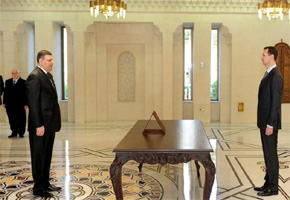
Syrian prime minister defects

Syrian state television said Hijab had been fired, but an official source in the Jordanian capital Amman said he had been dismissed only after he fled across the border with his family.

Syrian state television reported Hijab’s dismissal as government forces appeared to prepare a ground assault to clear battered rebels from Aleppo, the country’s biggest city.

The opposition Syrian National Council said a further two ministers and three army generals had defected with Hijab. That assertion could not immediately be verified.

Hijab was a top official of the ruling Baath party but, like all other senior defectors so far from the government and armed forces, he was also a Sunni Muslim rather than a member of Assad’s Alawite sect, which has long dominated the Syrian state.

“Hijab is in Jordan with his family,” said the Jordanian official source, who did not want to be further identified. The source said Hijab had defected to Jordan before his sacking.

Assad appointed Hijab, formerly agriculture minister, as prime minister only in June following a parliamentary election which authorities said was a step towards political reform but which opponents dismissed as a sham.

Hijab’s home province of Deir al-Zor has been under heavy Syrian army shelling for several weeks as Assad’s forces try to dislodge rebels from large areas of countryside there.

Syrian television said Omar Ghalawanji, who was previously a deputy prime minister, had been appointed to lead a temporary, caretaker government yesterday.

Assad and his father, who was president before him, have consistently appointed premiers from the majority Sunni community. However, the position is largely powerless and control has remained with Assad, his family and security chiefs from the Alawite community, an offshoot of Shi’ite Islam.

Earlier in the day, a bomb blast hit the Damascus headquarters of Syria’s state broadcaster as troops backed by fighter jets kept up an offensive against the last rebel bastion in the capital.

The bomb exploded on the third floor of the state television and radio building, state TV said. However, while the rebels may have struck a symbolic blow in their 17-month-old uprising against Assad, Information Minister Omran Zoabi said none of the injuries was serious, and the channel continued broadcasting.

Rebels in districts of Aleppo visited by Reuters journalists seemed battered, overwhelmed and running low on ammunition after days of intense shelling of their positions by tanks and heavy machinegun fire from helicopter gunships.

Emboldened by an audacious bomb attack in Damascus that killed four of Assad’s top security officials last month, the rebels had tried to overrun Damascus and Aleppo, the country’s commercial hub, near the Turkish border.

But the lightly armed rebels have been outgunned by the Syrian army’s superior weaponry. They were largely driven out of Damascus and are struggling to hold on to territorial gains made in Aleppo, a city of 2,5 million.

Damascus has criticised Gulf Arab states and Turkey for calling for the rebels to be armed, and state television has described the rebels as a “Turkish-Gulf militia”, saying dead Turkish and Afghan fighters had been found in Aleppo.

Paralysis in the UN Security Council over how to stop the bloodshed forced peace envoy Kofi Annan to resign last week, his ceasefire plan a distant memory.

The violence has already shown elements of a proxy war between Sunni and Shi’ite Islam which could spill beyond Syria’s border. The rebels claimed responsibility for capturing 48 Iranians in Syria, forcing Tehran to call on Turkey and Qatar — major supporters of the rebels — to help secure their release.

Yesterday, Syrian army tanks shelled alleyways in Aleppo where rebels sought cover as a helicopter gunship fired heavy machineguns.

Snipers ran on rooftops targeting rebels, and one of them shot at a rebel car filled with bombs, setting the vehicle on fire. Women and children fled the city, some crammed in the back of pick-up trucks, while others walked on foot, heading to relatively safer rural areas.

The main focus of fighting in Aleppo has been the Salaheddine district. One shell on Sunday hit a building next to the Reuters reporting team, pouring rubble on to the street and sending billows of smoke and dust into the sky.

State television said Assad’s forces were “cleansing the terrorist filth” from the country, which has been sucked into an increasingly sectarian conflict that has killed about 18 000 people and could spill into neighbouring states.

The army appeared to be using a similar strategy in Aleppo to the one used in other cities where they subjected opposition districts to heavy bombardment for days, weakening the rebels before moving in on the ground, clearing district by district.

Syria’s two main cities had been relatively free of violence until last month when fighters poured into them, transforming the war. The government largely repelled the assault on Damascus but has had more difficulty recapturing Aleppo.

Rebel commanders say they anticipate a major Syrian army offensive in Aleppo and one fighter said they had already had to pull back from some streets after army snipers advanced on Saturday under cover of the fierce aerial and tank bombardment.

“The Syrian army is penetrating our lines,” said Mohammad Salifi, a 35-year-old former government employee. “So we were forced to strategically retreat until the shelling ends,” he said. — Rtrs.

Syrian prime minister defects

Syrian state television said Hijab had been fired, but an official source in the Jordanian capital Amman said he had been dismissed only after he fled across the border with his family.

Syrian state television reported Hijab’s dismissal as government forces appeared to prepare a ground assault to clear battered rebels from Aleppo, the country’s biggest city.

The opposition Syrian National Council said a further two ministers and three army generals had defected with Hijab. That assertion could not immediately be verified.

Hijab was a top official of the ruling Baath party but, like all other senior defectors so far from the government and armed forces, he was also a Sunni Muslim rather than a member of Assad’s Alawite sect, which has long dominated the Syrian state.

“Hijab is in Jordan with his family,” said the Jordanian official source, who did not want to be further identified. The source said Hijab had defected to Jordan before his sacking.

Assad appointed Hijab, formerly agriculture minister, as prime minister only in June following a parliamentary election which authorities said was a step towards political reform but which opponents dismissed as a sham.

Hijab’s home province of Deir al-Zor has been under heavy Syrian army shelling for several weeks as Assad’s forces try to dislodge rebels from large areas of countryside there.

Syrian television said Omar Ghalawanji, who was previously a deputy prime minister, had been appointed to lead a temporary, caretaker government yesterday.

Assad and his father, who was president before him, have consistently appointed premiers from the majority Sunni community. However, the position is largely powerless and control has remained with Assad, his family and security chiefs from the Alawite community, an offshoot of Shi’ite Islam.

Earlier in the day, a bomb blast hit the Damascus headquarters of Syria’s state broadcaster as troops backed by fighter jets kept up an offensive against the last rebel bastion in the capital.

The bomb exploded on the third floor of the state television and radio building, state TV said. However, while the rebels may have struck a symbolic blow in their 17-month-old uprising against Assad, Information Minister Omran Zoabi said none of the injuries was serious, and the channel continued broadcasting.

Rebels in districts of Aleppo visited by Reuters journalists seemed battered, overwhelmed and running low on ammunition after days of intense shelling of their positions by tanks and heavy machinegun fire from helicopter gunships.

Emboldened by an audacious bomb attack in Damascus that killed four of Assad’s top security officials last month, the rebels had tried to overrun Damascus and Aleppo, the country’s commercial hub, near the Turkish border.

But the lightly armed rebels have been outgunned by the Syrian army’s superior weaponry. They were largely driven out of Damascus and are struggling to hold on to territorial gains made in Aleppo, a city of 2,5 million.

Damascus has criticised Gulf Arab states and Turkey for calling for the rebels to be armed, and state television has described the rebels as a “Turkish-Gulf militia”, saying dead Turkish and Afghan fighters had been found in Aleppo.

Paralysis in the UN Security Council over how to stop the bloodshed forced peace envoy Kofi Annan to resign last week, his ceasefire plan a distant memory.

The violence has already shown elements of a proxy war between Sunni and Shi’ite Islam which could spill beyond Syria’s border. The rebels claimed responsibility for capturing 48 Iranians in Syria, forcing Tehran to call on Turkey and Qatar — major supporters of the rebels — to help secure their release.

Yesterday, Syrian army tanks shelled alleyways in Aleppo where rebels sought cover as a helicopter gunship fired heavy machineguns.

Snipers ran on rooftops targeting rebels, and one of them shot at a rebel car filled with bombs, setting the vehicle on fire. Women and children fled the city, some crammed in the back of pick-up trucks, while others walked on foot, heading to relatively safer rural areas.

The main focus of fighting in Aleppo has been the Salaheddine district. One shell on Sunday hit a building next to the Reuters reporting team, pouring rubble on to the street and sending billows of smoke and dust into the sky.

State television said Assad’s forces were “cleansing the terrorist filth” from the country, which has been sucked into an increasingly sectarian conflict that has killed about 18 000 people and could spill into neighbouring states.

The army appeared to be using a similar strategy in Aleppo to the one used in other cities where they subjected opposition districts to heavy bombardment for days, weakening the rebels before moving in on the ground, clearing district by district.

Syria’s two main cities had been relatively free of violence until last month when fighters poured into them, transforming the war. The government largely repelled the assault on Damascus but has had more difficulty recapturing Aleppo.

Rebel commanders say they anticipate a major Syrian army offensive in Aleppo and one fighter said they had already had to pull back from some streets after army snipers advanced on Saturday under cover of the fierce aerial and tank bombardment.

“The Syrian army is penetrating our lines,” said Mohammad Salifi, a 35-year-old former government employee. “So we were forced to strategically retreat until the shelling ends,” he said. — Rtrs.

Related Posts

ZimParks celebrates historic translocation of black rhinos to the shores of Lake Kariba

Fairness Moyana, [email protected] A group of critically endangered black rhinoceros has been reintroduced into Matusadona National Park in a landmark conservation achievement that marks the return of one of Zimbabwe’s…

Beyond Western Hype: Truth of China-Zimbabwe Resource Ties

By Mafa Kwanisai Mafa For decades, Africa’s abundant mineral wealth has fuelled the development of Europe and North America, yet it has failed to lift African nations out of persistent…

Leave a Reply

Your email address will not be published. Required fields are marked *

×
×