Online Reporter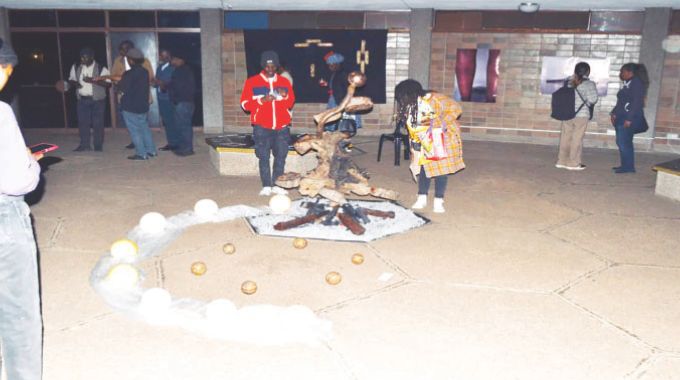
Mbulelo Mpofu, [email protected]
AT a time when climate change, environmental destruction and biodiversity loss are major global concerns, a thought-provoking exhibition at the Natural History Museum of Zimbabwe in Bulawayo is offering a different perspective on conservation. Instead of looking only to modern science for solutions, it is encouraging people to revisit indigenous knowledge and traditional practices that helped communities protect nature for generations.
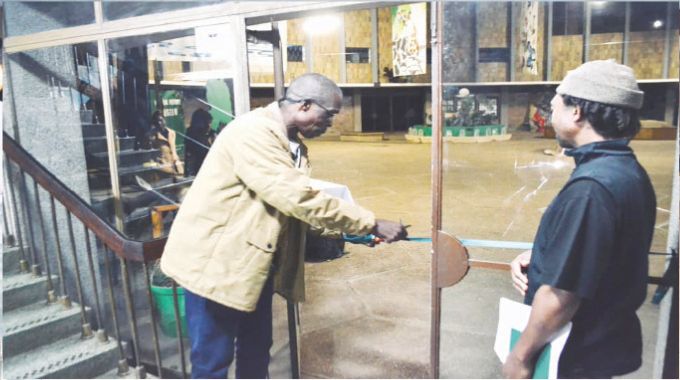
The exhibition, titled Taboos and Conservation: Back to the Future, opened on June 19 and runs until August 19. It is a collaboration between Black The New Green (BTNGreen) and the Natural History Museum of Zimbabwe.
Curated by Bulawayo visual artist Fisani Nkomo and Dr Andrew Mulenga, the exhibition explores how traditional taboos, known as amazilo, were once used to protect natural resources and maintain harmony between people and the environment.
Far more than an art exhibition, the project brings together contemporary art, conservation, indigenous knowledge and public discussion. It builds on last year’s mini performance art festival of the same name, which was held at Amagugu International Heritage Centre in Matobo. This year’s edition is larger in scale and seeks to spark deeper conversations about how conservation is understood and practised today.
At its core is the idea that taboos were never simply cultural superstitions, as they are often perceived today. For generations, they served as practical systems that regulated the use of water sources, forests, wildlife and communal resources, while promoting responsible behaviour within communities.
As the curatorial statement notes: “Conservation was never a separate activity within these societies. It was embedded within everyday life through systems of knowledge that connected people to land, water, animals, ancestors and future generations.”
The exhibition argues that these knowledge systems should not be viewed as relics of the past. Instead, they remain valuable sources of wisdom that can contribute to modern discussions around sustainability and environmental protection.
This idea is reflected in the exhibition’s title, Back to the Future. Rather than promoting nostalgia, it suggests that solutions to today’s environmental challenges may be found by revisiting and adapting the knowledge of previous generations.
The choice of venue is also significant. The Natural History Museum, an institution dedicated to preservation, research and education, provides a fitting setting for conversations about conservation. However, the exhibition also encourages visitors to think critically about the role museums have played in shaping knowledge.
Drawing on decolonial ideas, the curators acknowledge that many museums in Africa were established within colonial systems that often prioritised Western scientific perspectives while sidelining indigenous knowledge. The exhibition challenges this imbalance by placing indigenous ways of knowing at the centre of the conversation.
In doing so, it invites museums to become more than places where objects and information are stored. Instead, they can serve as spaces where different forms of knowledge are shared, debated and reimagined.
The museum’s circular architecture adds another layer of meaning to the exhibition. For the curators, the shape symbolises continuity, renewal and interconnectedness — ideas that resonate strongly within many African worldviews.
Unlike the Western concept of time as a straight line moving from the past into the future, many indigenous cultures see time as cyclical, linking ancestors, the living and future generations. Knowledge is therefore not abandoned but continually revisited, adapted and passed on.
Throughout the exhibition, artists engage directly with these themes through a range of installations, performances and visual works.
In Seeds of Self, Serah Chule and Dr Gankhanani Moffat Moyo use millet seeds to explore identity, memory and cultural heritage. Accompanied by ritual performance and the song Bunga Bwa Male, the work reflects on how people reconnect with traditions disrupted by colonialism, migration and modern life.
Nomvuyiso Mabi’s Uzilo Lwaloluko focuses on taboos linked to initiation practices and cultural knowledge. Using black cloth and acts of planting, the work mourns the loss of traditions while suggesting that restoration can bring both cultural and environmental healing.
Banji Chona presents You Have Come to Me in a Waking Dream/Kuyoya a Kuye Ya Portal, an immersive installation inspired by the spiritual ecology of the Zambezi region. Drawing on medicinal plants and the principles of simalende-ism, the work portrays taboos as ethical guides that shape relationships between people, rivers, plants, spirits and the natural world.
Nkomo’s own work, Imfukwa: What We Bury, What Buries Us, & What We Return To, explores Matobo cosmology through performance, stone, earth and silence. The piece reclaims the colour black as a symbol of rain, fertility and ancestral wisdom, while presenting stones as carriers of memory and responsibility.
Owen Maseko’s Ukufihla – Ukufihlwa examines rituals of concealment and ancestral invocation, showing how communities once regulated their relationship with both the visible and unseen worlds.
Environmental issues feature strongly in Danisile Ncube’s works Unganyeli Emthonjeni, Forbidden Flames, Greedy and Wasteful.
These pieces demonstrate how traditional taboos surrounding water sources, forests and consumption often served practical ecological purposes by encouraging restraint and collective responsibility.
Other participating artists include Fungai Marima, whose work Sununguka questions the preservation of cultural artefacts within institutional spaces; Dumisani Ndlovu, who explores totems and ecological identity; Victor Nyakauru, who examines material culture and memory; Maves Ndlovu, who highlights everyday taboos; and Nothando Chiwanga, whose Takamirira Vachauya reflects on migration, belonging and cultural continuity.
Beyond the gallery space, the exhibition is supported by the Taboos Indaba seminar series, held under the theme Conversations on Indigenous Knowledge, Conservation and Environmental Futures.
The discussions bring together traditional leaders, academics, conservationists, policymakers, artists and community members.
Topics range from climate adaptation and community-led conservation to storytelling, cultural preservation and policy reform. Organisers hope the conversations will strengthen partnerships, generate practical conservation solutions and help document indigenous ecological knowledge that is at risk of being lost.
Importantly, discussions from the programme will be archived for future educational, scientific and cultural research, ensuring that the knowledge shared during the exhibition remains available to future generations.
Ultimately, Taboos and Conservation: Back to the Future challenges visitors to rethink what conservation means and where valuable environmental knowledge can be found. It argues that indigenous knowledge systems are not outdated beliefs but interconnected frameworks that shaped how communities related to nature, spirituality and one another.
At a time when the world is searching for answers to mounting environmental challenges, the exhibition raises an important question: could some of those answers already exist within the knowledge passed down by our ancestors?
Rather than offering definitive answers, the exhibition leaves visitors with much to reflect upon. It suggests that protecting the future may require more than embracing new technologies; it may also demand rediscovering, valuing and carrying forward the wisdom of the past.