


 malvernmugadzikwa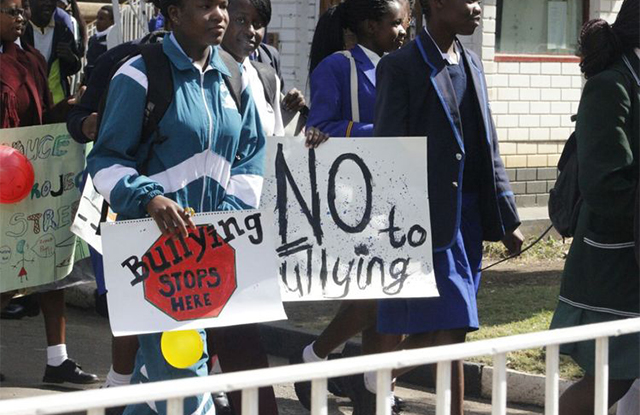
Gabriel Manyeruke
BULLYING is unfortunately a common occurrence among learners, especially in high schools.
Many learners experience this pervasive issue at some point during their time at school, either as a target or witnessing it happening to others.
The competitive nature of adolescence, as learners jockey for social status and popularity, is one of the reasons bullying is prevalent in schools.
The practice can occur in many forms. One common form of the problem is verbal bullying, where learners are subjected to hurtful words (insults) and teasing.
Verbal bullying often takes place in person. However, with the rise of social media, it has also extended to cyberbullying as heart-wrenching messages can be spread online.
Physical bullying involves aggressive behaviours such as hitting, pushing or shoving. This type of bullying can lead to physical harm and poses a serious risk to a learner’s safety. It occurs mostly in unsupervised areas such as playgrounds or hallways.
Social bullying, also known as relational aggression, includes deliberate exclusion of individuals from social groups, spreading rumours or manipulating social relationships to cause harm.
This can be particularly damaging as it targets a learner’s sense of belonging and social connectedness.
Emotional bullying is when learners are manipulated or intimidated to feel fear, anxiety and despair.
The impact of bullying can be devastating for the victims. They may experience anxiety, depression and low self-esteem as a result of being bullied. In extreme cases, bullying can even lead to suicide.
Some learners may even turn to self-harm or substance abuse as a way of coping with the emotional pain of bullying.
A decline in academic performance is one of the immediate effects of bullying. Learners who are bullied may have trouble concentrating in class, completing assignments and participating in extracurricular activities.
Low grades, a decrease in motivation and lack of interest in school often affect the victims. In severe cases, some learners may even drop out of school altogether just to escape bullying.
Bullied learners may struggle to form healthy relationships with their peers, leading to social isolation and feelings of loneliness.
They may also have trouble trusting others or expressing their emotions, which can hinder their ability to develop important life skills.
One of the best ways for learners to overcome bullying at school is to speak up and seek help from trusted adults.
This could be a teacher, a school counsellor or a parent, who can provide support and guidance on how to handle the situation.
By bringing the issue to the attention of those in authority, learners can receive the necessary assistance to address the problem.
Building a strong support system of friends and classmates can offer encouragement to stand up against this ugly behaviour. By building self-confidence, self-esteem and focusing on their strengths and abilities, learners can develop a sense of resilience that can help them withstand bullying.
Self-care and engaging in activities that promote overall well-being, for example, exercises and hobbies, or spending time with supportive friends, can also be therapeutic.
It is important for schools to have comprehensive anti-bullying policies and programmes in place.
They should also educate learners on the effects of bullying and foster a culture of respect and empathy.
This can support both victims and perpetrators in equal measure.
A school environment should be a home away from home, where all learners feel safe and valued.
Gabriel Manyeruke is an author and educator at Wise Owl High School in Marondera. He can be contacted on: 0774122288 or [email protected]



 Bongani Ndlovu
 Online Reporter