admin
admin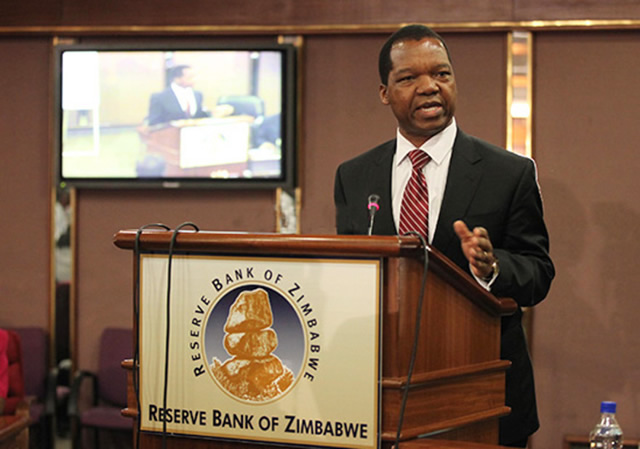
Dr Gift Mugano —
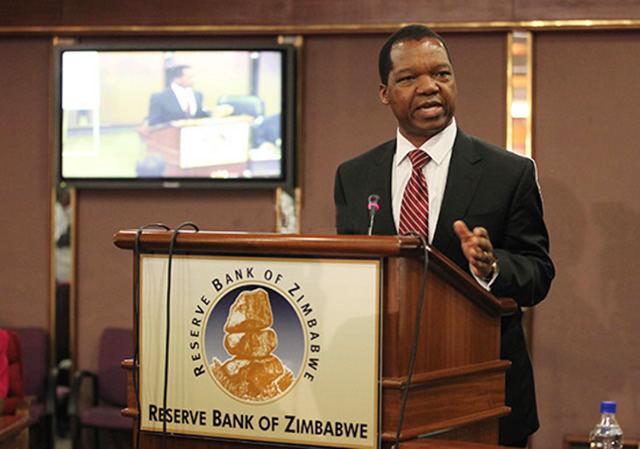
The Reserve Bank of Zimbabwe Governor Dr John Mangudya last week presented the mid-term monetary policy review which had a number of impressive measures aimed at boosting productivity.
Amongst policy measures enunciated in the policy statement are warehouse receipt system and commodity exchange, micro-finance revolving fund, portfolio fund, measures aimed at utilising foreign currency efficiently, savings bond and provision of incentives to the diaspora.
Warehouse Receipt System and the Commodities Exchange
Commodity exchange by broader definition is an organised market where future delivery contracts for graded commodities such as grains, cotton, sugar and coffee are bought and sold.
Zimbabwe promulgate the Zimbabwe Commodity Exchange Act and launched it in February 2011. Nevertheless, notwithstanding the importance of the commodity exchange in unlocking agricultural finance and provision of market access, the commodity was never operationalised.
In its mid-term monetary policy, the Reserve Bank of Zimbabwe indicated that it is working with the Ministry of Agriculture, Mechanisation and Irrigation Development on the establishment of a robust Warehouse Receipt System and the Commodities Exchange.
The warehouse receipt system in itself is a financial security which will be used as collateral in the absence of title deeds.
This will enable access to affordable finance for smallholder farmers, while enhancing their risk management particularly reduction in post harvest losses.
The commodities exchange will address information asymmetry on the prices of agricultural produce, and enhance the protection of small holder farmers from unscrupulous middlemen.
Micro-finance Revolving Funds
Unlike commercial banks, micro-finance institutions have the ability to provide tailored client-specific financial services, and traverse the multi-dimensional complexities of the poverty phenomenon.
This makes micro-finance institutions a powerful multi-faceted approach to sustainable development.
As part of efforts to support the micro-finance sector and facilitate lower lending rates by micro-finance institutions, the Reserve Bank in its wisdom established a $10 million Micro-finance Revolving Fund which will be administered by the Zimbabwe Micro-finance Fund.
According to the RBZ, the revolving fund which is earmarked for the productive sector is expected to give impetus to sustainable economic growth as this will provide an opportunity for the for the low income and marginalised groups to participate in economic activity.
Establishment of a Portfolio Fund
The RBZ has noticed that repatriation of foreign exchange for securities related transactions is taking a long time to be processed by banks despite such transactions being on the first category of the priority list for the allocation of foreign exchange.
In order to address this challenge, the Bank is establishing a Zimbabwe Portfolio Investment Fund (‘the Fund”) to facilitate the efficient repatriation of portfolio related funds to foreign investors invested specifically on the Zimbabwe Stock Exchange (ZSE).
The rationale for setting up the Fund, according to the RBZ, stems from the fact that foreign investors have traditionally played a significant role on the ZSE which is one of the most diverse and long-established markets on the continent.
Foreign portfolio flows have provided both liquidity and stability on the market which has been positive for not only listed firms but the country as a whole.
The RBZ’s view, which is supported by economic theory, is that a well-functioning capital market provides a strong signal for potential sources of foreign investment and for promoting the integrity and efficiency of the stock market.
The Fund will help in re-establishing confidence on the ZSE by demonstrating that there is a pathway for foreign investors to realise their gains, stimulate active trading and build a vibrant market with efficient and accurate price discovery and generally to demonstrate that Zimbabwe is open for business.
According to the RBZ, the Fund is expected be in place with effect from September 1, 2017 on the basis of the following salient framework:
(i) The Fund shall initially focus on the collection and repatriation of foreign funds related to portfolio equity purchases and sales, with the scope of the Fund to include the repatriation of dividends at a later date. Such dividends would then be serviced on a pro-rata basis.
(ii) Opening of a dedicated Portfolio Investment Fund at two designated commercial banks for the receipt of all portfolio investment proceeds into Zimbabwe and the repatriation of foreign investors’ proceeds from the ZSE. The RBZ, as noted in the monetary policy, will place an initial seed capital of $5 million in this Fund to kick-start the repatriation mechanism and improve investor confidence.
(iii) The RBZ will have an oversight role for monitoring purposes and to maintain integrity and transparency in the functioning of the Fund.
(iv) All incoming and outgoing portfolio funds, going forward, to be collected and pooled into the Fund, with payments made on a first-in-first-out basis and, if required, on a pro-rata basis in line with funds available in the Fund post contribution.
Nostro Stabilisation Facility
Sweet news for Zimbabwe is that the RBZ, as reported in the monetary policy, has negotiated for an enhanced nostro stabilisation facility of $600 million from Afreximbank to manage the cyclical nature of Zimbabwe’s foreign exchange receipts. This facility will be available for draw-down after the closure of the tobacco selling season by the end of August 2017.
Together with the efficient foreign exchange measure this nostro stabilisation facility will certainly ensure that the revival of firms is strengthened and that critical imports of fuel and electricity are assured.
Efficient Utilisation of Foreign Exchange
In order to ensure that the nostro stabilisation facility is supported by a continuous stream of export receipts, and by so doing, improve the efficient utilisation of foreign exchange and bring equity in the foreign exchange market, foreign exchange receipts from platinum and chrome shall be treated in the same manner as gold, diamonds,tobacco and cotton.
According to the RBZ, this policy measure, which is with immediate effect, is consistent with best practice in other jurisdictions that include Angola and Nigeria where fuel foreign exchange receipts are managed by the central banks, just like what diamonds are to the Bank of Botswana and copper to the Bank of Zambia. Here, the RBZ is spot on! This measure was long overdue.
Savings Bonds
To encourage individuals, families, households, small and medium enterprises, schools, universities, public and private institutions, corporates, churches and investors in general, to start saving and to nurture a culture of saving and building national wealth, the RBZ has developed a savings bond which offers simplicity and guaranteed returns with minimum investment from as little as $100 with no commission, agency or service fees.
The Savings Bonds will help to accelerate the empowerment of the banking public by providing an investment instrument with high yielding returns as well as offering safe and secure investment. The Savings Bonds will be made available, through banks, selected agencies and electronically on a platform to be established. The bonds will be accepted as collateral on all borrowings and convertible to cash on a simple open and transparent fixed conversion rate on any trading day. The salient features of the savings bond are as follows:
- Fixed Rate Savings Bonds,
- Rolling maturities of one year, two years, three years and five years,
- Simple interest rate of 7 percent,
- Minimum investment amount of $100; and
- Tax free on interest earned.
This is an excellent policy measure. Hopefully, the diasporas can participate on the same.
The savings bond is synonymous with deposit accounts which are traditionally used to tap into the diaspora. What is needed is aggressive marketing (targeting both locals and the diaspora) by the participating banks.
Diaspora Remittances Incentive (DRIS)
The Diaspora Remittances Incentive (DRIS) has attracted international remittances to flow through formal channels, but informal remittances are still high. The remittances market also has a high appetite for cash as the majority of recipients are not banked. In order to enhance financial inclusion for remittances recipients, the RBZ has increased the DRIS for remittances received through banking or wallet accounts from 3 percent to10 percent, with effect from August 2017.
This incentive is quite handsome! This move will not only help in encouraging the diaspora to send money via the formal channels but also increase the amount of remittances coming in country. Undoubtedly, there are a number of policy measures which were enunciated by the Governor of the Reserve Bank which cannot be exhausted in this article. In my humble view, the measures discussed here are quite key in moving us forward. What we need to do is to join our hands together and build the Zimbabwe we want.
Together we make Zimbabwe great.
- Dr Mugano is an Economic Advisor, Author and Expert in Trade and Competitiveness Strategy. He is a Senior Lecturer at Zimbabwe Ezekiel Guti University and Research Associate of Nelson Mandela Metropolitan University. Feedback: +263 772 541 209 or [email protected]



 Online Reporter