admin
admin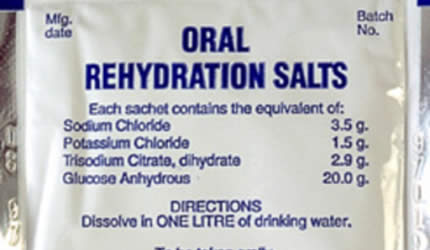
doctor because they associated the illness with witchcraft.
There was evidence of dehydration as the two-year-old Gladys kept throwing up. Her fontanelle (nhova) hand sunk, prompting the family elders to resort to traditional remedies.
Mary’s mother-in-law took the baby to an elderly woman who lived a few houses away from their home.
The baby returned with some black paste on her fontanelle and Mary was told that the toddler had been cured and was on his way to recovery.
Although she knew how good-willed her mother-in-law was when she took the baby to the traditional healer, Mary still felt that her baby needed to be taken to a medical facility for rehydration.
Later in the day she took the baby to the clinic.
The doctor at the clinic diagnosed Gladys with rotavirus and recommended immediate rehydration.
Like Mary and her family, many in Zimbabwe have gone through similar experiences.
Some have lost their children while trying to choose between traditional and modern remedies.
In recent years, Zimbabwe has seen an increase in rotavirus cases some of whose casualties lost their lives.
Many have attributed the increase in the cases to the unavailability of clean drinking water.
A doctor at one of the Government hospitals in Harare, who spoke on condition of anonymity, said many parents have not been educated on the signs and symptoms of rotavirus and the severity of the infection.
Many young mothers no longer use the salt and sugar solution as a primary remedy for diarrhoea and thus children have died due to dehydration.
Symptoms of the disease include fever, vomiting and watery diarrhoea.
Abdominal pain may also occur and infected children may have profuse watery diarrhoea up to several times per day.
Symptoms generally persist for three to nine days.
The time period from initial infection to symptoms (incubation period) for rotavirus disease is around two days.
Rotavirus is the most common cause of severe diarrhoea among infants and children throughout the world and causes the death of about 500 000 children worldwide annually.
Ministry of Health and Child Welfare epidemiology and disease control director Dr Portia Manangazira said that there is no problem using traditional remedies when a child is not feeling well as long as people remember to retain the fluids that it would have lost.
“We have surveillance at three central hospitals, so the data we have is limited to children who are seen at Harare Children’s Hospital, Parirenyatwa and Chitungwiza Central hospitals.
“For the countrywide information, we use the surveillance on common diarrhoea as proxy to rotavirus diarrhoea in children because more than 50 percent of the cases occur in children under the age of five years of which up to 40 percent of the cases were attributed to rotavirus,” she said.
Dr Manangazira said the cases increase in winter in tandem with rotavirus occurrence, and in conformity with laboratory-based findings at the three sites.
Another senior medical practitioner at a hospital in Harare said because the rotavirus is so prevalent, it is very difficult or even impossible to prevent infection in unvaccinated people.
Places with excellent standards of hygiene and sanitation can become contaminated.
Vaccination is the most effective preventative measure.
He, however, said there is a rotavirus vaccine in Zimbabwe though not yet available in public hospitals and clinics but can be found in private hospitals and pharmacies.
“There are many contributing factors to the increase in the cases of rotavirus but the main cause is the unavailability of clean water. The ministry will soon introduce the rotavirus vaccine in public hospitals,” he said.
Dr Manangazira added that the ministry anticipates receiving the rotavirus vaccine during the third quarter of this year since construction works on expansion of the national vaccination stores have begun.
“We anticipate completion as scheduled in five months’ time. This was blocking the release of the vaccine by the organisation that funds all our childhood vaccines since we do not manufacture any vaccines of our own, nor are we able to pay the health budget.
“The Government must fulfil certain agreed aspects of vaccine delivery, while they provide vaccines, injection safety materials and logistics, the State provides the infrastructure, personnel and a small co-payment of about 20 percent of the whole program me cost,” Dr Manangazira said.
The secretary-general of the Zimbabwe National Traditional Healers’ Association, Mr George Kandiero, said they have had an increase in the number of such cases.
“We have had such problem way before the coming of Western medicines and we have elderly women (vanaMbuya) who specialise in treating such cases. If they notice signs of dehydration on the child they have traditional medicines which they give to retain the fluids lost.
“We have medicines like mungurahwe which helps the child regain they appetite and to drink more fluids.
Rotavirus infection in children causes high fever, constitutional upset, vomiting and diarrhoea and irritability, so parents must ensure children get the relevant supportive measures of temperature control such as tepid sponging, analgesics and plenty of fluids including salt sugar solution or oral rehydration salts to replace lost fluids, and if little or no improvements take the children to the clinic or hospital.
Antibiotics do not help much as the causative agent is a virus not bacteria, but the health personnel will assess and treat as per requirement.
According to medical experts, repeat infections with different viral strains are possible, and most children have several episodes of rotavirus infection in the first years of life. After several infections with different strains of the virus, children acquire immunity to rotavirus.
Rotavirus infection can be associated with severe dehydration in infants and children. Severe dehydration can lead to death in some cases, so it is important to recognise and treat this complication.
In addition to the symptoms of rotavirus infection cited above, parents should be aware of the symptoms of dehydration that can occur with rotavirus infection or with other serious conditions.
Some of the symptoms of dehydration include lethargy, dry, cool skin, absence of tears when crying, dry or sticky mouth, sunken eyes or sunken fontanelle (the soft spot on the head of infants) and extreme thirst.
Since rotavirus infection is highly contagious, those who are around infected people are at high risk of infection. For this reason, children in group day-care settings or pre-schools are at risk.
Babies and toddlers between the ages of six and 24 months are at greatest risk for developing severe disease from rotavirus infection. However, most children will become infected with rotavirus by the age of three. Adults may also become infected, but the resulting illness is usually less severe than that in infants and young children.
Children can transmit the virus when they forget to wash their hands before eating or after using the toilet. Touching a surface that has been contaminated with rotavirus and then touching the mouth area can result in infection.
There also have been cases of low levels of rotavirus in respiratory tract secretions and other body fluids. Because the virus is stable (remains infective) in the environment, transmission can occur through ingestion of contaminated water or food and contact with contaminated surfaces.
Rotavirus can survive for days on hard and dry surfaces, and it can live for hours on human hands.
There is no specific treatment for rotavirus. For people with healthy immune systems, rotavirus infection of the bowel (gastroenteritis) is a self-limited illness, lasting for only a few days.
The treatment consists of increased fluid intake (oral rehydration) to prevent dehydration. About one in 40 children with rotavirus infection of the bowel requires hospitalisation for intravenous fluid.
Feedback: [email protected]



 Online Reporter